Ausangate, the Mystical Road to the Imposing Snow-Capped Mountain
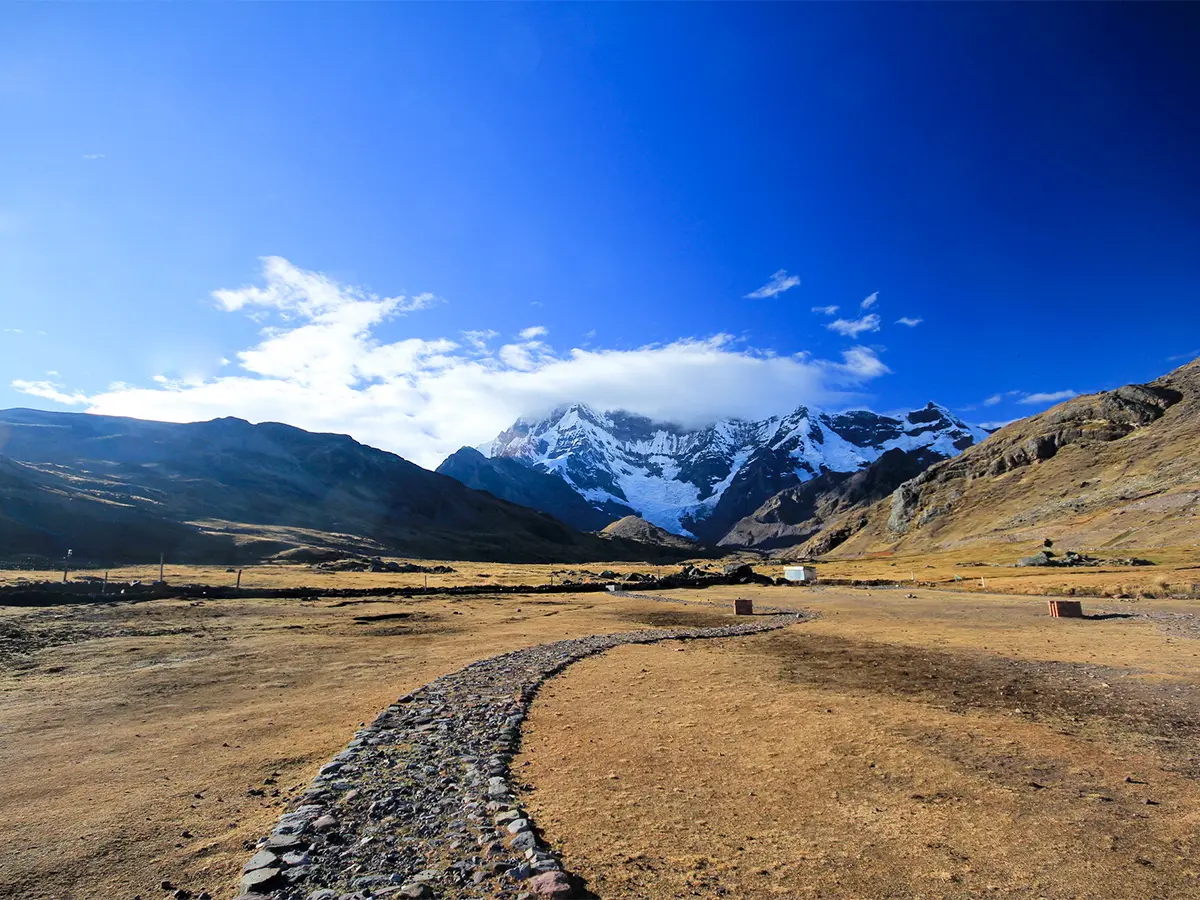
Ausangate took my breath away from the very first minute. I am not just talking about the altitude, but about the beauty of its white glaciers and deep blue skies. Waking up early to prepare for a great adventure makes anyone’s heart race, but knowing that in a few hours you will have the most beautiful spectacle of nature right in front of you is a privilege that not everyone gets to have. Not in my wildest dreams did I imagine I would be standing in front of such an incredible snow-capped mountain.
It is worth mentioning that I was about to face the largest mountain in all of Cusco and the fifth highest in all of Peru. This impressive glacier is part of the Vilcanota mountain range and is located in the province of Quispicanchis at 6,384 meters above sea level. If there is one thing you have to do once in your life, it is to walk in front of a sacred Apu. I will not lie to you, it will not be easy. But what great thing in life is easy?
The Pre-Ausangate Trek
Since I knew I would walk for three days on one of the most famous hiking routes in Peru, my mind was racing trying to imagine what it would be like. Would I have to climb a lot? Do you walk for the full three days? Will I see snow the whole way? Is it very cold? So many questions that only increased my desire to know everything.
One day before day zero, I had an introductory meeting in our office in Cusco. It was exactly what I needed to answer my questions and understand the great challenge I was about to face. I met the guide who would lead our journey and the people who would be my hiking brothers for the next three days. The explanations were our grounding, and the recommendations and maps were our guide. With my mind now focused, only a few hours separated me from the adventure.
Today Everything Begins
4 a.m. and my alarm tells me the moment is close. I grab my backpack full of excitement, some water, a warm jacket and get on the bus that will take me and my fellow travelers to Tinke. From the moment I sat down, I could only think about when we would arrive. After sleeping for two and a half hours, I woke up in a completely different landscape. Green fields, clear skies and cold winds told me that the moment of truth was approaching.
As we got out of the transport, I could see in the distance a white peak that welcomed me to its sacred land. I am here, I just have to keep going. After a few minutes, breakfast was ready. A full buffet was more than enough to wake us up. Toast, pancakes, fresh bread, eggs and hot infusions gave us the energy to start the walk.
The First Impression is the Most Important of All
The adventure really begins now. I take a deep breath and slowly start to ascend through the community. The local villagers who see us pass by smile at us and I am almost certain they are wishing us good luck. For approximately three hours of walking under an intense sun, with red cheeks and wide eyes trying to capture everything, we arrived at the lunch place in Upis.
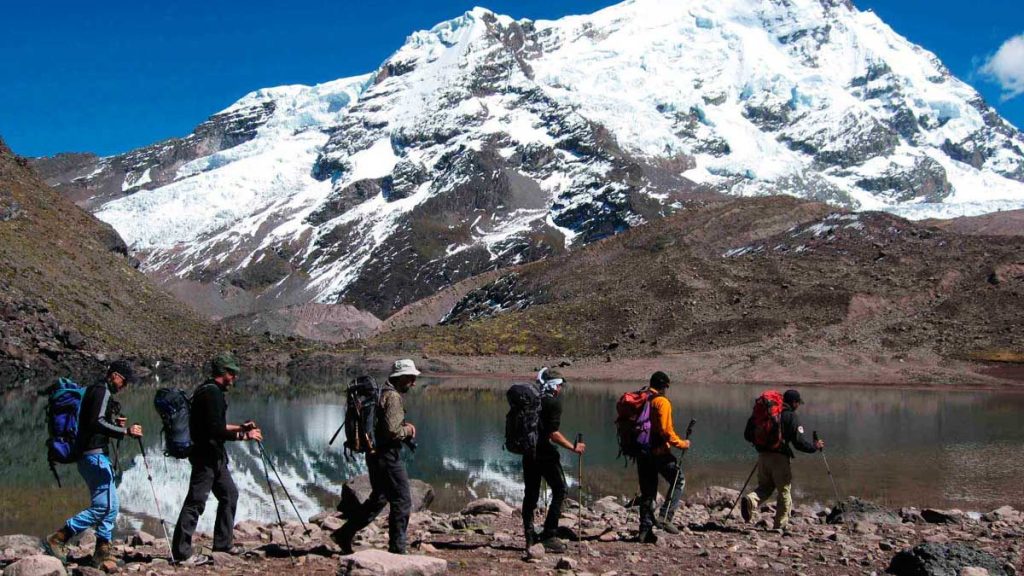
This is a moment I will carry in my heart for the rest of my life. A white blanket of snow in front of a river of crystal-clear water appears as the main act of this walk. The first full view of Ausangate.
After leaving our things, another extraordinary buffet of hot comfort food awaited us. We had lunch and admired this precious gift for a few more minutes before continuing.
What Goes Up, Must Come Down
We climbed to get a panoramic view of everything ahead. Almost out of breath and praying that it would not rain too much, after two and a half hours we arrived at the first pass of the trail, Arapa Pass at 4,850 meters. It gives you a front row seat for a magical meeting with what we came to see: the Apu Ausangate.
It is incredible how the mysticism of the Apus and the energy of the Pachamama fill your soul and bring you into harmony with the connection between man and nature.
Photos here, photos there, and after letting this unrepeatable view fill our eyes, we started our descent to our campsite. Be careful, and I say this from my own experience, be careful with the descents. Instead of walking, you can end up rolling. Pucacocha awaited us with the largest natural mirror. The reflection of the moon on the immense glacier was our light on that starry night.
Local tip from Andenes del Inca: Pucacocha means red lake in Quechua. It sits at 4,650 meters and is one of seven turquoise lakes around Ausangate.
On Top of the World
Can you imagine waking up and the first thing you see is Ausangate? I realized that if you walk a little more than usual, you can find wonders like this. A little coca tea and we continue toward what we came for, to keep climbing in search of the best view.
We have to conquer Puca Pass. A little more climbing and that promised “just a little bit more” becomes the panoramic view we were searching for. Prepare a small stone, we will show our respect by building a traditional Apacheta, a tower of stones that travelers leave on the high passes. The photos do not do it justice. Seeing it with your own eyes is an out of this world experience.
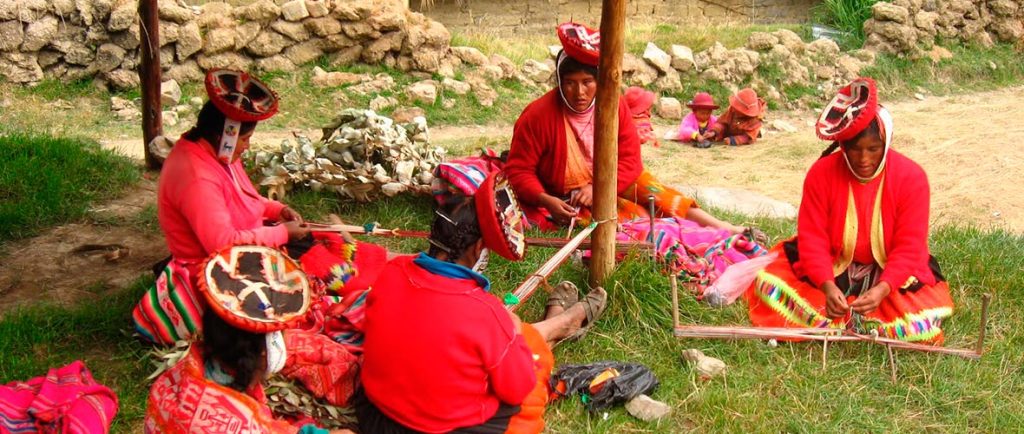
It was time to go down and our stomachs were asking us to stop for lunch. In a small place called Anantapata a table full of delicious food awaited us so we could recover before the last climb. As I was going down I saw a peculiar scene: a small adobe house with two people inside, a lady weaving in the green pasture and a man sitting at the doorway looking at the horizon.
Full belly, happy heart. We got ready to conquer the second summit of the day. Yes, two summits in one day and I already felt my heart in my hands. We grabbed our backpacks and the unpredictable mountain surprised us with a little rain that reminded us we had to earn the way up to Warmisaya Pass at 5,000 meters. Up there, despite the rain and hail, everything is still magical and I could feel the breeze caress my thoughts.
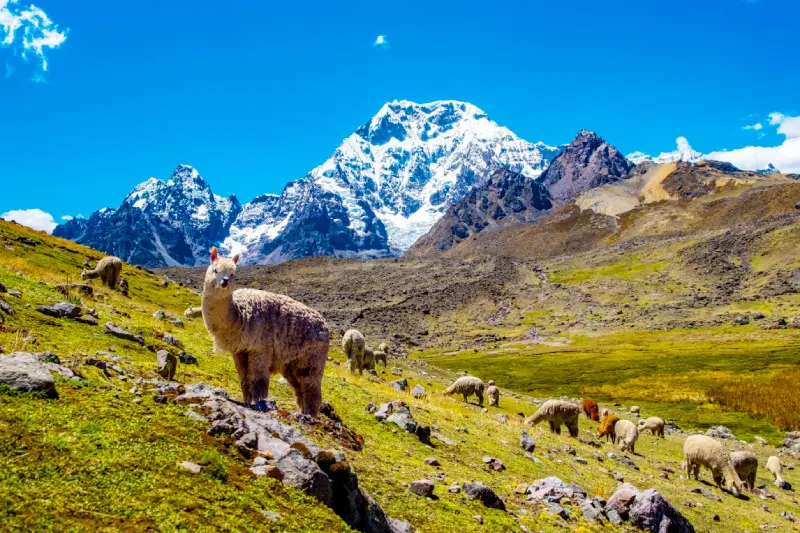
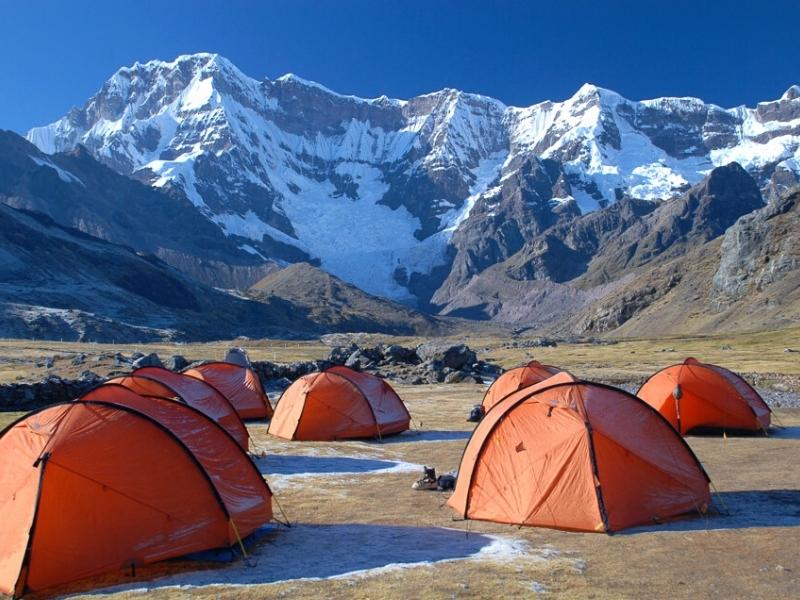
Ending the Ausangate Trek Under the Stars
After days of going up and down, I felt my legs could not go any further and I just wanted to rest. Suddenly, good news arrived. The guide told us that one more descent and we would be on sacred ground. While I found the courage to keep going down, I could see in the distance a colorful mountain. Yes, it was Rainbow Mountain.
More excited than ever to see what else this journey had hidden, I continued my descent toward the camp. As I took photos and listened to my own thoughts in the silence of the mountains, I felt grateful for making the decision to step out of my comfort zone.
In approximately two hours, I arrived at Surinecocha. Our porters and cooks were waiting for us with everything ready and an orange sunset told us the trip was coming to an end. While I was taking some photos and talking to Avelino, our porter, I realized how lucky I am and how often we miss experiences like this.
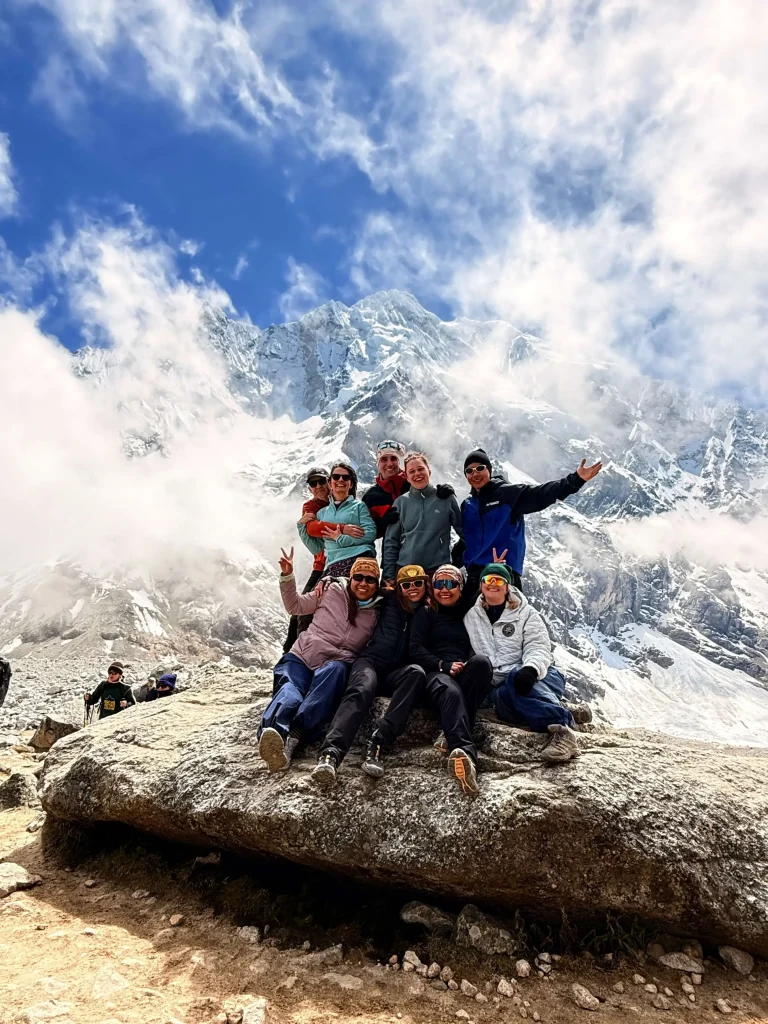
Talking with my fellow travelers is comforting, because I thought I had a hard time, but no, each of us suffered in our own way. And here we are, sitting across from each other with our hearts in our hands, remembering the most beautiful part of the journey and listening to the guide give us the final instructions for tomorrow. As if I was not lucky enough, before going to sleep, the sky gave me something unexpected, a shooting star that fell as a blessing.
The Rainbow Mountain
It was time to say goodbye to the camp and the route that had welcomed us during these last days, to go and discover a new wonder: Rainbow Mountain.
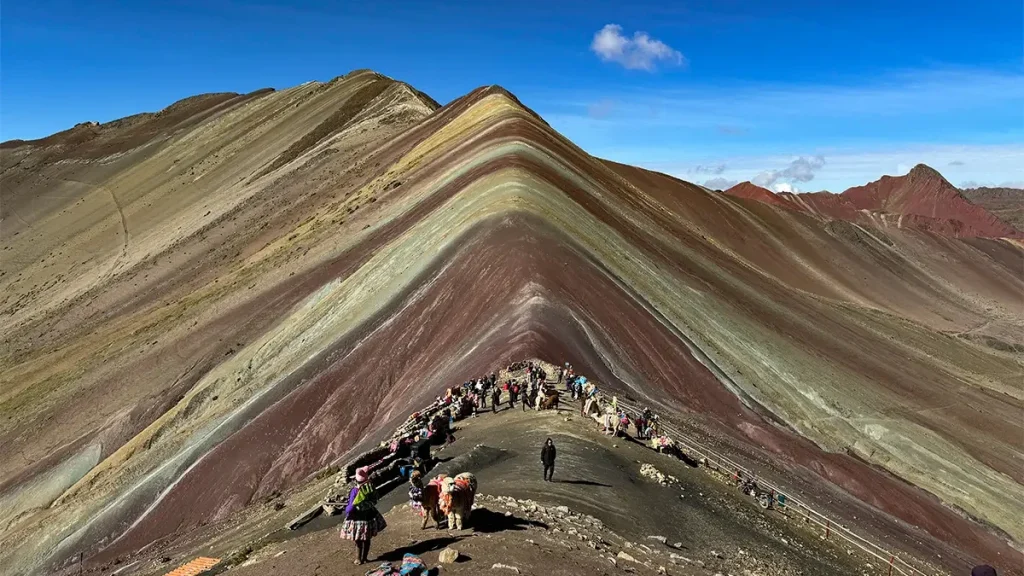
Every time someone tells you that something is impossible, remember that in Cusco we have a mountain of seven colors. Yes, you did not read that wrong. A mountain with seven colors that appears among imposing snow-capped peaks and reveals its peculiar colors to the world.
We left very early and for 45 minutes my heart was racing. After a small final climb, at 5,200 meters above sea level they yelled that I made it. I looked around me and the colors flashed in my eyes. It really does have seven colors. I rested for a moment, fixed myself a little and smiled in front of the camera with the deep satisfaction of having this wonder of nature right in front of me, in all its splendor. Without fog and with a sun that highlighted the natural rainbow of Vinicunca, I was finally able to take my cover photo..
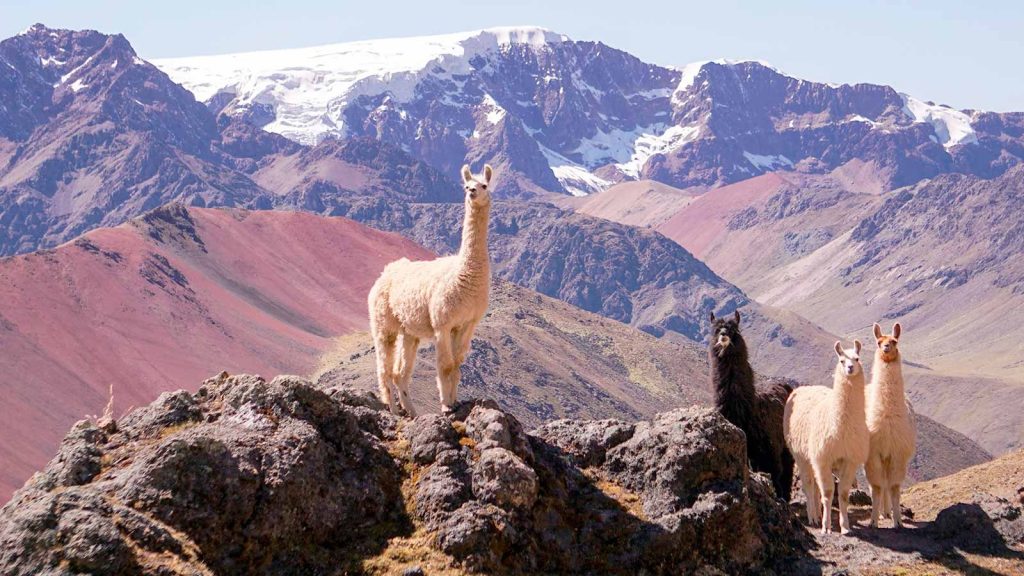
Till Next Time, Ausangate and Rainbow Mountain
It was time to descend toward our final point and I felt like an expert hiker. I did this descent in the blink of an eye, because compared to everything I had experienced in the last few days, this was nothing. Upon arriving at Llacto, where the vehicles park, I felt like I had won an Oscar for such an incredible walk.
Here I said goodbye to the porters and part of the team that accompanied us, and continued with my friends and the guide to Rumi Punku. I had a small lump in my throat because having the luxury of sharing extraordinary experiences with such amazing people is a privilege.
After traveling by bus for approximately two hours, we arrived at what was formerly known as the gateway to Cusco. Rumi Punku welcomed us with dazzling sun, as if to close this adventure with a flourish. I said goodbye to the walk, got on the bus and soon I would arrive home, with my heart in my hand and the desire to eat up the world to live experiences like this for the rest of my life.
You never know what you will find on the way, the people you will meet and much less the landscapes you will walk through. If I could give you one piece of advice it would be this: get out of your house, grab your backpack and get your camera ready. Your dreams are just a step away and the opportunity to experience the inexplicable depends only on one yes.
Essential Information About the Ausangate Trek
- Where is Ausangate? In the Vilcanota Range, Quispicanchis Province, 100 km southeast of Cusco.
- How difficult is it? Moderate to challenging due to altitude. You sleep above 4,400m and cross passes over 5,000m.
- Best time to go: April to October is dry season. May, June and September are ideal.
- What to bring: Warm sleeping bag, waterproof boots, thermal layers, down jacket, rain poncho, sun protection and reusable bottle.
- Do I need acclimatization? Yes. Spend 2 days in Cusco before the trek.
At Andenes del Inca we include certified English speaking guides, private campsites, emergency oxygen, meals from our trek chef and responsible porters from local communities.
Frequently Asked Questions About Ausangate
How high is Ausangate Mountain?
Ausangate peak is 6,384 meters. The trek itself crosses passes between 4,850 and 5,200 meters.
How long is the Ausangate Trek?
The most popular options are 3 days to Rainbow Mountain, 4 to 5 days for more lakes, and 7 days for the full circuit.
Is Rainbow Mountain part of the Ausangate Trek?
Yes, on our 3-day Ausangate Trek, Rainbow Mountain at 5,200 meters is the final highlight on the last morning.e.
Is the Ausangate Trek harder than the Salkantay Trek?
Ausangate is higher and colder, so it feels harder for altitude. Salkantay has more jungle and more total distance.
Do I need to book in advance?
Yes. Unlike Rainbow Mountain day trips, Ausangate requires permits for campsites, horses and guides. Book at least 1 month in advance, 3 months for high season.