Choquequirao Trek
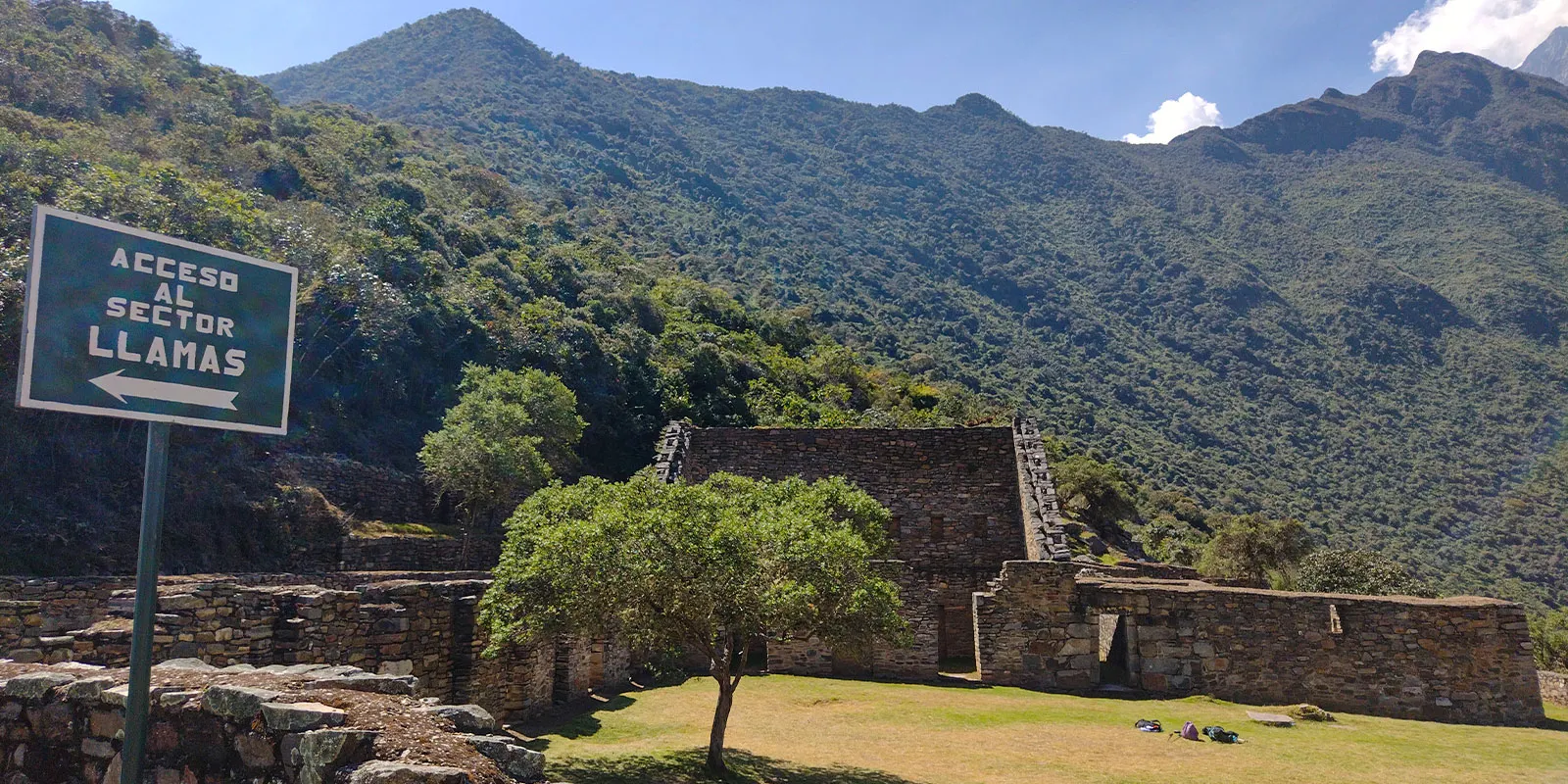
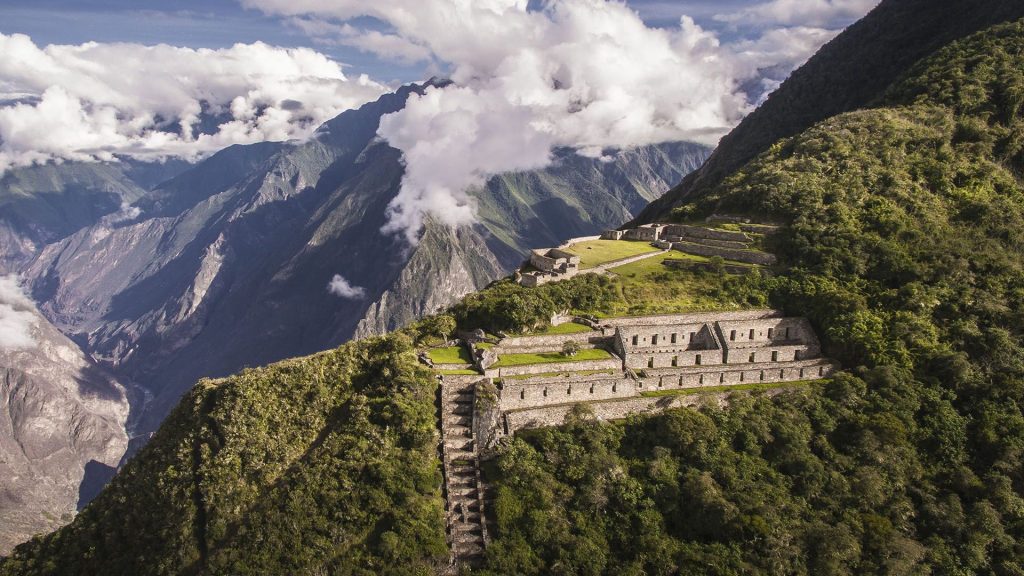
High above the roaring Apurímac Canyon, shrouded in cloud forest, lies Choquequirao with Inca engineering on a scale that rivals Machu Picchu, but without the crowds. Here, there are no shuttle buses or timed tickets, just silent terraces clinging to vertical peaks, vast stone plazas, and the raw majesty of the Andes stretching to the horizon. Uncovered by only 40 percent, it remains one of the last true lost cities on Earth.
We call it Machu Picchu’s older, wilder sister. They were built around the same time, by the same hands, for the same royal family. But while Machu Picchu was found and restored, Choquequirao was left alone in the jungle for 400 years. Today, only 40 percent has been uncovered. The rest is still under green.
This is not an easy walk. It is a true Andean expedition through one of the deepest canyons in the Americas. If you want to feel what the first explorers felt, this is the trek.
Choquequirao Trek at a Glance
- Distance & Time: 64 km round-trip | 4 or 5 days (or 8–9 days extending to Machu Picchu)
- Elevation: Starts at 2,915m, dips into Apurímac Canyon at 1,550m, and climbs to the citadel at 3,103m.
- Terrain & Grade: Challenging. Demands greater stamina and knee-stretching ascents/descents than the standard Inca Trail.
- When to Go: May through September for stable weather and dry trails.
- The Crowd Factor: ~20–30 daily travelers. Total solitude compared to Machu Picchu’s thousands.
What is Choquequirao? The Cradle of Gold
Choquequirao comes from Quechua. Chuqi means gold and Qirao means cradle. The Cradle of Gold.
It was not just a village. Historians believe it was a royal estate of Tupac Inca Yupanqui and his son Huayna Capac, built in the late 1400s as a ceremonial, administrative and agricultural center to control the passage from Cusco to the Amazon.
When the Spanish arrived in 1533, Choquequirao became something more. Manco Inca and the last Incas of Vilcabamba used it as a sacred refuge and a fortress of resistance. From here, they controlled access to Vilcabamba, the last capital of the Incas.
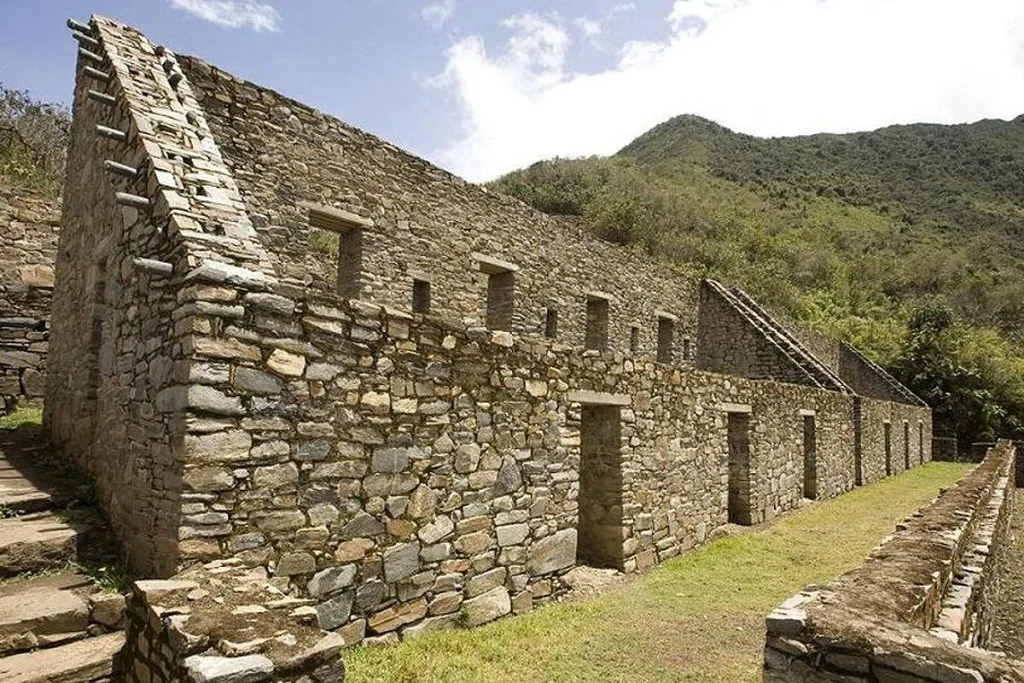
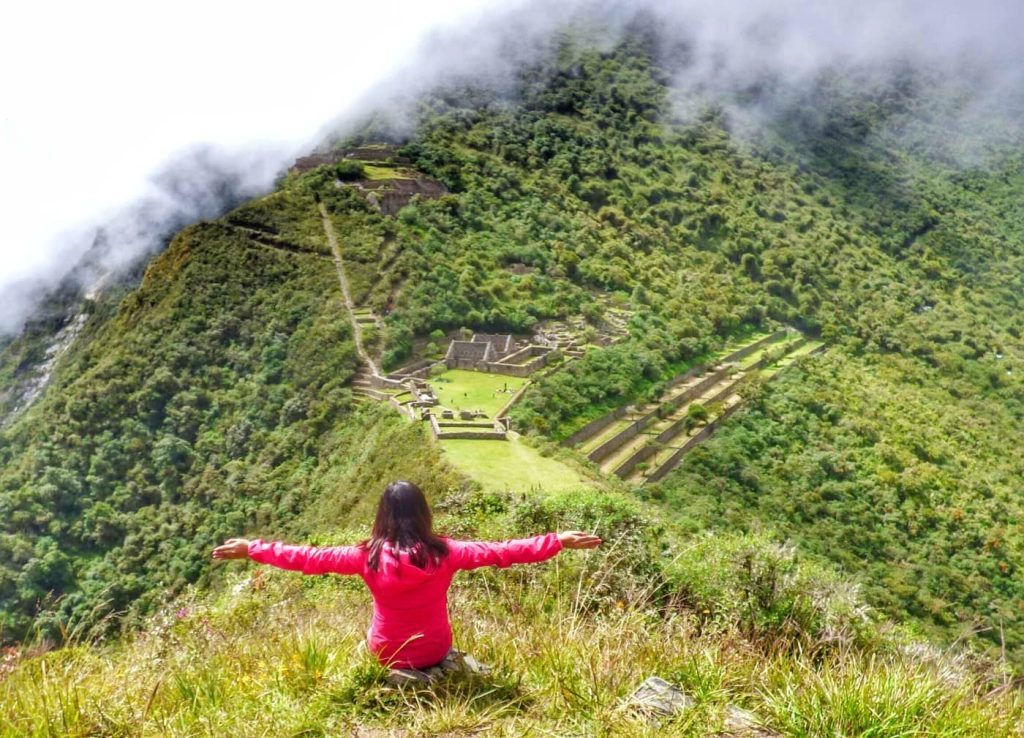
At 3,103 meters or 10,178 feet, it sits on a high ridge where the Andes meets the Amazon jungle. On a clear day you can see snow peaks and below you the Apurimac River roaring 1,500 meters below. The complex is actually three times larger than Machu Picchu, with nine different sectors, huge agricultural terraces, royal residences, temples and water channels.
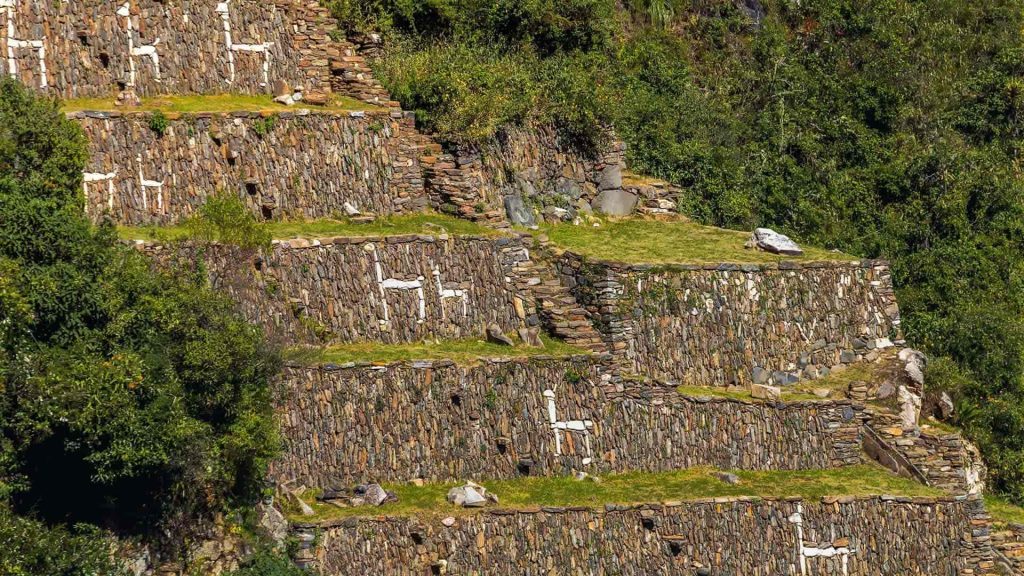
The most famous are the Llama Terraces. Twenty-two life size white llamas made of white stone set into the terraces on the mountain wall. You will not see this anywhere else in the Inca world.
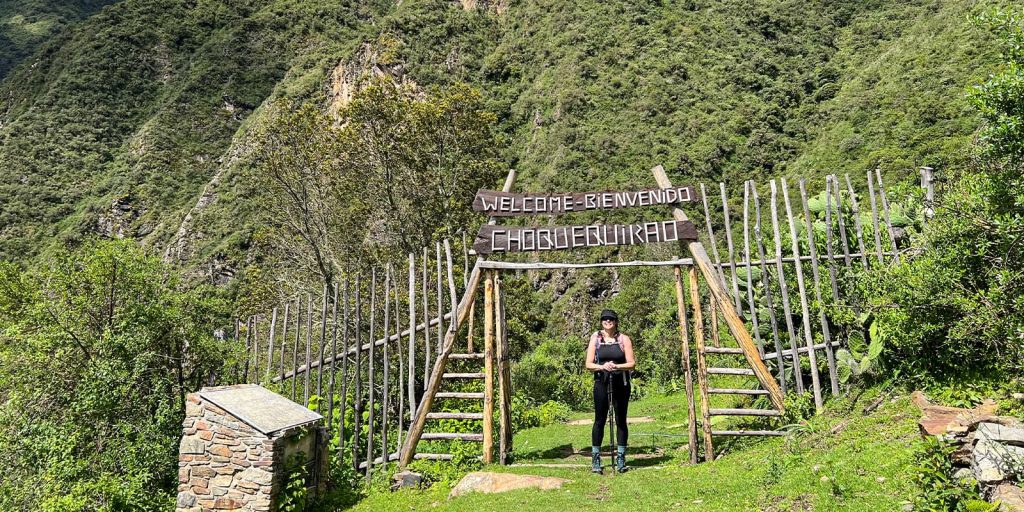
The 5-Day Relaxed Route Day by Day (classic Choquequirao only)
This is the route we run every week with our local team from Yanama, designed to give you more time at the ruins and a less punishing pace.
Day 1: Cusco to Capuliyoc to Chiquisca to Playa Rosalina
We leave Cusco early at 4:30 AM for a scenic, four-hour private van ride to Capuliyoc, the trailhead on the edge of the Apurímac Canyon. (The road is very curvy; if you get carsick, be sure to sit up front.)
From Capuliyoc, you immediately understand the challenge. The trail traces a giant “V” shape, starting on one mountain ridge and ending on the one facing it. We descend for about 3 hours to Chiquisca for lunch. The path is dusty, sandy, and rocky with loose stones—good boots with ankle support are essential here. After lunch, we continue down through cacti and changing microclimates until we reach Playa Rosalina (1,550m) beside the roaring Apurímac River. This is our first camp: hot, humid, and alive with jungle sounds.
- Walking Time: 6 to 7 hours, mostly downhill.
Day 2: The Big Climb to Marampata
Today brings the famous canyon climb, but breaking it over two days makes it far more manageable than the 4-day rush. We start early before sunrise to beat the heat, tackling a steep zigzag ascent up to Santa Rosa for a rest and a look at local sugarcane production. From there, we continue climbing up to Marampata. As we gain altitude, the river shrinks below and green cloud forest takes over. We arrive at Marampata in time for a warm lunch with our first breathtaking views of Choquequirao resting on the opposite ridge. We set up camp here and spend a relaxed afternoon watching the changing light over the canyon.
- Walking Time: 4 to 5 hours, mostly uphill.
Day 3: Full Day Exploring Choquequirao
After breakfast, it’s just a short, beautiful 1.5-hour walk from Marampata directly into the lost city. Today is entirely dedicated to exploring Choquequirao.
Because we chose the 5-day itinerary, you aren’t rushed. We have all day to discover the major sectors with our guide: the Hanan (upper sector) with its sacred temples and water channels, the Qolqas (storehouses), the Main Square with its long residences (kallankas), the ceremonial Ushnu platform, and the famous Llama Terraces, featuring giant white quartz camelids built directly into the stone walls. Because so few travelers make it out here, you can sit in total silence on a terrace for 20 minutes and see no one else. We camp tonight just 5 minutes from the ruins at approximately 2,900m.
- Walking Time: 1.5 hours to the ruins, plus full-day exploration on foot.
Day 4: Choquequirao to Chiquisca (The Return Descent)
After taking in one final morning sunrise over the citadel, we begin our journey back. We retrace our steps, descending from the ruins all the way down into the depths of the Apurímac River at Playa Rosalina. After a refreshing break by the water, we conquer the afternoon climb back up the canyon wall to our comfortable camp at Chiquisca. Breaking the final climb in half ensures your knees and lungs get a well-deserved break.
- Walking Time: 6 to 7 hours (a mix of steep descent and steady ascent).
Day 5: Chiquisca to Capuliyoc to Cusco (Hot Springs Reward)
We enjoy an early breakfast and tackle the final morning stretch: the steady climb out of the canyon back to the Capuliyoc trailhead. It’s a tough final hour, but the panoramic views over the Apurímac Valley from the top make every step worth it.
Our private van will be waiting to take you to the natural hot springs of Conoc for a long, well-earned thermal soak before the 4-hour scenic drive back to Cusco, dropping you off right at your hotel.
- Walking Time: 3 to 4 hours, mostly uphill.
New for 2027 Ultimate Choquequirao Trek to Machu Picchu 5 Days
2027 Ultimate Choquequirao Trek to Machu Picchu 5 Days
Have the unique opportunity to visit Choquequirao, the sister city of Machu Picchu, and the famous Inca citadel, one of the New Seven Wonders of the World, on an unforgettable journey!
Day 1: The Big Drop Into the Canyon
Leave Cusco at 5:00 am still dark. Five hours to Capuliyoc on the edge of the world. You buy last snacks, tighten your boots and then you drop. 3.5 hours of dusty, rocky trail straight down to the roaring Apurimac River at Playa Rosalina. Lunch at the bottom. Then you climb. Three hot hours up to Santa Rosa with river views and ice-cold drinks from tiny mountain shops. First night camping deep in the canyon.
Day 2: You Find Choquequirao
Wake up to condors. Two hours climbing through orchids and waterfalls to Marampata at 2,850m. Then the jungle closes in and suddenly it is there. Choquequirao. Empty. Huge. We have lunch overlooking it, then you get it almost alone, palaces, temples, the Usnu platform and the 24 white llamas carved into the terraces. Our guide tells you the real story, not the brochure one. You sleep inside the lost city.
Day 3: Desert to Cloud Forest to Hot Shower
Breakfast inside the ruins. One morning you watch the whole country change. Dry desert turns into green cloud forest on the way to Yanama. Lunch in a tiny Andean village, then up to the 4,600m pass where the wind hits hard. Our van drops you through the clouds to Collpapampa. Our domes are waiting, glass roof, hot shower, real bed, chef dinner. You will love this night.
Day 4: Your First View of Machu Picchu
Coffee in your dome. Short ride to Lucmabamba and 3 hours on a forgotten Inca trail to Puncuyoc Pass at 2,700m. Fruit trees, valleys, then Llactapata. This is the moment. Directly across the valley, Machu Picchu, Huayna Picchu and the Aobamba Canyon in one shot, with no crowds. Two hours down to Hidroelectrica, lunch, then train to Aguas Calientes. Hotel, hot shower, dinner.
Day 5: Sunrise Over Machu Picchu
First bus in the dark. You watch the sun hit Machu Picchu. Two hours with our guide through the three sectors, then time to just sit. Back to Aguas Calientes for lunch and a wander. Expedition train at 2:55 or 3:20 pm along the wild Urubamba River, you can spot Wiñay Wayna high on the wall. Van back to Cusco around 7:00 pm. Two lost cities, five days.
What You Will Actually See Inside Choquequirao
Choquequirao is not one ruin. It is nine different sectors spread along the ridge. Only 40 percent is uncovered, so you feel like you are discovering it. Our guides are from Yanama and grew up here, they will show you what most visitors miss.
Hanan – The Upper Sacred Area
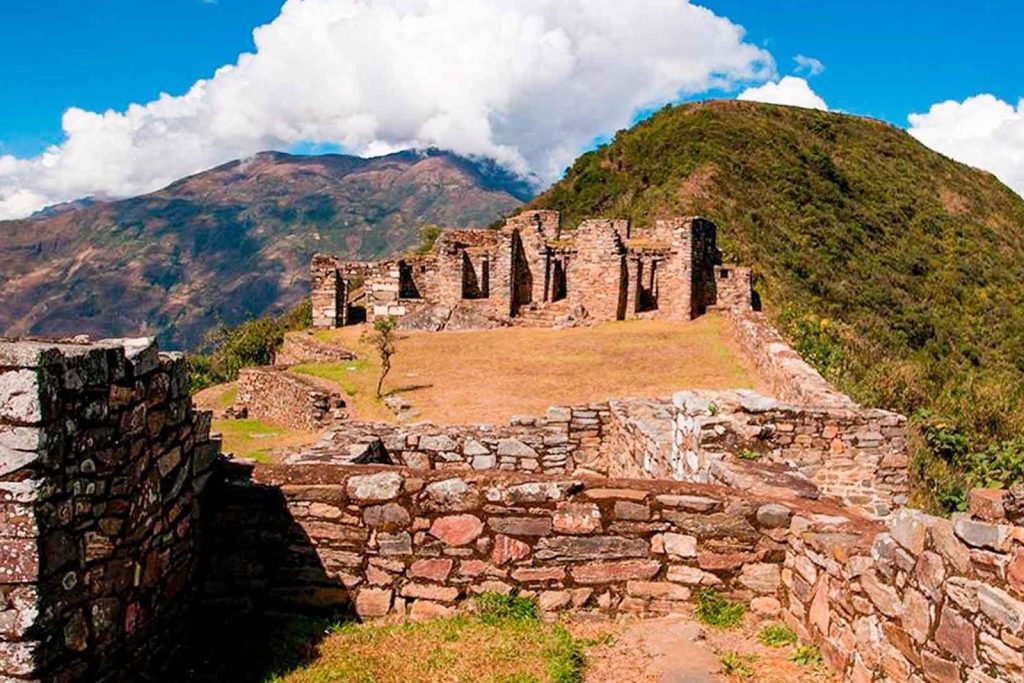
Hanan means high in Quechua. This is the northern and highest part, right next to the main square. You will see perfect water channels that still run, ritual fountains and royal houses. This was the ceremonial heart.
The Qolqas – The Storehouses
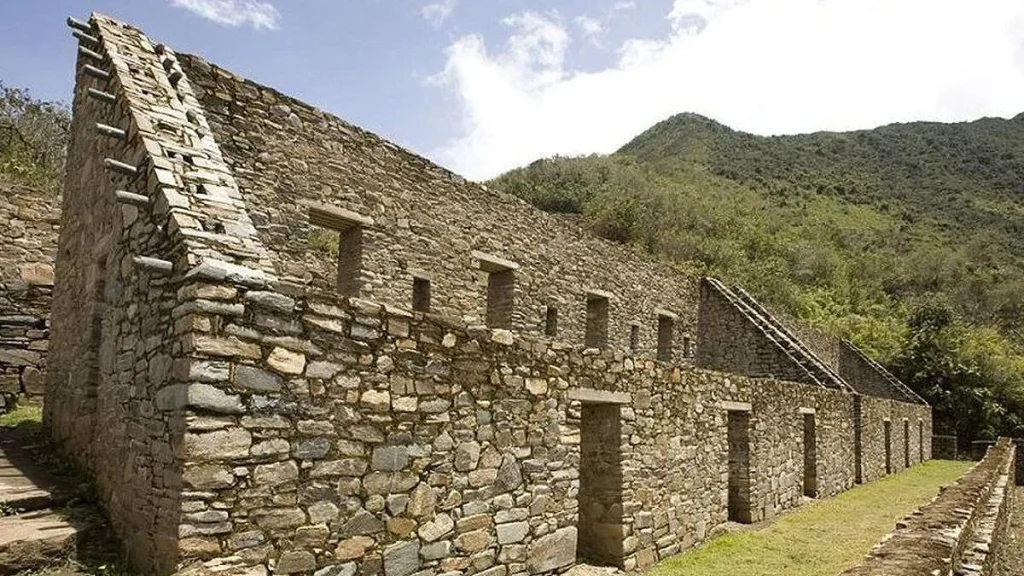
Big, long buildings built for one job, to keep food fresh for months. The walls have ventilation ducts that bring in cold air. You can still feel the draft inside. The Incas stored dried potatoes, corn and quinoa here for the whole city.
The Main Square – Where You Take the Photo
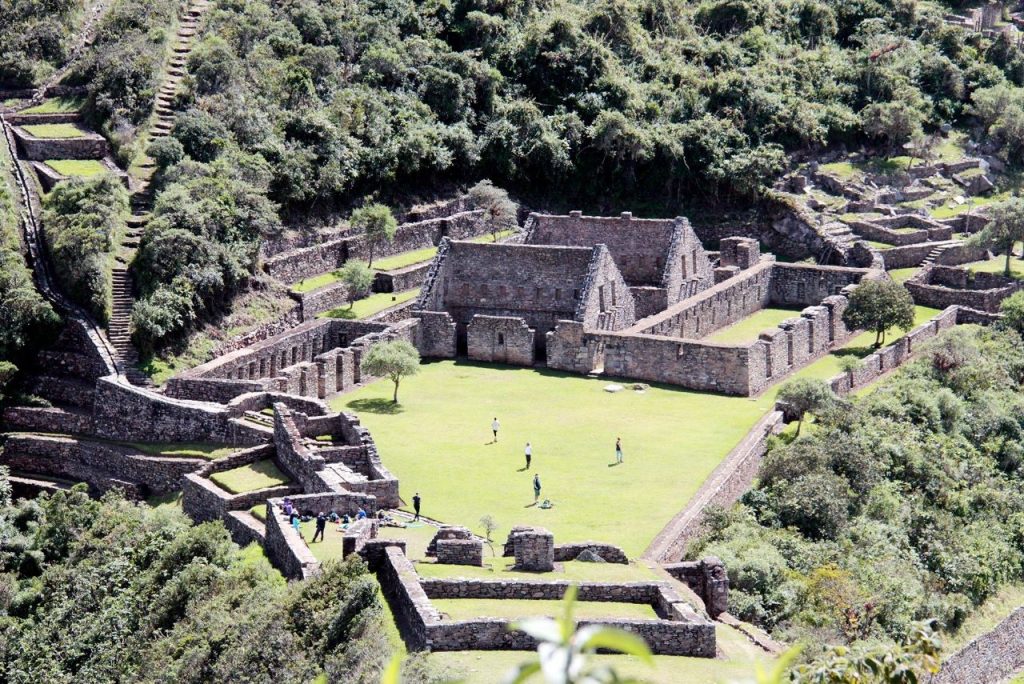
Without a doubt, this is the most important place in the archaeological complex. As its name suggests, it’s in the center and is generally the main point where you’ll take the photo to prove you really made it there.
Here you’ll find the famous Kallankas, structures, usually two stories high, considered residences. Also, there are four terraces forming what’s known as a sacred enclave, considered a setting for essential events.
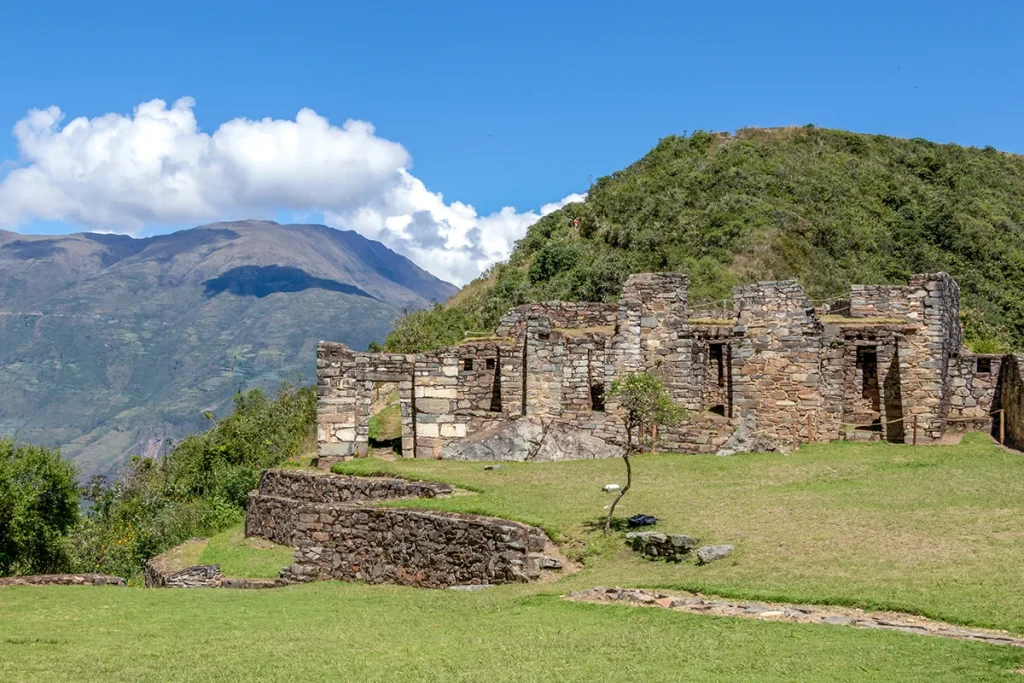
The Portals – The Ancestor Houses
These monuments are considered by archaeologists to be dedicated to the ancestors. The reason is that trapezoidal-shaped portals can be seen, believed to mark the place where mummies of important people were kept.
The Ushnu – The Ceremonial Platform
A panoramic platform from which you can see Choquequirao. It’s on a platform high on a hill, very close to Choquequirao, to the south of the site. It’s surrounded by a wall of almost 150 meters and terraces shaped like a horseshoe. It’s believed this place was used for religious and even astronomical rituals.
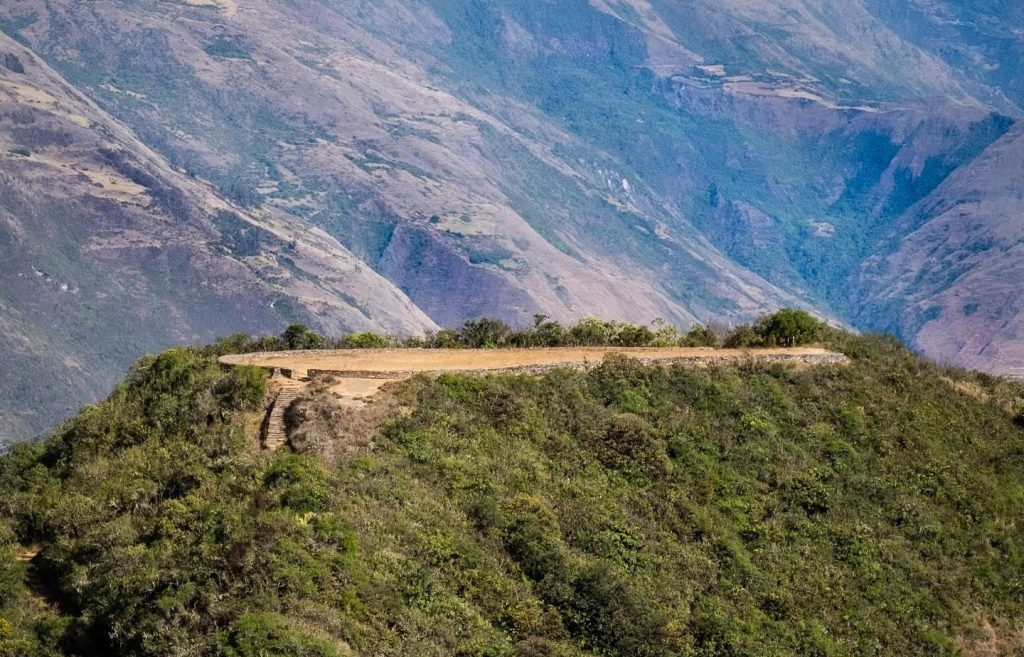
The Sacred Terraces
These are large terraces forming a concave space located northwest of the main square. One of the longest terraces is almost 116 meters long.
The Llama Terraces
The most famous in the entire site. They are in the north of the main part of Choquequirao, covering much of this area. You can see white llamas that give a very special look to the archaeological complex. These are steep terraces of almost 16 levels carved in limestone..
The House of the Priests
Right next to the Ushnu, just a short walk away. This is where the priests lived. The compound is divided into two separate areas where sacred ceremonies were prepared, so access was restricted to only a few people. You can still see the fine stonework and the quiet, private patios. Our guide will show you where the fire was kept burning.
Paraqtepata Terraces
Eighteen tall, vertical terraces hanging on the mountain edge. This was pure farming engineering. The vertical design was not just for planting corn and quinoa, it was also built to control water and stop the mountain from sliding. Standing below them you finally understand how the Incas turned a cliff into farmland.
Phaqchayoq Terraces
The longest terraces in Choquequirao. Nine huge levels that run along the ridge, also built for farming. From here you get one of the best side views of the main plaza and the canyon.
You will leave Choquequirao full of photos, but more than that, with the satisfaction that you earned this place with your legs. We walk back to our camp near the ruins to rest.
The next morning, after one more look at the city in morning light, we pack up and start the long walk back to the other side of the mountain.
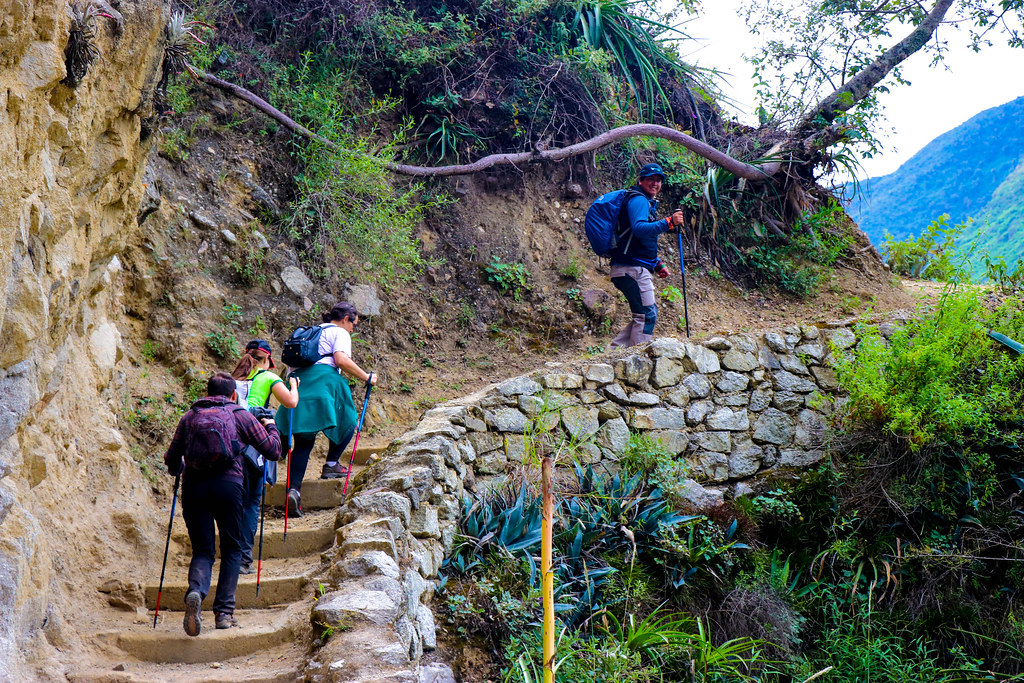
The Way Back
Everything that goes up must come down. After breakfast in Choquequirao we start the long return on the same trail. It feels different now. You know the river, you know the zigzags.
We drop to Santa Rosa and then to Chiquisca where we have lunch, the place where you first felt the adventure start two days ago. Then the last big climb from Chiquisca to Capuliyoc. It is tough but short compared to what you have already done, and the view over the Apurimac Valley at the top is your reward.
Our van is waiting to take you to the natural hot springs of Conoc. Hot water after four days of dust is the best finish.
Tips From Guides Who Do This Every Week
- Train a bit. The V shape is real. One mountain down, one mountain up.
- Bring strong repellent. Mosquitoes in Playa Rosalina are intense.
- Bring cash in small bills. Small shops in Chiquisca and Marampata sell water, beer and snacks but have no change.
- Hiking poles save your knees. Essential for descent and climb.
- Bring rehydration salts. You sweat a lot in the canyon.
Best Time to Trek Choquequirao
The Apurimac Canyon has a dry desert climate, warmer than Cusco.
May to September: Best time. Completely dry, clear skies, firm trails. Days are hot in the canyon up to 25 C or 77 F, nights cold in camp down to 0 C or 32 F. Perfect for photos.
October to April: Rainy season. Afternoon showers, greener landscape, fewer people, muddier and more slippery trail. Possible landslides. We run the trek all year except heavy rain weeks in January and February.
For most travelers, May, June and September are ideal. Late May and early September have the best balance of good weather and fewer trekkers.
Where Do You Sleep on the Trail?
You sleep in tents at established campsites, Chiquisca, Playa Rosalina, Santa Rosa and Marampata. They are rustic with basic toilets and small local shops that sell water, beer and snacks. Some have space to charge a phone for a few soles. There are no beds and no WiFi in most camps, except Marampata where you can sometimes get weak signal. Our crew brings everything, tents, dining tent, chairs and food.
General Packing Rule For All Choquequirao Treks
Your duffel bag for the horses is max 7 kg. We give you big plastic bags to keep it dry. We provide tents, dining tent, boiled water every meal, cook and muleteers. You carry only your daypack with water and what you need for the day. There is no electricity on the trail except in Collpapampa domes and Aguas Calientes hotel on the 5 day Choquequirao to Machu Picchu route.
1. Packing List – Choquequirao 4 / 5 Days Classic
This is our most popular trek. 2 to 3 nights camping in the canyon, 1 to 2 nights near the ruins.
Documents and money
Original passport, the same you used for booking, plus some cash in small soles bills for small shops and tips
In your daypack – carry every day
Small daypack 20 to 30 liters, 2 to 3 liter water bladder or bottles, sun hat, sunscreen factor 50, strong insect repellent, rain poncho, fleece jacket, headlamp, toilet paper and small bag for waste, snacks, hand sanitizer, camera and battery bank
In your duffel bag for the horse
2 t shirts, 2 hiking pants, 1 shorts for camp, 4 sets underwear, 3 pairs hiking socks, 1 pair camp shoes or sandals, bathing suit for Conoc hot springs, thermals top and bottom, warm down jacket for cold nights, waterproof gloves, quick dry towel, small bottle soap, toothbrush
Sleeping bag minus 15 C, you can rent from us
Good hiking boots with ankle support, already broken in
2. Packing List – Choquequirao 7 / 8 / 9 Days Remote Trek
Same trail but longer, deeper into the Vilcabamba. You need more clothes and more power.
Add to the 4 / 5 day list:
3 t shirts instead of 2, 3 hiking pants instead of 2, 6 sets underwear instead of 4, 5 pairs hiking socks instead of 3, extra thermals, extra fleece, second battery bank 20,000 mAh, larger quick dry towel, more blister plasters and personal meds, more cash in small bills, 1 extra water bottle
Daypack also add:
Water purification tablets just in case, extra snacks and electrolytes, trekking poles essential for 7 plus days
For 7 to 9 days you will be 4 to 5 days without any shop, so bring everything you need from Cusco. No WiFi, no charging until you return.
3. Packing List – Choquequirao to Machu Picchu 5 Days New 2027 Route
This trek is different. 2 nights tents near Choquequirao, 1 night panoramic domes in Collpapampa with hot shower and WiFi, 1 night hotel in Aguas Calientes and train. You need both trekking gear and a small clean set for Machu Picchu.
Documents and money
Original passport, student card if you booked as student, cash in small soles and some dollars for Aguas Calientes shopping
In your daypack for trekking days 1 to 4
Small daypack, 2 to 3 liter water bladder, hiking boots with ankle support, sun hat, sunscreen, strong insect repellent, rain poncho, fleece, headlamp, toilet paper, hand sanitizer, snacks, camera, battery bank
In your duffel bag for the horse, days 1 to 3
2 t shirts, 2 hiking pants, 4 sets underwear, 3 pairs hiking socks, camp shoes, bathing suit, thermals, warm down jacket, waterproof gloves, quick dry towel, toiletries
In a small separate bag we keep in the van for days 4 and 5, Collpapampa and Machu Picchu
1 clean t shirt and pants for Aguas Calientes dinner, 1 clean underwear and socks for Machu Picchu day, flip flops for hotel, small clean towel for Machu Picchu, chargers for dome and hotel, you can charge everything in Collpapampa
Sleeping bag minus 15 C for first two nights only, you can rent from us. After Collpapampa you do not need it.
Do not bring:
Jeans, cotton heavy clothes, big hard suitcase, drone without permit, plastic disposable bottles, too much cotton.
All three treks include boiled water after the first lunch spot, so you only need to bring your own water for the first morning of day 1.
Choquequirao Trek What People Really Ask
Can you see both Choquequirao and Machu Picchu on the same trek?
Yes. You can see both lost cities on one trek. Our new 2027 Choquequirao to Machu Picchu 5-day trek connects them in 5 days. You trek from Capuliyoc to Choquequirao, spend the night inside the ruins, cross the Yanama Pass at 4,600m, stay in our panoramic domes in Collpapampa and arrive at Llactapata for your first private view of Machu Picchu before your guided tour the next day. Check our new 2027 Ultimate Choquequirao Trek to Machu Picchu 5 Days.
How difficult is Choquequirao Trek compared to Inca Trail?
Choquequirao is harder than the Inca Trail. The Inca Trail is 43 km with one big pass. Choquequirao is 64 km round trip for 4 days with a 1,500-meter descent to the Apurimac River and an 1,800 meter climb the next day in full sun on sandy, rocky trail. You need to be fit and able to hike 7 to 8 hours. With mules for your main bag, hiking poles and our pace, most fit travelers do it fine.
Can you do Choquequirao in 2 or 3 days?
No, you cannot do Choquequirao in 2 days safely. The trail is a giant V. One mountain down, one mountain up. You need 2 days just to get in. The minimum realistic time is 4 days and 3 nights, 2 days in and 2 days out. If you want more time inside the site, do 5 days. If you want to continue to Machu Picchu, do 5 days on our new route or 8 to 9 days on the traditional expedition.
What is Choquequirao and why is it called the sister of Machu Picchu?
Choquequirao means Cradle of Gold in Quechua. It is a royal Inca city at 3,103 meters built by Tupac Inca Yupanqui around the same time as Machu Picchu for the same royal family. It has the same fine stonework, water channels and temples. It is called the sister because they look alike, but Choquequirao is three times bigger, only 40 percent excavated and sees 20 to 30 visitors a day instead of 4,500.
How do you get to Choquequirao from Cusco?
You drive 4 to 5 hours from Cusco to Capuliyoc at 2,915 meters, the trailhead on the edge of the Apurimac Canyon. From Capuliyoc you hike down 3.5 hours to Playa Rosalina at 1,550 meters at the bottom of the canyon and then climb 3 hours to Santa Rosa. The next day you climb to Marampata and Choquequirao. There is no road or train to Choquequirao, only this trail.
What is the altitude of Choquequirao and will I get altitude sickness?
Choquequirao is at 3,103 meters or 10,178 feet, lower than Cusco at 3,400 meters. You will feel the steep climb more than the altitude. We recommend 2 days in Cusco before the trek, drinking water, going slow and using coca tea. We carry oxygen and first aid. The highest point on the Choquequirao to Machu Picchu trek is the Yanama Pass at 4,600 meters.
Do you need a guide for Choquequirao? Can you do it alone?
You can go alone but we do not recommend it. There is no rescue, camps are rustic with only basic toilets and small shops, and you must carry your tent, food and water. With Andenes del Inca you get a licensed local guide from Yanama, mules for 7 kg of your gear, a cook, boiled water, tents and the entrance ticket included. You also get the real history of the 24 llama terraces that most solo hikers miss.
How much is the entrance fee to Choquequirao?
The entrance to Choquequirao is 60 soles for foreigners, about 16 USD. You pay at the checkpoint near Marampata. No advance booking needed like Machu Picchu. For the Choquequirao to Machu Picchu 5-day trek you also need a Machu Picchu ticket for Circuit 2 which must be booked 1 to 2 months ahead. Both tickets are included in our price.
What is the best time to visit Choquequirao?
May to September is the best time. It is dry season with clear skies and firm trails. Days in the canyon are hot up to 25 C and nights near Choquequirao are cold near 0 C. April and October are excellent shoulder months with green mountains and fewer people. November to March is rainy season with muddy, slippery trail and possible landslides.
Where do you sleep on the Choquequirao Trek? Is there WiFi or a hot shower?
On the classic 4- and 5-day trek you sleep in tents at Chiquisca, Playa Rosalina, Santa Rosa and Marampata. Camps have basic toilets and small shops for water and snacks, no beds and no WiFi except weak signal in Marampata. On our new 5-day Choquequirao to Machu Picchu trek you sleep 2 nights in tents near Choquequirao, 1 night in our exclusive panoramic domes in Collpapampa with hot shower, WiFi, real beds and gourmet food, and 1 night in a hotel in Aguas Calientes.
What are the Llama Terraces in Choquequirao?
The Llama Terraces are 24 life size white llamas made of white quartzite set into 16 levels of terraces on the steep northern slope of Choquequirao. They were built as a symbolic offering and face the sunrise. They shine bright in the afternoon sun. No other Inca site in Peru has them and they are the most photographed part of Choquequirao.
Is Choquequirao worth it and how crowded is it?
Yes, if you want adventure and solitude. Machu Picchu has 4,500 visitors a day. Choquequirao has 20 to 30. You can sit on a terrace for 20 minutes and see no one. It is three times bigger than Machu Picchu, wilder and you earn it with your legs. Some of our clients have said that Choquequirao was more memorable than Machu Picchu because they had it almost alone.