How the Incas Built Machu Picchu: Stonework, Temples, and History
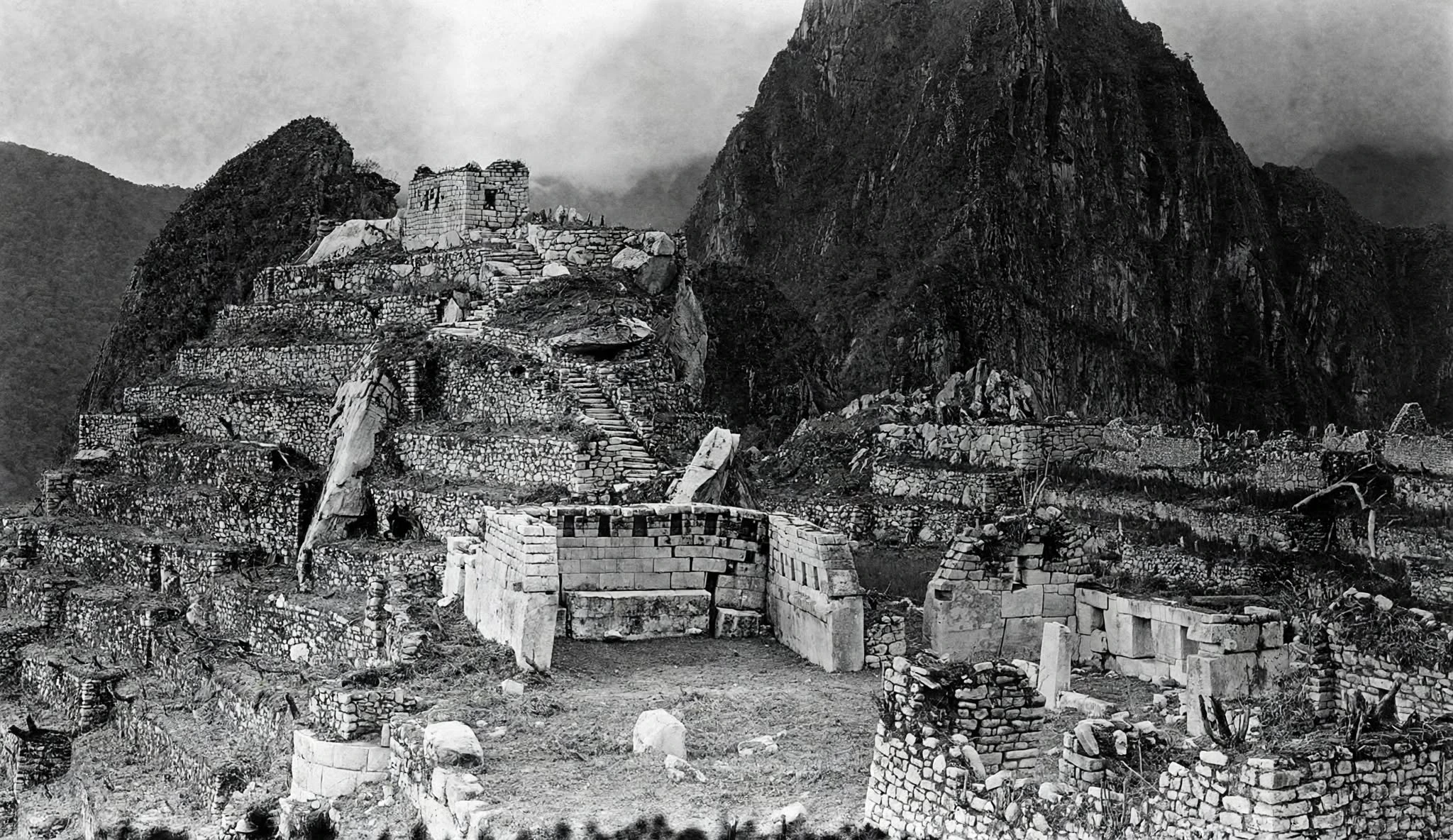
The Stones of Machu Picchu
Machu Picchu was occupied for only about 110 years, from about 1420 to 1532. The chronology rests on radiocarbon dating of bone and teeth from 26 individuals buried in caves at four cemeteries around the site.
During that century, about 300 people lived at Machu Picchu throughout the year, farming the terraces, maintaining the canal and fountains, and tending the temples. When the emperor was in residence with his household, the population likely rose to about 1,000. When he returned to Cusco, the permanent residents remained to keep the estate in order.
The estate is generally attributed to Pachacuti, who ruled from 1438 to 1472. No Inca document records the foundation. The dates fall within his reign, the scale fits a royal commission, and other emperors built comparable estates in the Urubamba Valley. Because the site was used for only 110 years, the temples, terraces, and water system belong to one period, not to centuries of rebuilding.
As an estate, Machu Picchu combined residence, ritual, agriculture, and political display. It provided the emperor with a house away from Cusco, temples oriented to the solstices, terraces that produced food, and storehouses to preserve it. The quality of the stonework, the reliability of the water system, and the stability of the terraces showed what the Inca state could do on a steep mountain top.
After about 110 years, the estate was abandoned. The reasons remain unresolved, and no single explanation commands agreement. The Spanish never reached Machu Picchu, and the site was not destroyed by conquest. As the empire fragmented, its population dispersed to other centers.
What survives is a working estate, not an empty monument. Kitchens, storehouses, temples, and a functioning water system remain in place, together with the tools, pottery, and burials of the people who cut the stone, cooked in the kitchens, farmed the terraces, and were buried in the caves around the site.
Why They Lived Here
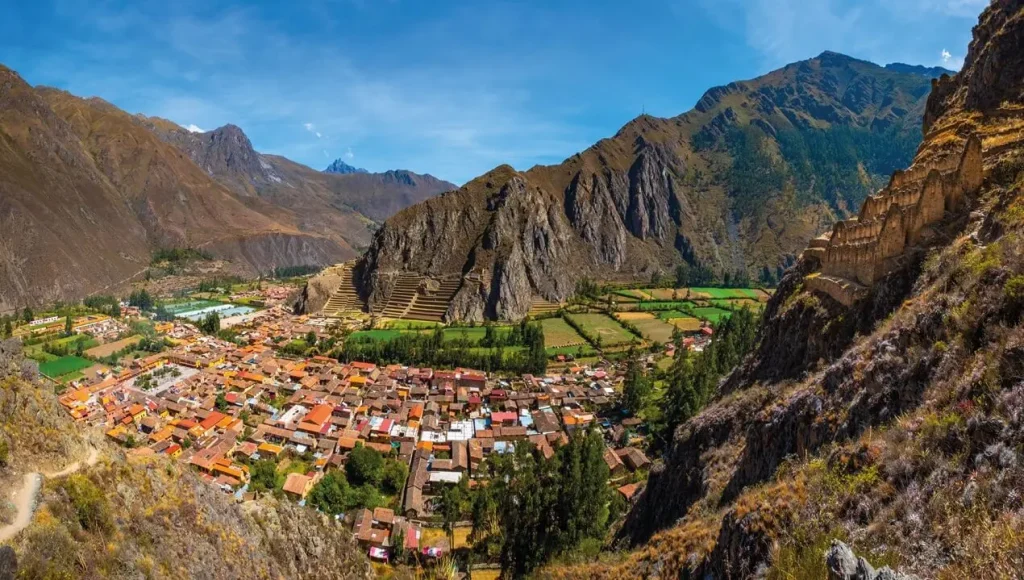
Machu Picchu is not a convenient place for a town. The ridge is narrow. The slopes are steep. Everything had to be carried up and cut on site.
The Inca chose it for plain reasons.
- First, water. A spring outside the urban area could be brought in by canal.
- Second, position. The ridge sits above a bend in the Urubamba River, between Cusco and the valleys toward Vilcabamba. It controlled movement through the valley.
- Third, land. The slopes could be terraced for maize and other crops.
- Fourth, religion. The peaks around it, especially Huayna Picchu, gave the site a setting that mattered in Inca belief.
It was also a royal landscape. In the 1400s, Inca emperors built a series of estates in the Urubamba Valley. Each one was a place to live, to feast, to manage land, and to show power. Machu Picchu fits that pattern.
That explains why the stonework is uneven. The finest work went to the buildings that carried meaning. The rougher work went to walls that held soil, stored food, or housed workers. The city was not built to impress a visitor. It was built to house an emperor, to feed a household, to honour the sun, and to make a claim about who could command labour, water, and stone in difficult terrain.
The population included priests, administrators, craftspeople, cooks, farmers, and guards. The population maintained the terraces, the water system, the temples, and the royal residence.
The Granite of Machu Picchu: Composition, Age, and Origin
The ridge belongs to the Vilcabamba Batholith, a large body of intrusive rock that cooled deep underground in Permian and Triassic time and was later exposed by uplift and erosion.
The building stone at Machu Picchu is a pale granite. The pale granite consists mainly of quartz and feldspar, with dark flecks of biotite mica through it. Quartz gives the granite high hardness and slow weathering. Feldspar gives much of the pale colour. Biotite gives the dark specks. Geological descriptions give an age of about 250 million years for the intrusion.
The same granite forms the bedrock of the ridge. Faults and joints cut the bedrock into blocks. Those natural fractures mattered, because those fractures supplied stone already close to a usable size.
Machu Picchu is not built from andesite. Andesite is the dominant stone at Cusco. At Machu Picchu, granite is the primary material in sacred buildings and in terrace walls. The difference is visible in the colour of the city. Cusco is darker. Machu Picchu is pale grey, and the walls seem to grow out of the ridge rather than sit on top of it. The builders used what the mountain offered, and the mountain offered granite.
How the Incas Cut and Fitted Granite Without Iron Tools
Inca masons had no iron or steel. The cutting toolkit was stone, copper, and bronze.
The main method was pounding. A mason struck granite with a hammerstone to remove small flakes and to shape a block gradually. A bronze chisel cut finer detail and dressed joints. Sand mixed with water served as an abrasive for grinding and polishing surfaces. It was slow work.
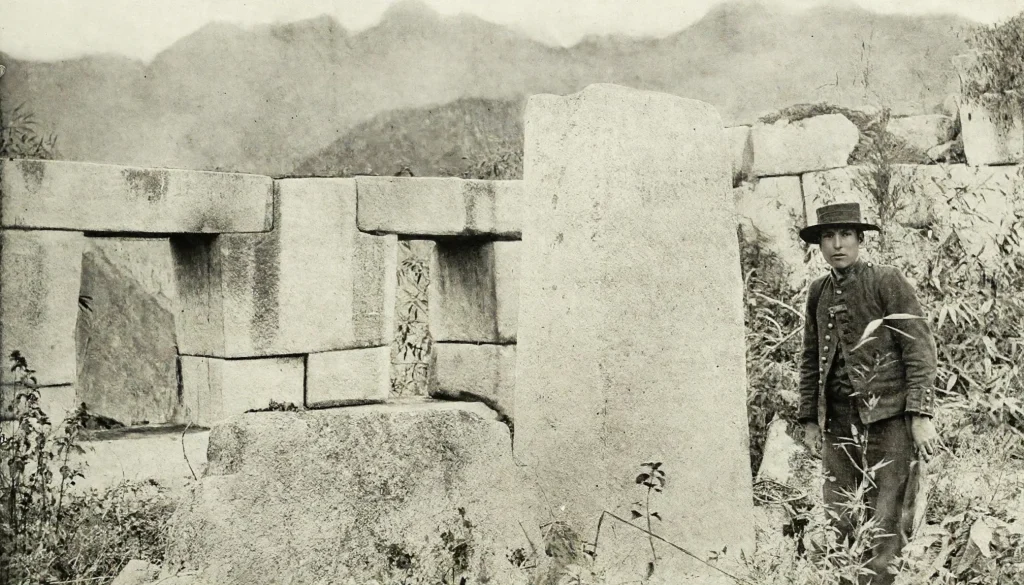
What was found at Machu Picchu
Early excavations at Machu Picchu recovered hundreds of hammerstones. Some of those hammerstones show thumb and finger depressions shaped for grip. Later summaries of those finds list the materials as including dolerite, quartzite, olivine basalt, and hematite.
That list is important. The Machu Picchu assemblage was not a single rock type. The assemblage included several hard, tough lithologies, all selected because those lithologies resist fracturing on impact.
What was found at other Inca quarries
Later quarry studies recorded similar tools in larger detail at other sites.
At Rumicolca, researchers counted 68 river cobble hammerstones scattered among broken andesite blocks, in ground where that rock type does not occur naturally. The foreign character of those cobbles shows that masons brought hammerstones to the quarry, rather than using local stone for hammers.
At Kachiqhata, the quarry that supplied Ollantaytambo, researchers recorded a small number of hammerstones, including examples of diorite and quartzite, with one example left unidentified.
At Kachiqhata and at Rumicolca, the researcher Jean Pierre Protzen described hammerstones as river cobbles, mostly of quartzite, weighing up to 10 kg. Protzen described a progression from large hammerstones for splitting to progressively smaller hammerstones for dressing faces.
How do we know the hammerstone material
The statement that Machu Picchu hammerstones were river cobbles of diorite and quartzite alone overstates the evidence.
Direct evidence from Machu Picchu supports a broader statement: Inca masons used rounded, hard river cobbles as hammerstones, selected for toughness, and the recorded materials include dolerite, quartzite, olivine basalt, and hematite.
Direct evidence from Kachiqhata supports a narrower statement for that quarry: diorite and quartzite examples were found there, in small numbers.
The inference that a hammerstone must be tougher than the workpiece follows from the physics of percussion. Machu Picchu granite contains quartz, giving the granite a hardness of about 6 to 7 on the Mohs scale. A hammerstone of granite striking granite would blunt or shatter quickly. A cobble of dolerite, quartzite, olivine basalt, hematite, or diorite could chip and fracture granite on repeated impact without breaking apart. The rounded shape fitted the hand, needed no handle, and concentrated force on a small point of contact.
No complete published count classifies every hammerstone from the Machu Picchu quarry by rock type. Diorite and quartzite are documented examples from Kachiqhata, not the complete list for Machu Picchu.
How fitting was done
Architectural historian Jean-Pierre Protzen reproduced the fitting process experimentally at Ollantaytambo. Working with hammerstones and sand, Protzen fitted a block to a bedding joint in a few hours. The experiment shows that the finish at Inca sites can be achieved with the tools Inca masons are known to have used. The experiment does not prove that every block at Machu Picchu was fitted in exactly the same number of hours.
In practice, fitting was iterative. A mason placed a block, lifted the block out, reshaped the block, and placed the block again until the joint closed. Evidence near the Temple of the Three Windows shows unfinished stones still propped on wedges, preserving the stage where a bedding joint was refined by tilting a stone back to work on the underside.
In most walls, only the outer faces of rising joints were fitted closely. Interior gaps were filled with clay and rubble to stabilise the structure. Only in a few prestigious buildings were interior faces also carefully fitted. Bedding joints, which support vertical loads, required a closer fit.
Where the Granite Came From
The main quarry lies inside the citadel, on the upper western side of the sacred sector, between the Sacred Plaza and the Intihuatana. Unfinished blocks remain in that area, abandoned in the middle of shaping.
The quarry was not a single deep pit. The quarry was a natural quarry. Faults and joints had already fractured the Vilcabamba granite into blocks, and rockfalls on the western edge had left more blocks ready to split. Inca stonemasons selected blocks from that fractured bedrock, split each block further on site, and dressed each block in place.
Much of the sacred stone was never quarried at all. Inca masons carved the Intihuatana, the Temple of the Condor, and the lower cave of the Temple of the Sun directly from living rock. In those places, there is no joint to find because there was never a separate block to move.
The presence of unfinished blocks shows the city was still being built when occupation ended. Some blocks show tool marks where shaping stopped. Other blocks show one face partly smoothed and another face still rough. Those blocks preserve intermediate stages of the process, from raw block to finished ashlar, without any need to bring stone in from another valley.
The contrast with Ollantaytambo is plain. At Ollantaytambo, temple blocks were cut at Kachiqhata, across the Urubamba River and several kilometres away, then dragged to the site. At Machu Picchu, almost all stone was quarried locally, and the quarry along the edge of the city is still clearly visible.
How Stone Was Moved and Who Built Machu Picchu
Inca builders moved stone without wheels and without horses, oxen, or other large draft animals. Stone was moved by people using earth ramps, wooden levers, and fibre ropes pulled by teams.
Labour for state projects was organised through mita, a rotational obligation. Each community sent workers for a set period to build roads, terraces, storehouses, temples, and other public works, then workers returned home. This system allowed the Inca state to mobilise large numbers of workers for major construction without a permanent paid workforce. Chronicler accounts for Sacsayhuaman describe thousands of workers divided into quarrying, hauling, foundation work, and timber work. Those figures are chronicler figures, not a census of Machu Picchu. Those figures show the organisational model, not the exact crew size at Machu Picchu.
The largest blocks at Machu Picchu are estimated in the tens of tons. Most blocks are far smaller. The variation reflects the different requirements of different buildings. Temple walls used large, carefully shaped blocks. Terrace walls used smaller, rougher stone.
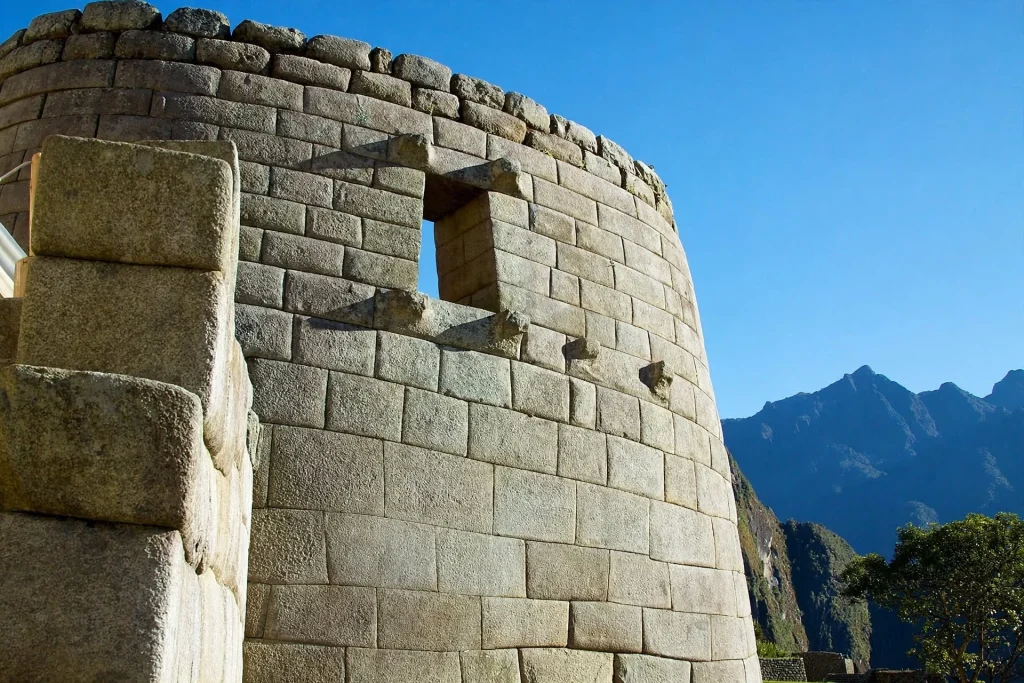
Three Types of Inca Masonry at Machu Picchu
Three styles of stonework appear at Machu Picchu. The three styles reflect different levels of labour and different functions.
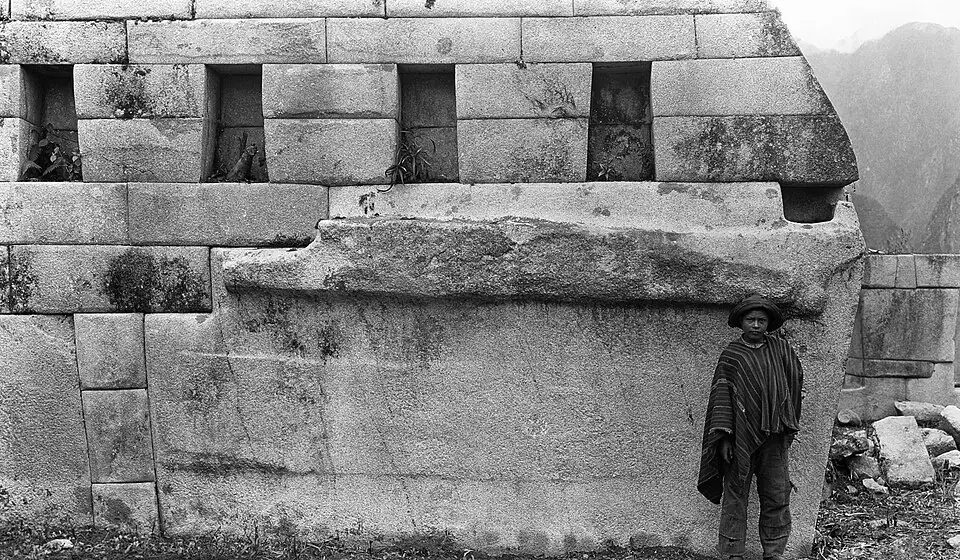
Polished ashlar uses smooth, rectangular blocks cut to fit exactly, with very fine joints. Polished ashlar appears in the most sacred buildings: the Temple of the Sun, the enclosure around the Intihuatana, and the principal temple walls.
Polygonal masonry uses large, irregular stones with many faces, locked together. The irregular shapes increase contact between stones and improve stability. Polygonal masonry is common in retaining walls and temple foundations where strength matters more than a smooth face.
Field stone uses roughly shaped stones with smaller stones filling the gaps. Field stone appears in agricultural terraces and less formal walls where appearance was secondary.
The tightest joints are found only in the highest status buildings. Many other walls have visible gaps or rougher joints. The variation is deliberate. Skill and time were invested where the building mattered most.
The central buildings use dry masonry. Blocks were shaped to fit without mortar. In less formal walls, clay or small stones were used to fill gaps, but the sacred buildings rely on fit and gravity alone.
Special Skills Used at Machu Picchu: Earthquake Engineering, Hydraulics, and Astronomy
Inca builders used four specialist skills at Machu Picchu, all documented in the archaeology and all replicable with known tools.
Earthquake engineering. Machu Picchu lies in a seismically active region. The walls survive because the walls were designed to move. Doorways, windows, and niches narrow toward the top. The sides slope inward, so each opening is wider at the base than at the lintel. Wall faces also lean slightly inward as the walls rise. Dry joints allow the blocks to shift during shaking, then settle back into place. A rigid mortared wall would crack under the same movement.
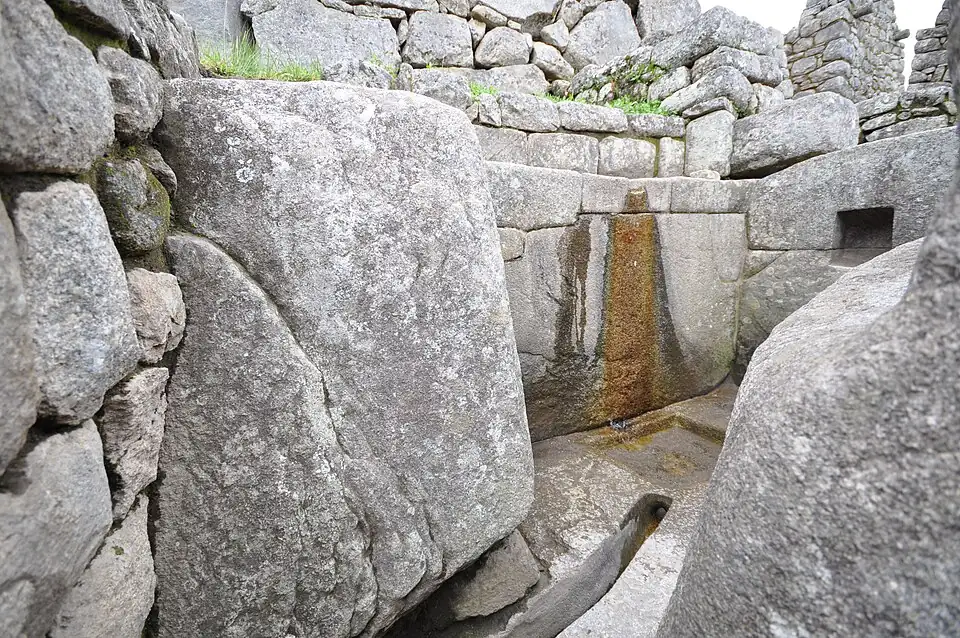
Hydraulics. Water for the city came from a spring outside the urban area. A canal about 749 metres long carried the spring flow to the centre of the site. The canal fed a sequence of 16 fountains that descend through the urban sector. The first fountains served the emperor residence and the sacred buildings on the highest ground. Later fountains served domestic use and agriculture. The system was sized to handle more water than the spring normally produced, which prevented overflow during heavy rain.
Drainage and terracing. Kenneth Wright documented 129 formal drainage outlets in the walls of the urban sector. Those outlets release water from behind walls and from roofs and courtyards, preventing pressure buildup and erosion. Wright estimated that about 60 percent of the construction effort at Machu Picchu went into work below ground level: foundations, land preparation, and drainage.
The agricultural terraces cover about 4.9 hectares. The terraces are held by stone retaining walls and built in layers. Large stones at the bottom provide drainage and support. Above the large stones lies gravel, then sandy material, then topsoil for cultivation. This sequence drains water, filters sediment, and keeps the slope stable. The terraces were still free of erosion and sedimentation when Bingham found the terraces after nearly 400 years without maintenance.
Astronomy. The Temple of the Sun, the Intihuatana, and the Intimachay cave were aligned to solstice sunrises. Those alignments linked the calendar to ceremony and agriculture. The alignments were achieved by observation and marking, not by instruments that required modern technology. The alignments are architectural facts. The exact ritual use of each alignment is interpretation, based on Inca cosmology and on the position of the building, not on a written Inca record for that building.
Areas of Machu Picchu and What Each Was Used For
Machu Picchu is divided by function. The agricultural sector lies on the southern and western slopes. The urban sector lies on the ridge itself. Within the urban sector, the sacred sector holds the principal temples. A main plaza separates the sacred sector from the residential and industrial areas.
The wider Historic Sanctuary that surrounds the citadel covers 32,592 hectares of peaks, slopes, and cloud forest.
The Temple of the Sun at Machu Picchu
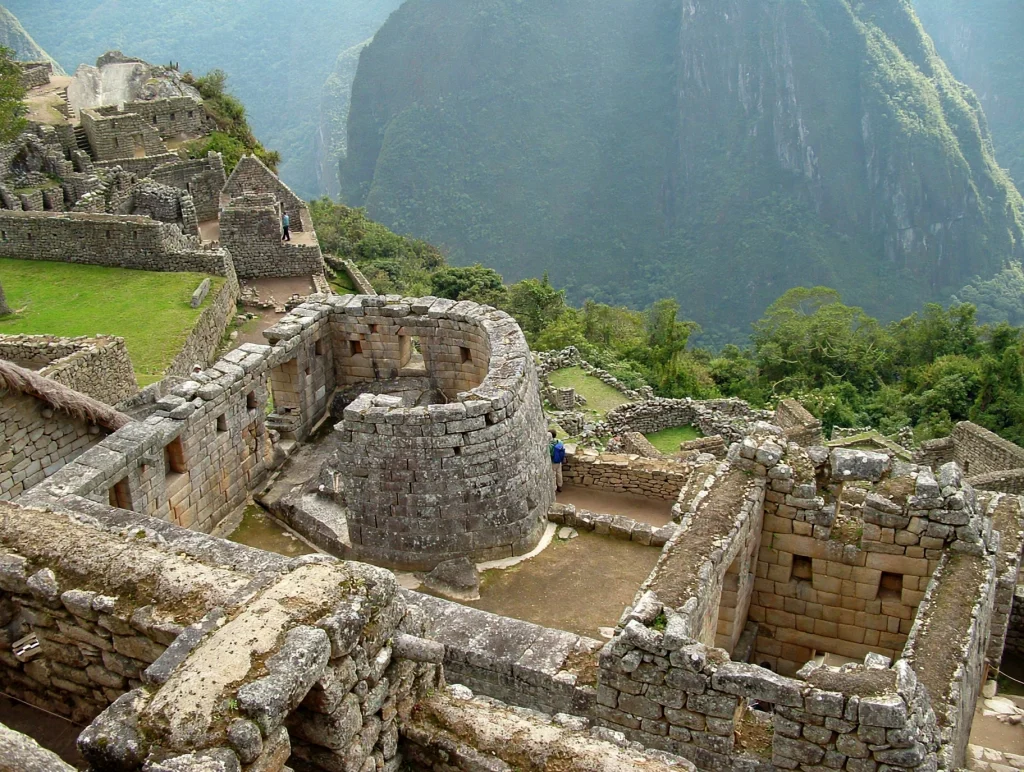
The Temple of the Sun, also called the Torreon, is the only circular building at Machu Picchu. Its lower level incorporates a natural rock cave. Its upper level is a semicircular tower with polished ashlar walls.
One of its windows is aligned with the June solstice sunrise. On that date, the first light enters through the east facing window and falls on a carved rock inside the tower. The alignment connects the building, the stone, and the sun at the winter solstice in the Southern Hemisphere.
The masonry in the Temple of the Sun is among the finest at the site. The joints are among the tightest, and the curved wall required blocks cut to follow the curve of the tower. The lower cave, with its niches and carved rock, is an integral part of the structure, not a separate chamber.
Below the Temple of the Sun lies the Royal Tomb, a carved cave with niches. It is believed to have been used for royal mummies or for high status burials. Its position directly below the temple links it to the sacred function of the building above. The identification as a royal tomb is an interpretation based on position and form, not on a surviving Inca label.
The Sacred Plaza at Machu Picchu: Temple of the Three Windows and Main Temple
The Sacred Plaza holds two of the most important ceremonial structures.
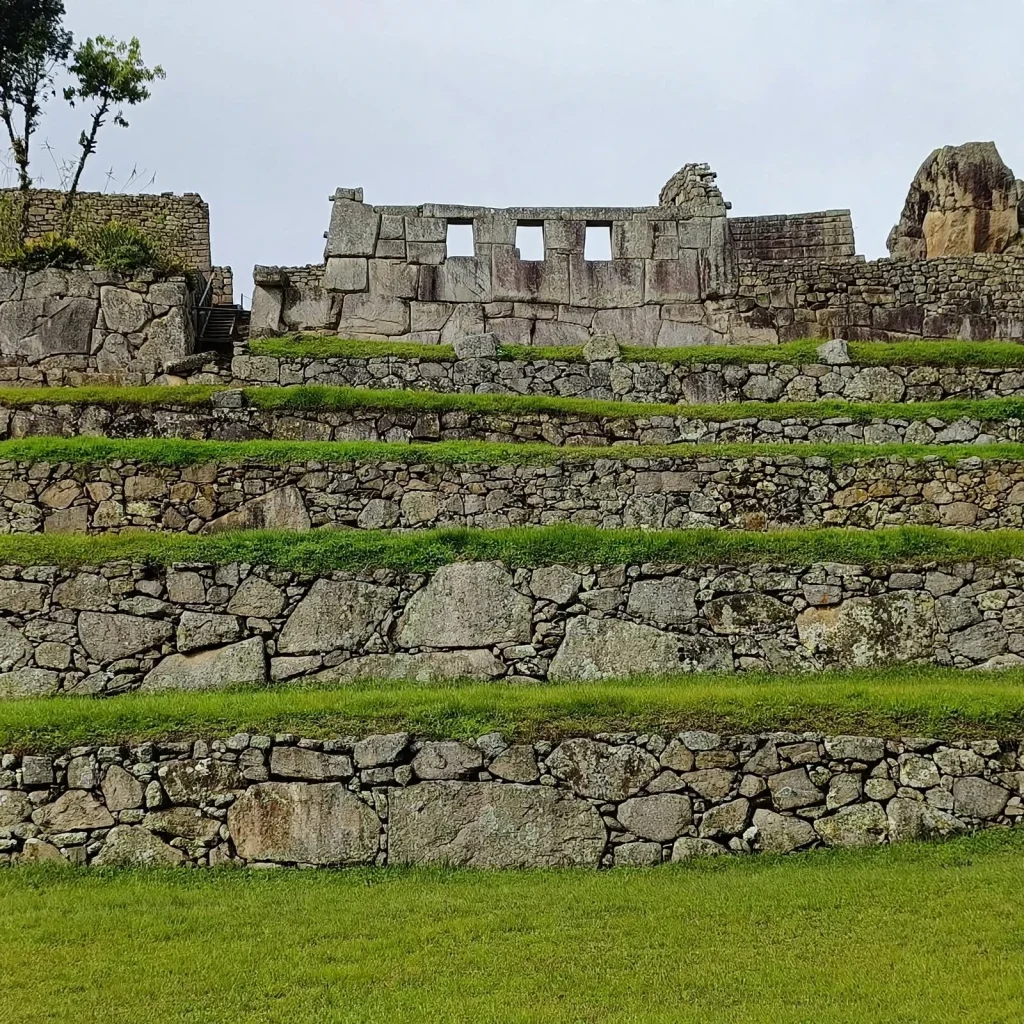
The Temple of the Three Windows has three large trapezoidal windows overlooking the plaza. In Inca cosmology, the three windows correspond to the three realms: Hanan Pacha, the upper world of the sun, moon, and stars, Kay Pacha, the earthly world of humans and nature, and Uku Pacha, the inner world associated with ancestors and the dead. The correspondence is a cosmological interpretation, widely used in the literature, not a text inscribed on the building.
The Main Temple, also called the Templo Principal, is a long open structure with three walls built from large polished blocks. A small crack at the base, caused by seismic movement, remains visible. It shows that even the finest walls moved during earthquakes, but the finest walls did not collapse.
The plaza itself is a flat, open space. It served as a gathering place and as a frame for the temples. From the plaza, the Intihuatana is visible on the hill above, and Huayna Picchu rises behind it.
Intihuatana the Carved Solar Marker
The Intihuatana is a carved granite outcrop in the upper urban sector. It consists of a platform with a central pillar and four faces, carved from living rock rather than assembled from separate blocks.
The platform is oriented on an axis of 65 to 245 degrees. The central stone is aligned with the sun position at the winter solstice in June. At that time, the sun rises and sets along the axis of the platform. The name Intihuatana is commonly translated as hitching post of the sun. It served as a solar marker and ritual stone within the sacred sector, linking the calendar to ceremony and agriculture.
In September 2000, a crane used during filming of a beer commercial fell onto the stone and chipped a small piece from it. The damage is documented in UNESCO 2000 State of Conservation report. The Intihuatana is now protected and viewed from a designated platform.
The Temple of the Condor at Machu Picchu
The Temple of the Condor is carved directly into the bedrock in the lower urban sector. It uses natural rock to form the image of a condor with outstretched wings. At the centre is a flat carved stone in the shape of a condor head and neck ruff, with a small pool beneath the beak that collects rainwater. Two vertical blocks behind it form the wings.
The structure shows a different use of stone from the ashlar temples. Here the masons did not assemble blocks. The masons shaped the living rock in place, using the natural form of the mountain as part of the image. The condor was one of the principal sacred birds in Andean cosmology, associated with the upper world.
The Sacred Rock and Funerary Rock at Machu Picchu
The Sacred Rock is a large granite monolith, about 7 metres wide and 3 metres high, set on a carved platform at the northern end of the city near the entrance to Huayna Picchu. Its outline follows the profile of the mountains behind it. Researchers have associated its shape with Pumasillo, Putukusi, and with a feline profile. The exact intended mountain is not settled in the literature. The shaped form and the platform are observed facts. The specific mountain identification is interpretation.
The Funerary Rock is a carved rock with a small chamber beneath it near the upper terraces. Its form and location associate it with mortuary preparation. It lies near the entrance to the city, close to the terraces and the main trail, a position consistent with ritual use before burial in the caves around the site. The mortuary function is an interpretation based on form and position, not on a surviving Inca text.
The Royal Residence at Machu Picchu
The Royal Residence, also called the Royal Sector, lies south of the Temple of the Sun. It contains the emperor house, a private courtyard, and the first fountains of the water system. Its walls use polished ashlar, and its rooms are larger and better finished than ordinary residences. This was the private living area of the emperor when he was in residence. The attribution rests on position, finish, and proximity to the Temple of the Sun and to the first fountains.
Workshops, Storage, and Residential Areas at Machu Picchu
The Industrial Sector, also called the Mortar District, lies south of the Sacred Plaza. It contains workshops, storage rooms, and areas for grinding and food preparation. Its walls use field stone and polygonal masonry, not the polished ashlar of the temples. The difference in stonework reflects the difference in function.
The Prison Group contains small, enclosed rooms with niches and trapezoidal doorways. Its name is a later interpretation. Its function remains debated, but its stonework and layout suggest storage and controlled access rather than a prison in the modern sense.
Ordinary residences in the urban sector are smaller, with field stone and polygonal walls. Those residences housed the permanent staff who maintained the estate: priests, administrators, craftspeople, and agricultural workers.
The Temple of the Moon on Huayna Picchu and the Intimachay Cave
The Temple of the Moon lies on Huayna Picchu, not in the main citadel. It is a cave structure with niches and carved rock, reached by a steep trail. It is not included in the standard circuits of the main citadel. It shows the same principle as the Temple of the Condor: carving the living rock, not assembling blocks.
Intimachay is a cave with a window aligned to the December solstice sunrise. On that date, light enters the cave and falls on the back wall. It complements the June solstice alignment of the Temple of the Sun and the Intihuatana, giving Machu Picchu markers for both solstices.
How Many People Lived at Machu Picchu at Peak
The fountains supplied an estimated permanent population of about 300 people, rising to about 1,000 when the emperor was in residence. Those figures come from the hydraulic study by Wright, based on water supply and on the size of the residential areas. Those figures are estimates, not a census.
The permanent population was not a large city population. Machu Picchu was not a city in the sense of Cusco. Machu Picchu was a royal estate with a small permanent staff. At peak, when the emperor and his retinue arrived, the population tripled for a short period.
Tombs, Burials, and What Excavations Found at Machu Picchu
Machu Picchu has no large pyramids or Egyptian style tombs. Its burials are in caves and in small stone cists around the site.
The Royal Tomb. Directly below the Temple of the Sun, a carved cave with niches is known as the Royal Tomb. It is believed to have held royal mummies or high status burials. Its position below the temple links burial to sacred space.
Cave cemeteries. Around the citadel, four cemeteries in caves held burials. The 26 individuals used for radiocarbon dating came from those cemeteries. The bones and teeth provided the new occupation dates.
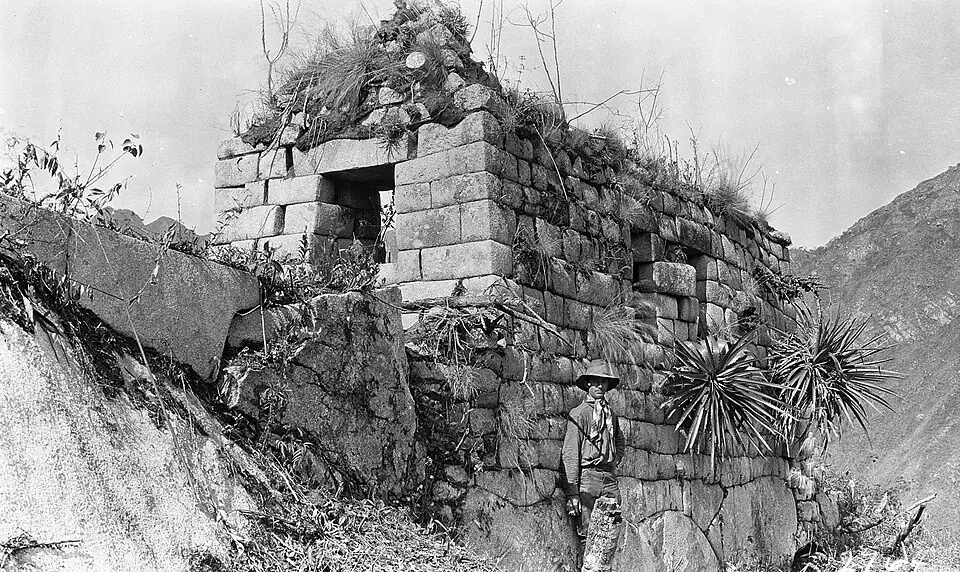
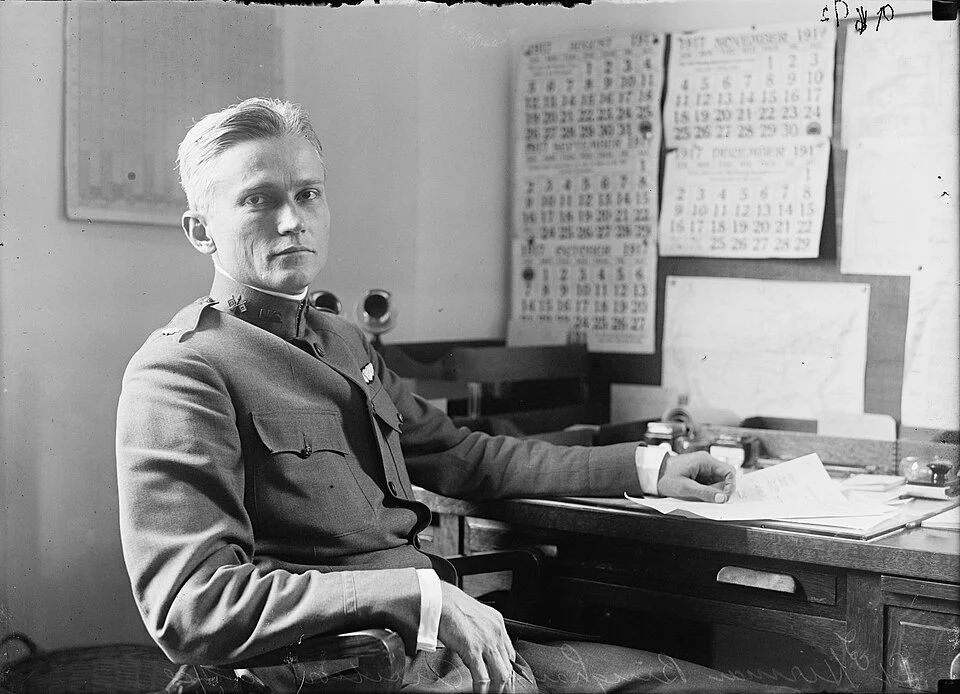
What Bingham found. In 1911, Hiram Bingham, with local guides, reached Machu Picchu and began clearing and documenting it. The expedition found pottery, bronze tools, stone tools, grinding stones, and human remains. The human remains were studied by George Eaton, who identified men, women, and children. Later research corrected some of the early conclusions of Eaton, but the basic finding remains: the burials were Inca, not foreign.
What the burials show. The burials contain Inca pottery styles, Inca metalwork, and Inca textiles. The burials show a population that lived, worked, and died at Machu Picchu, not a population that arrived from elsewhere to build a single monument and left.
The Funerary Rock. Near the upper terraces, the Funerary Rock with its small chamber beneath it is associated with mortuary preparation. It lies near the entrance to the city, close to the terraces and the main trail, a position consistent with ritual use before burial in the caves around the site.
Other finds. Excavations have found agricultural tools, storage jars, cooking vessels, and remains of maize, potatoes, and other Andean crops. Excavations have also found evidence of the water system, drainage, and terrace construction in place, confirming that the site was built as a living estate, not as an empty ceremonial shell.
Inca Cosmology at Machu Picchu: Hanan Pacha, Kay Pacha, and Uku Pacha
Inca architecture did not separate building from belief. The three realms below provide the framework for reading the temples.
Hanan Pacha is the upper world of the sun, moon, and stars. Kay Pacha is the earthly world of humans and nature. Uku Pacha is the inner world associated with ancestors and the dead.
These realms are embodied in the Temple of the Three Windows and in the vertical organisation of the city, from the terraces below to the Intihuatana above. The condor, puma, and serpent, often cited as symbols of the three realms, appear in carving and in the layout of the city, but specific meanings varied by place and context. The three realm framework is a cosmological model from Andean studies. The application of that model to a specific window or carving is interpretation, not a measurement.
History of Machu Picchu: From Construction to Rediscovery
Local farmers knew the site throughout the colonial and republican periods. In 1911, the work of Bingham brought the site to international attention, but it was not a discovery in the sense of a place unknown to local people. The site had never been lost to the people who lived below it.
Since 1983, the Historic Sanctuary has been a UNESCO World Heritage Site. Since June 2024, visits have been organised into three circuits containing ten routes. Circuit 1 is Panoramic. It covers the upper terraces and the classic photo viewpoint without entering the urban core. Circuit 2 is Classic. It combines the photo viewpoint with the full urban core of the citadel. Circuit 3 is Royalty. It covers the lower agricultural sector and mountain routes, depending on the specific route.
For stonework, Circuit 2 provides the most complete view, because it includes the quarry area, the Temple of the Sun, the Temple of the Three Windows, the Main Temple, the Intihuatana, and the Sacred Rock.
How to Identify Inca Masonry at Machu Picchu
Polished ashlar is identified by smooth faces, rectangular shape, and minimal joints. Polygonal masonry is identified by irregular shapes, many faces, and tight interlocking. Field stone is identified by rough shaping, visible gaps, and smaller filler stones.
Trapezoidal openings are identified by sides that slope inward from bottom to top. Battered walls are identified by faces that lean inward as the faces rise.
Unfinished blocks in the quarry are identified by rough surfaces, tool marks, and incomplete shaping. Those blocks show the intermediate stages of the process.
In the Sacred Plaza, the difference is visible in a single view. The Temple of the Three Windows uses polished ashlar. The retaining walls below it use polygonal masonry. The terraces beyond use field stone. The three styles are not a progression from primitive to advanced. The three styles are a deliberate allocation of labour, from the most sacred to the most practical.
Did Aliens Build Machu Picchu?
This question is kept separate from the main history above because it is not part of the archaeological record. It is a modern question about the record.
The answer is no.
There is no archaeological evidence for not human construction at Machu Picchu. There is extensive evidence for human construction: a quarry inside the citadel, tool marks on unfinished blocks, hammerstones and bronze tools, experimental replication of the cutting methods, local granite that matches the bedrock, and burials, pottery, and metal objects left by the people who lived there.
The reason it was possible is simple: local stone already fractured into blocks, a large organised labour force, a toolkit of stone hammers and bronze chisels, sand as an abrasive, and a method of repeated fitting and grinding.
If a not human technology had built the site, there would be no reason for that technology to also leave Inca pottery, Inca burials, Inca food remains, and Inca workshops.
Frequently Asked Questions
How did the Incas cut granite at Machu Picchu without iron?
Inca masons pounded granite with harder stone hammerstones, refined the shape with smaller hammerstones, used bronze chisels for detail, and ground surfaces with sand and water as abrasives. The hammerstones were rounded river cobbles selected for toughness. Documented materials include dolerite, quartzite, olivine basalt, and hematite at Machu Picchu, with diorite and quartzite examples documented at Kachiqhata.
Why is there no mortar in the sacred buildings at Machu Picchu?
Inca builders used dry fitted ashlar masonry. Each stone was cut to fit its neighbours exactly. Dry joints allow slight movement during earthquakes without cracking.r.
What was the Intihuatana at Machu Picchu used for?
It was a carved granite rock that served as a solar marker and ritual stone. Its name is commonly translated as hitching post of the sun.
What was the Temple of the Sun at Machu Picchu used for?
It was a ceremonial temple with a lower cave and an upper tower. On the June solstice, morning light enters through a window and reaches a carved stone inside.
How many people lived at Machu Picchu at peak?
About 300 permanent residents, rising to about 1,000 when the emperor and his people were in residence. Those figures are estimates from water supply and residential area, not a census.
What did excavations find at Machu Picchu?
Houses, workshops, storage rooms, terraces, canals, fountains, pottery, bronze tools, grinding stones, and burials in caves around the site, including the Royal Tomb below the Temple of the Sun.