11 Fruits from Peru You Must Try whilst in Cusco
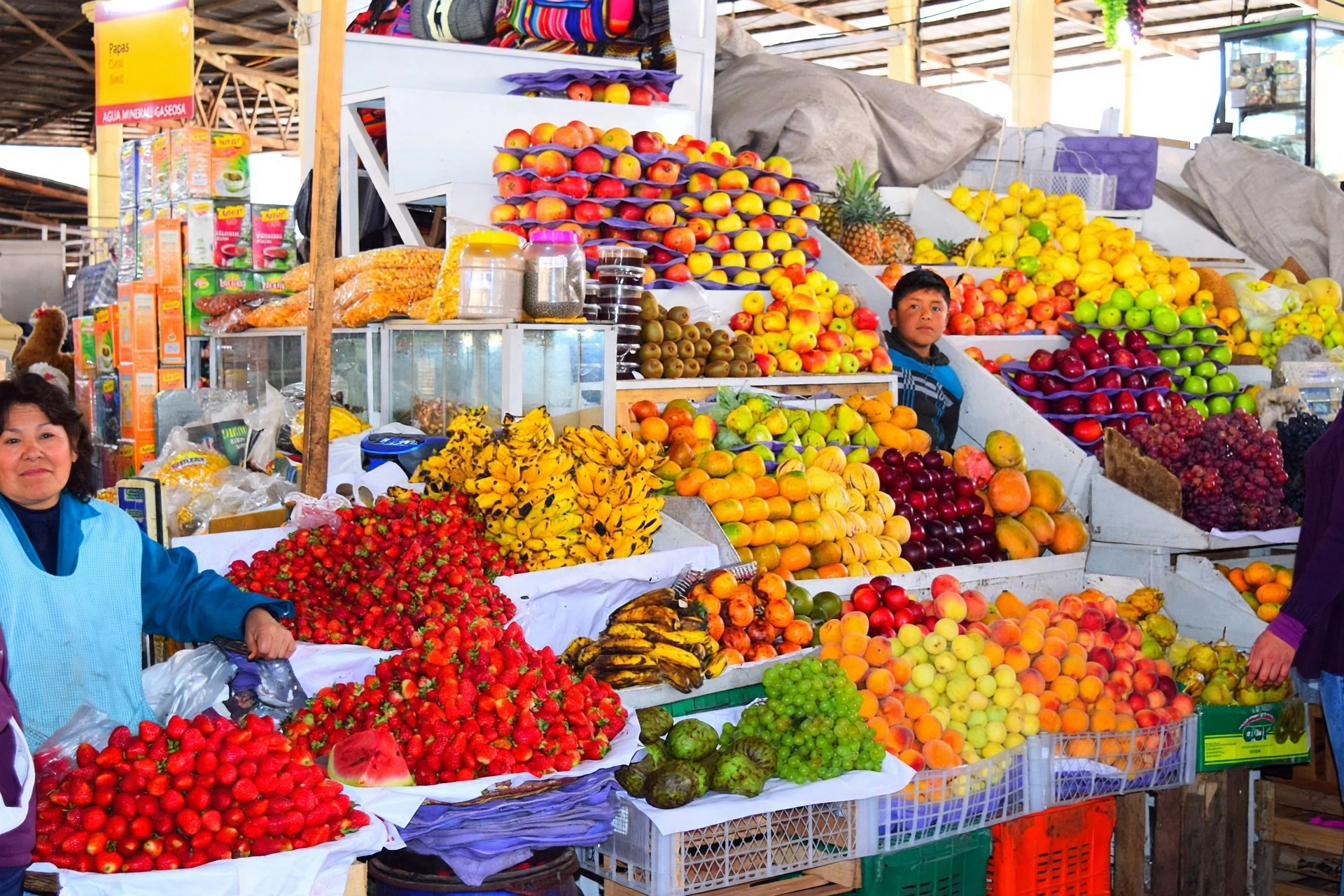
Most of these fruits you cannot find in a supermarket in London, New York, or Berlin. Some you will never see outside Peru. All of them you can taste for a few soles at the San Pedro Market in Cusco.
Peru has more than 500 native fruits, thanks to its coast, Andes, and Amazon. In Cusco, the high altitude markets bring all three regions together in one place. If you only try one new thing on your trip, make it fruit.
The 3 fruits to try first in Cusco are lucuma, yellow pitahaya, and tuna cactus fruit. You will find all three inside and outside San Pedro Market for 1 to 5 soles. Read on for the full list of 11.
The 11 Fruits at a Glance
1. Lucuma: Caramel, maple, sweet potato. Like ice cream in fruit form. Writers favorite
2. Chirimoya: Custard apple. Creamy, sweet, and incredibly healthy. Writers favorite
3. Granadilla: Sweet passion fruit. Crack it and scoop it.
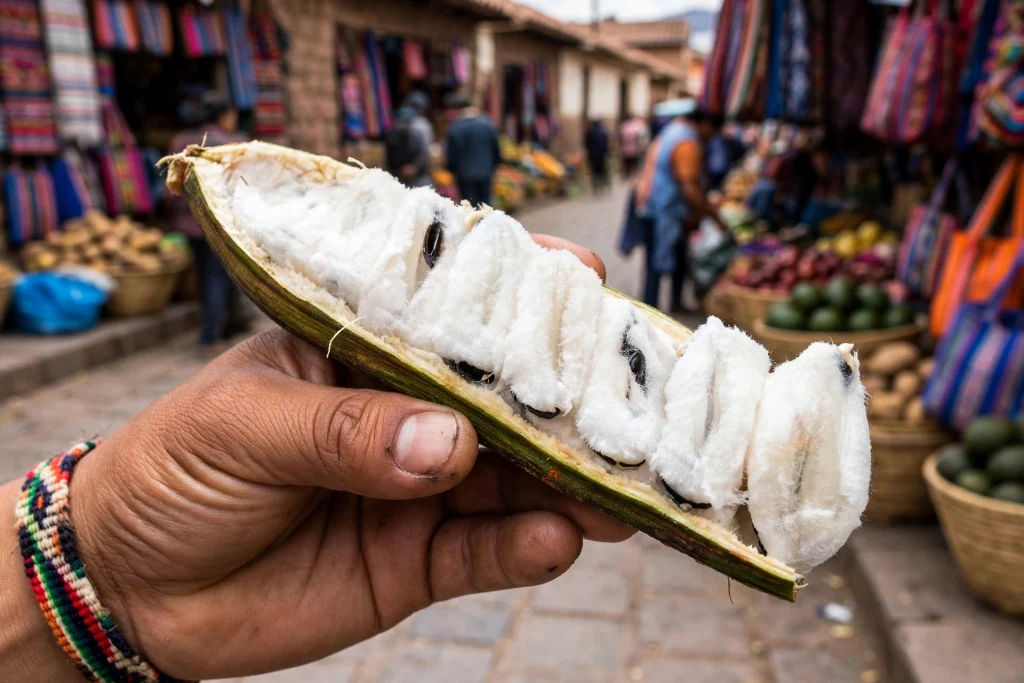
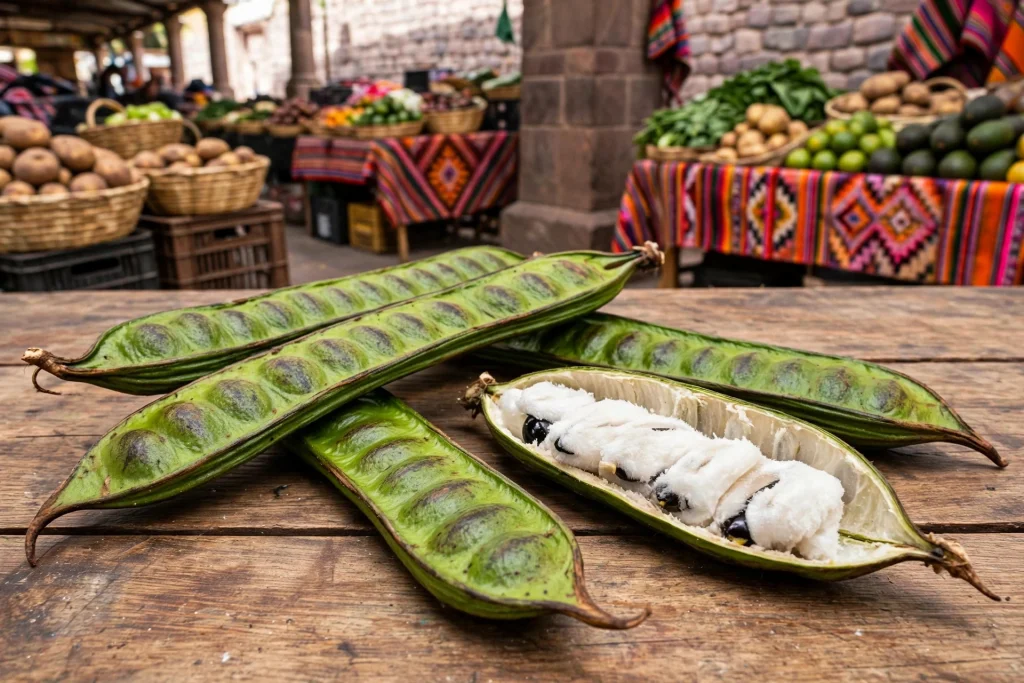
4. Pacay: Ice cream bean. A long pod with soft, sweet cotton.
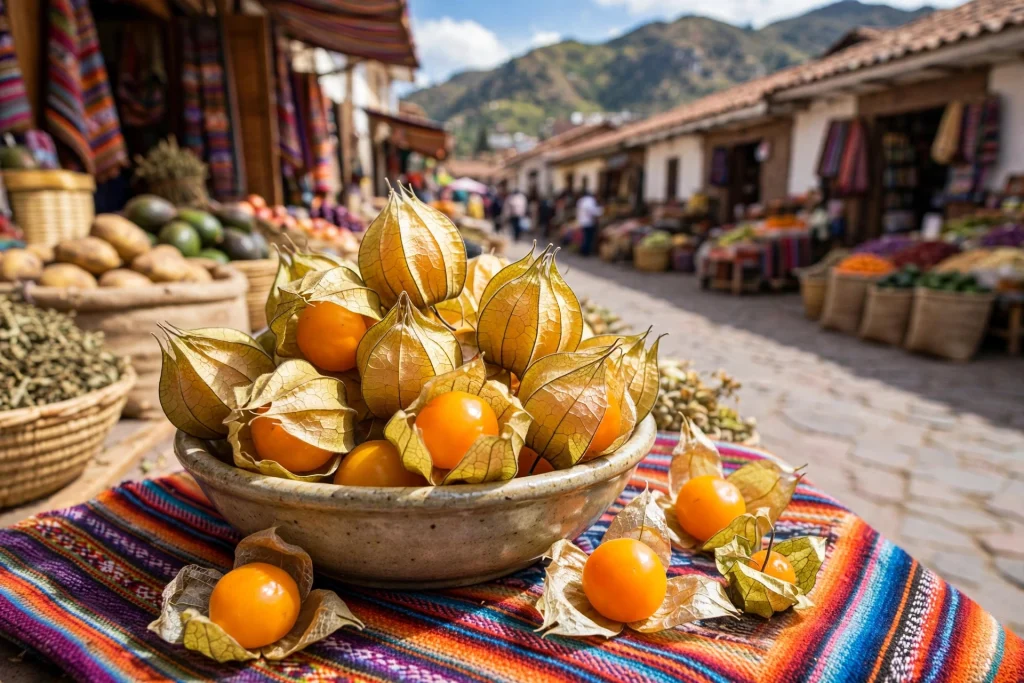
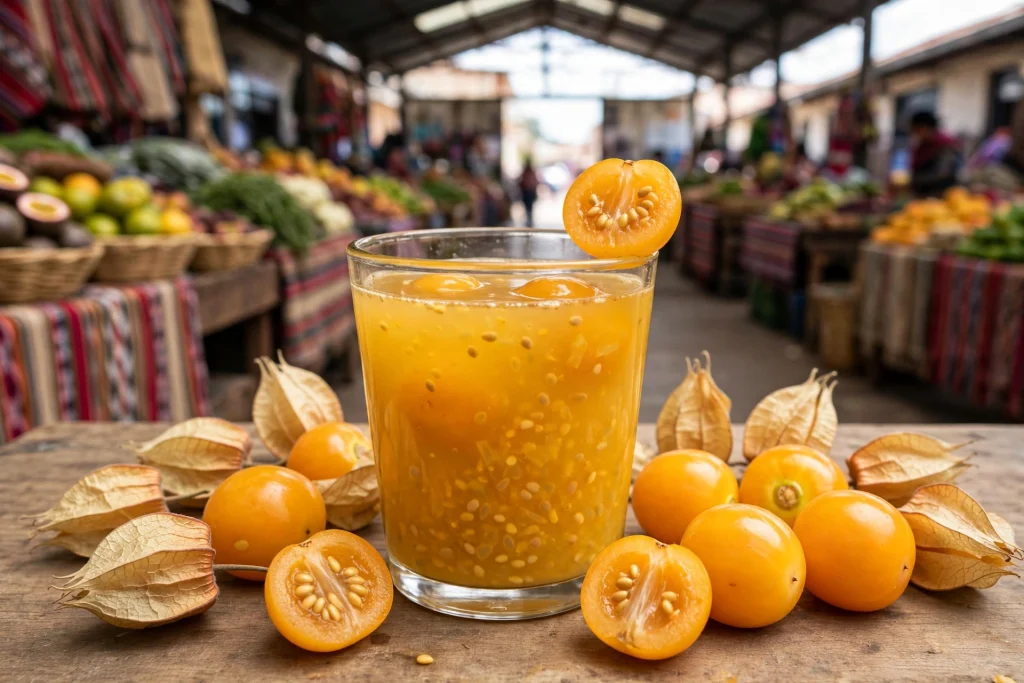
5. Aguaymanto: Goldenberry. Tangy, golden, and packed with vitamin C.
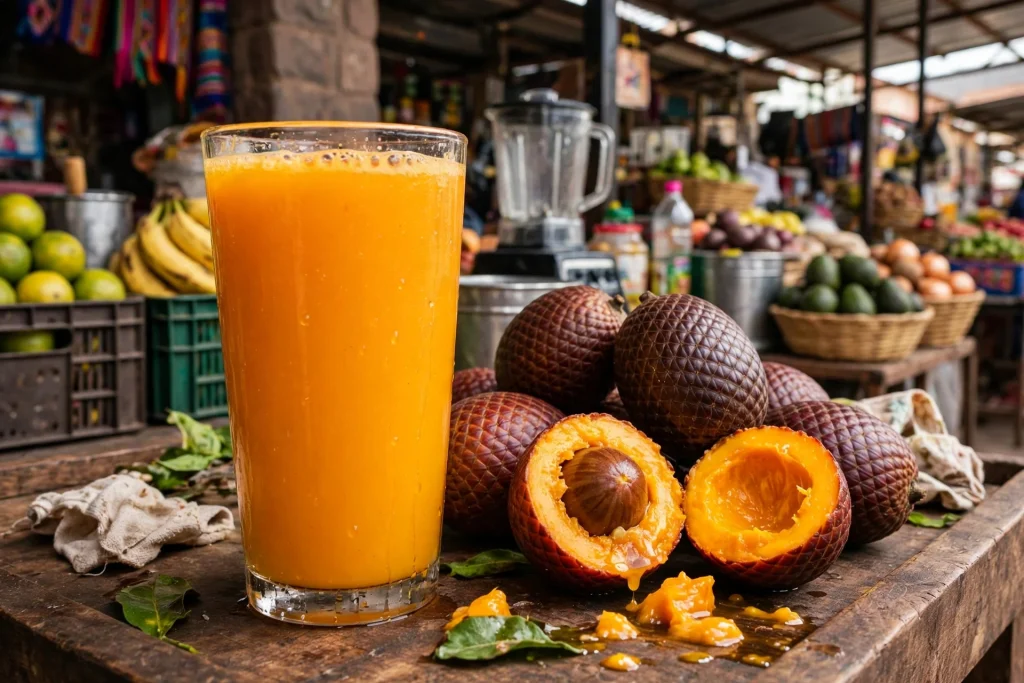
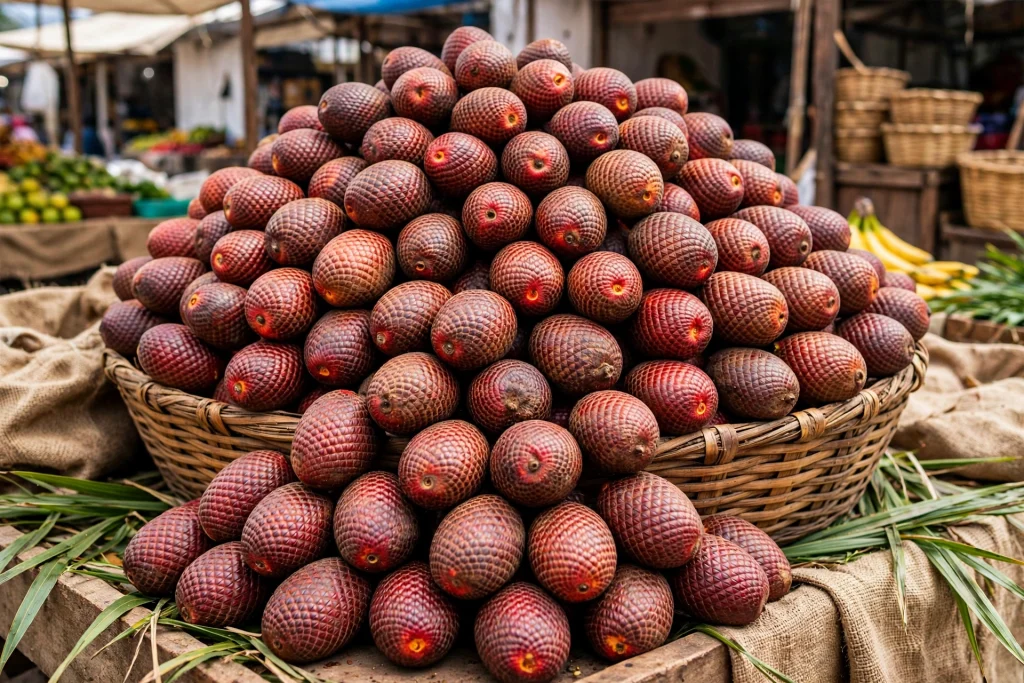
6. Aguaje: Amazon palm fruit. Rich, oily, and bright orange.
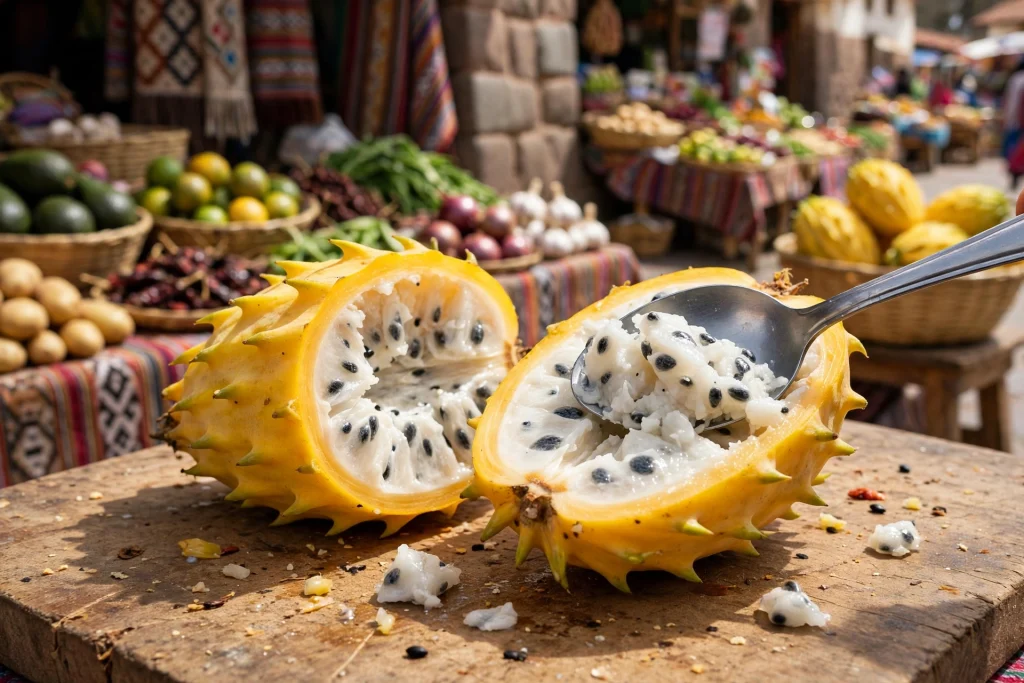
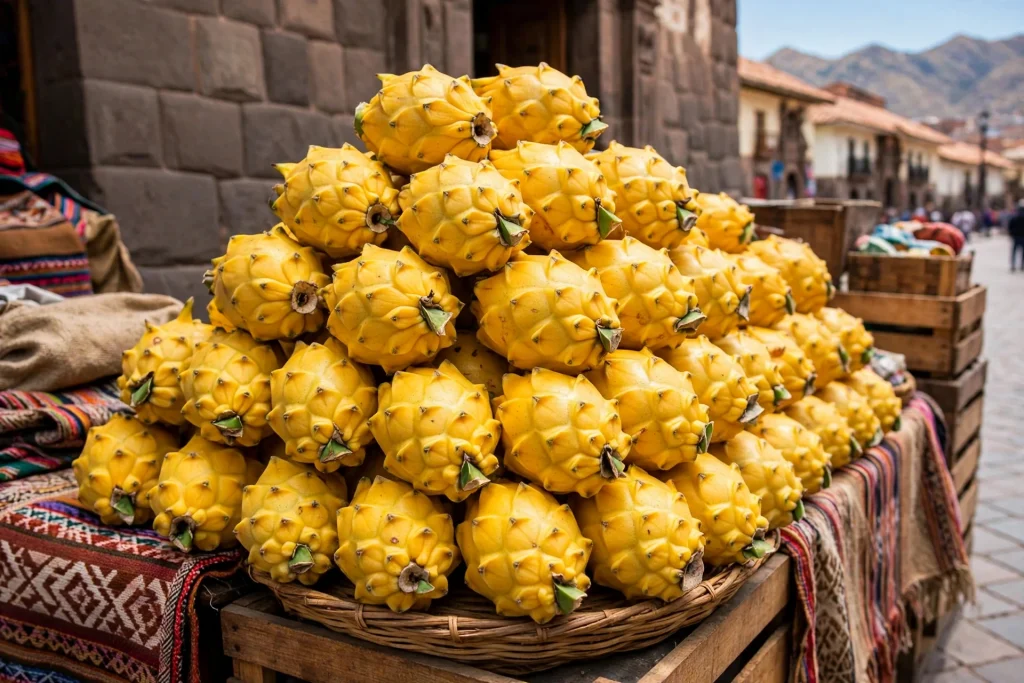
7. Yellow Pitahaya: Yellow dragon fruit. Sweeter and tastier than the pink one.
8. Tuna: Cactus fruit. Not the fish. Sweet, juicy, and only 1 to 2 soles. Writers favorite
9. Tumbo: Banana passion fruit. Tart, fragrant, and perfect in juice.
10. Maracuya: Passion fruit. Sour, tropical, and essential in Peruvian juice. Very good as icecream
11. Sauco: Andean elderberry. Eat it straight from the tree in Urubamba.
Bonus: Peruvian mango. You know mango, but have tasted a Kent mango from Piura in season? Delicious!
The Top 3 to Try First at San Pedro Market
If you are short on time, start with these three. They are the most Peruvian, the most surprising, and the easiest to find.
1. Lucuma
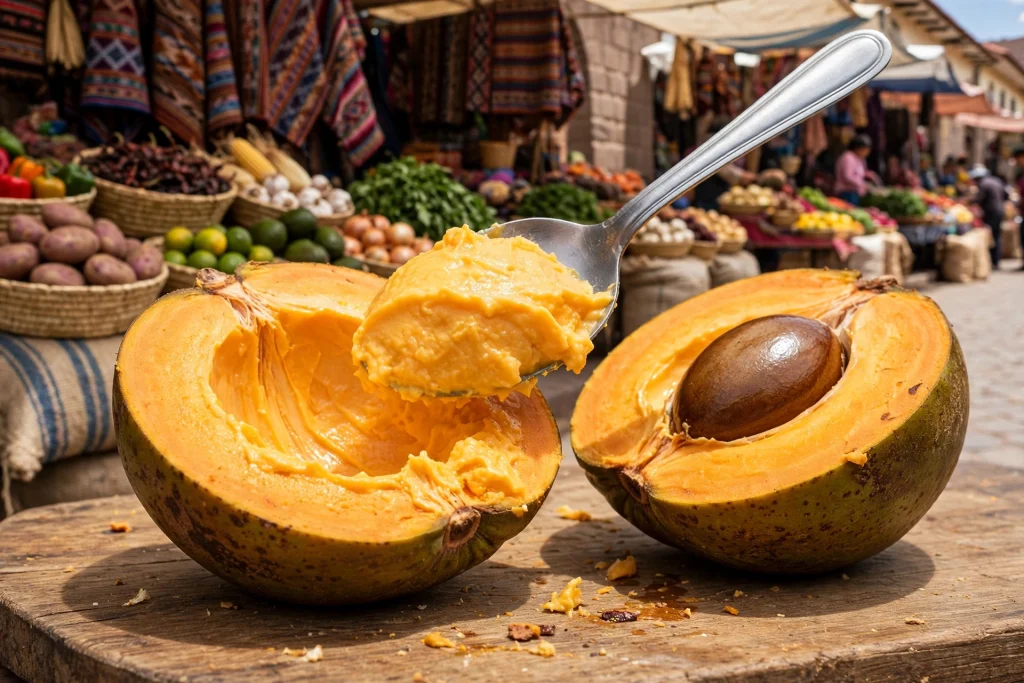
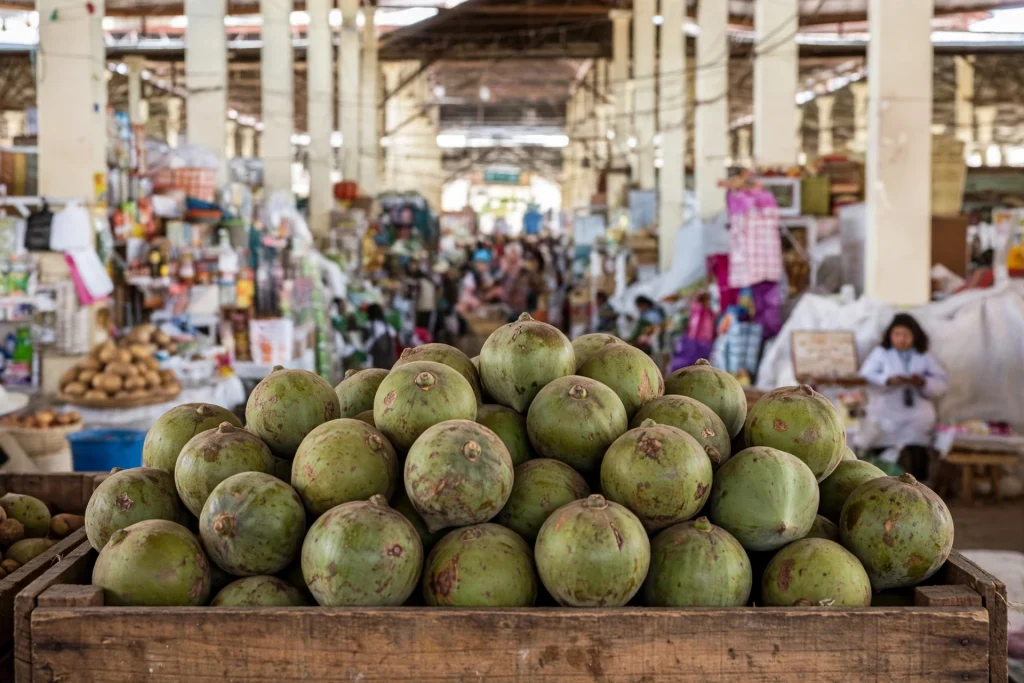
Lucuma is Peru in a fruit. The outside is dull green and unremarkable. Inside, the flesh is deep yellow, dry, and dense. The taste is pure caramel mixed with maple and roasted sweet potato. Peruvians do not just eat it fresh. They blend it into ice cream, milkshakes, cakes, and even cheesecake. If you try lucuma ice cream once, you will understand why Peruvians are obsessed with it. You will not find fresh lucuma in most UK or US supermarkets. At San Pedro, look for whole fruits or ask for a lucuma milkshake at the juice stalls.
2. Yellow Pitahaya
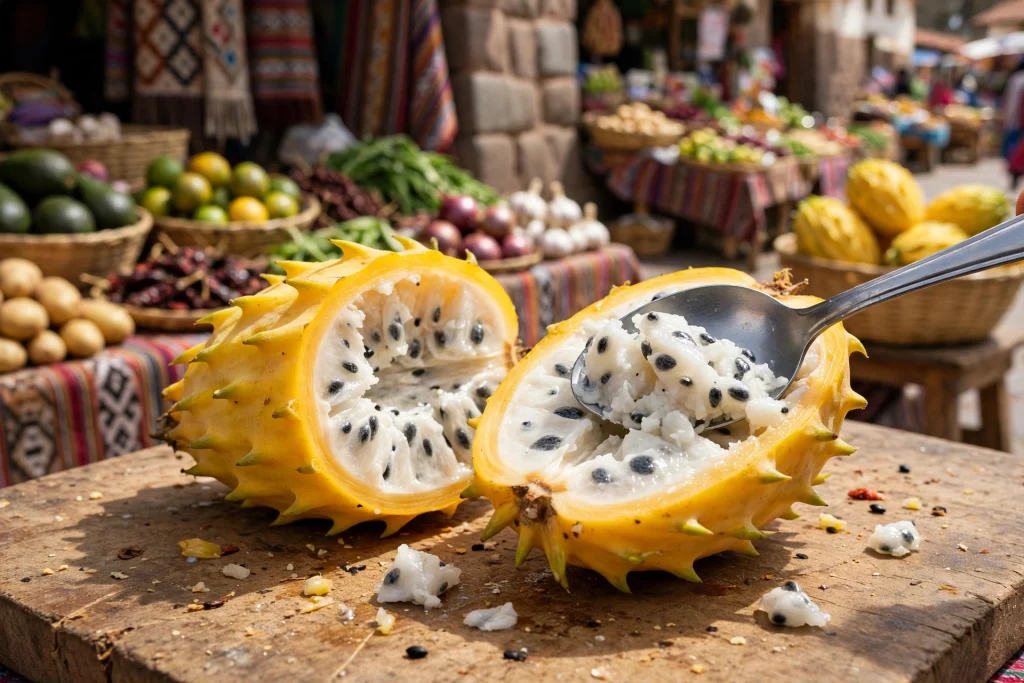
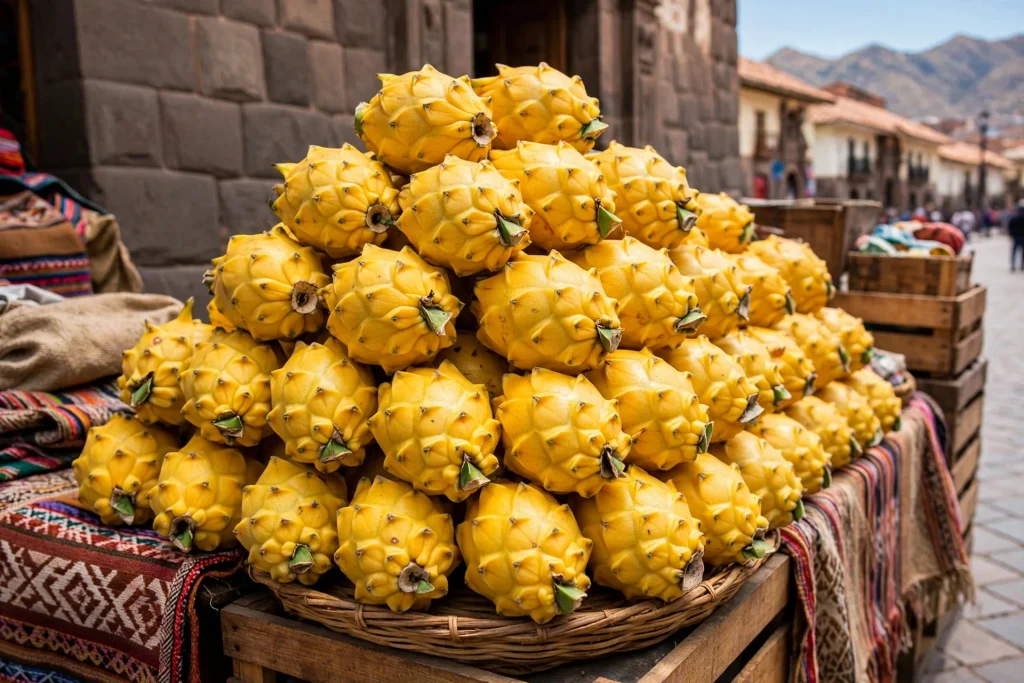
You may have tried pink dragon fruit at home and thought it was pretty but bland. Yellow pitahaya is completely different. The outside is bright yellow with small spikes. Inside, the flesh is white with tiny black seeds, but it is far sweeter, juicier, and more fragrant than the pink version. It is also a natural digestive aid, so eat it in the morning and go easy on your first one. Buy it whole at the market, cut it in half, and scoop it with a spoon.
3. Tuna, the Cactus Fruit
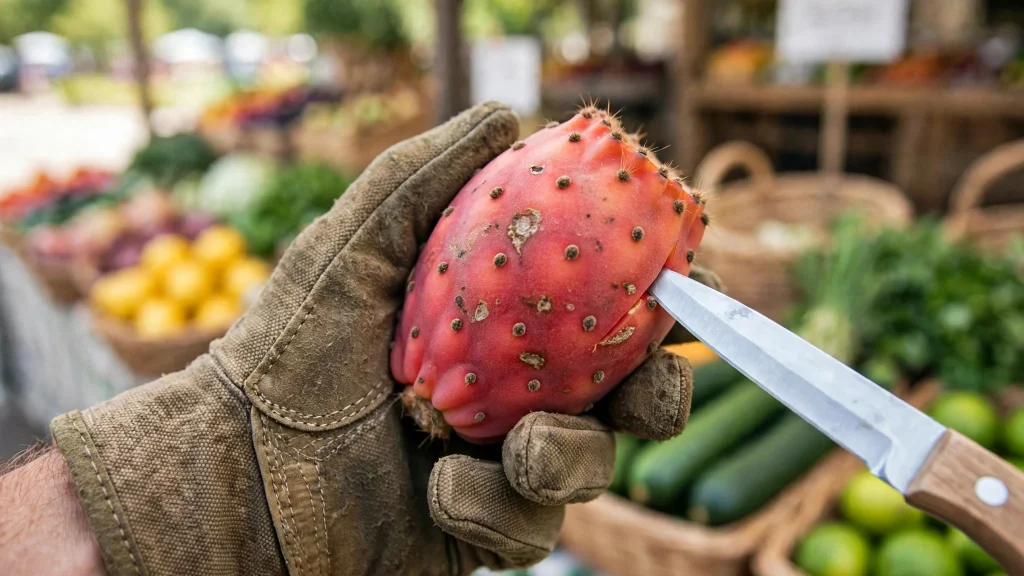
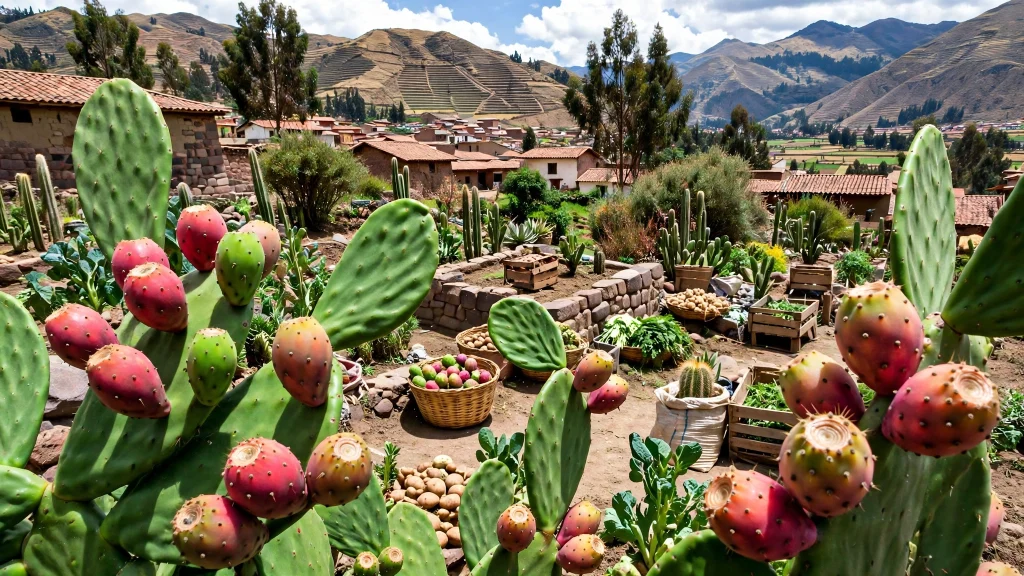
Tuna is pronounced too-na, and it is not fish. It is the fruit of the prickly pear cactus that grows all over the Sacred Valley. The skin is green, yellow, or red, and the flesh is sweet, juicy, and full of tiny seeds. It is very tasty and very healthy, rich in fiber, vitamin C, and antioxidants.
Do not pick it directly from the cactus unless you want to spend an hour pulling tiny hair like thorns from your hand. The market sellers have already cleaned them. At San Pedro, you can buy a cleaned tuna for 1 to 2 soles. It is the best value fruit in Cusco.
The Full List: 11 Fruits from Peru You Must Try
1. Lucuma
- What it tastes like: Caramel, maple, and sweet potato.
- How to eat it: Fresh if it is soft, or blended in ice cream and milkshakes.
- Where to find it: Whole fruit at San Pedro Market, or lucuma ice cream in any Cusco ice cream shop.
- Can you find it at home: Almost never fresh. Sometimes as frozen pulp or powder in health food shops in the US and Europe.
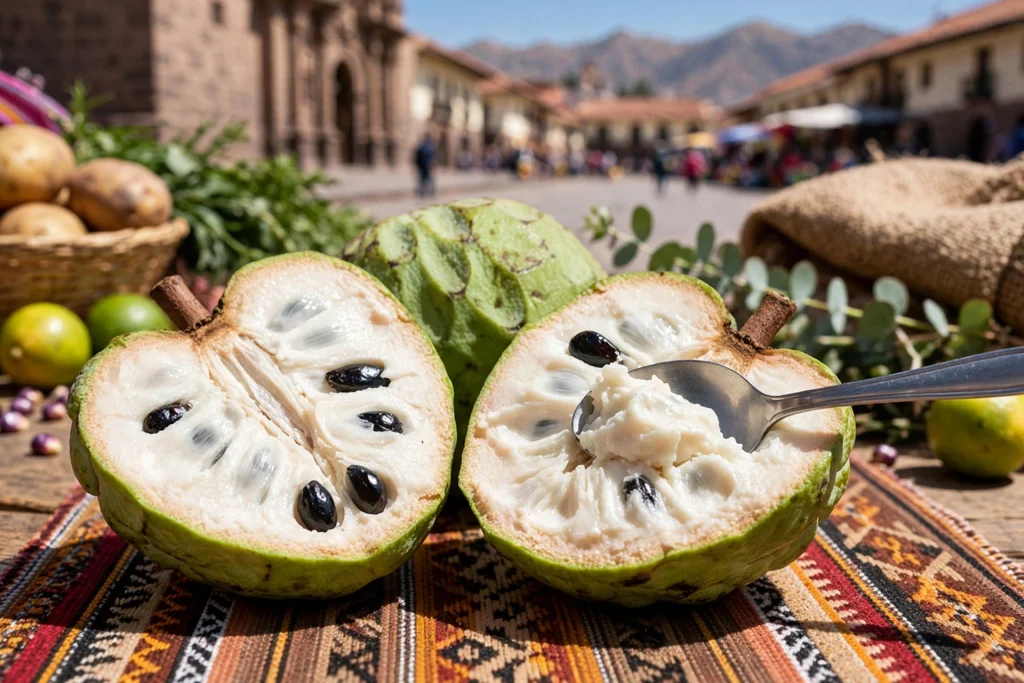
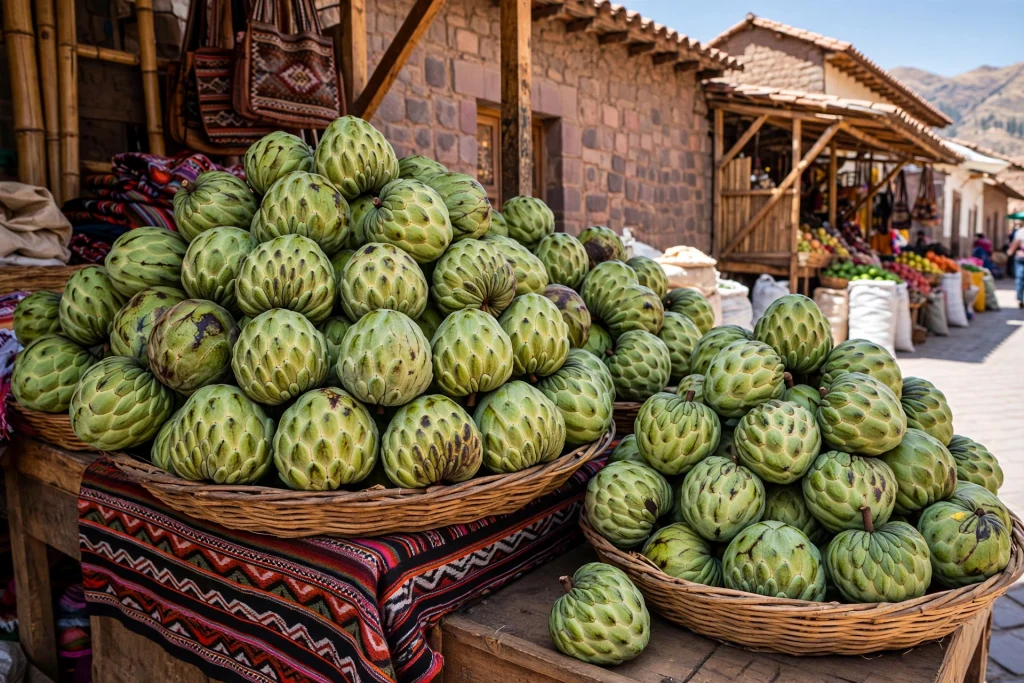
2. Chirimoya, Custard Apple
- What it tastes like: A mix of banana, pineapple, pear, and vanilla custard.
- How to eat it: Cut in half and scoop the creamy white flesh with a spoon. Do not eat the black seeds.
- Why you must try it: Mark Twain called it the most delicious fruit known to man. It is creamy without cream, sweet without sugar, and full of vitamin C, fiber, and potassium.
- Where to find it: San Pedro Market, sold whole by weight. Choose one that gives slightly when you press it.
3. Granadilla
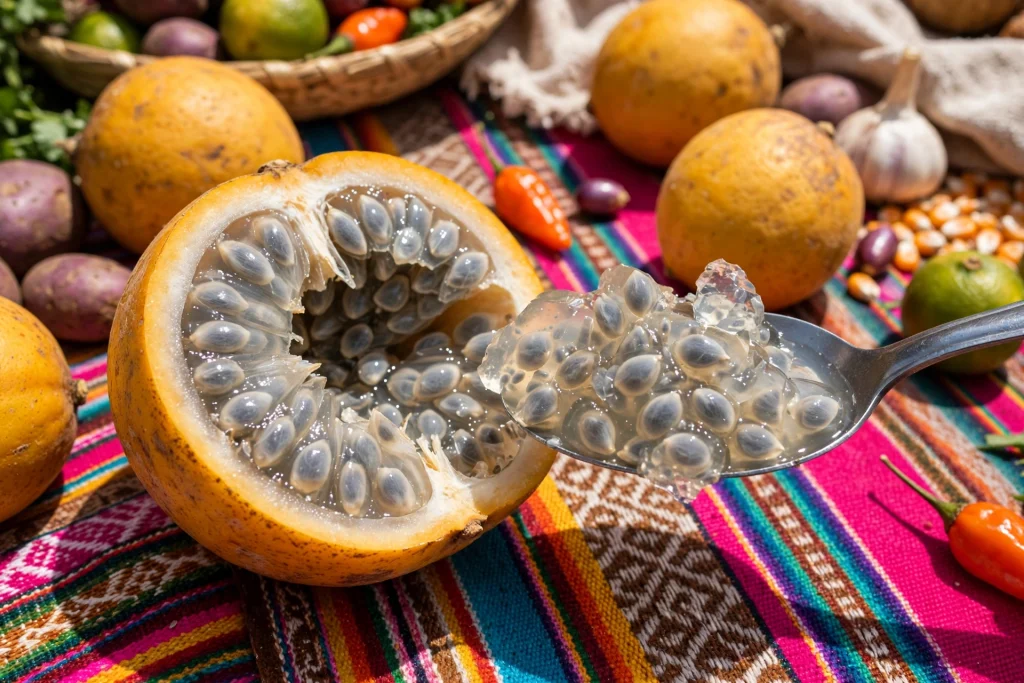
- What it tastes like: Sweet, floral, and gentle. Much sweeter than normal passion fruit.
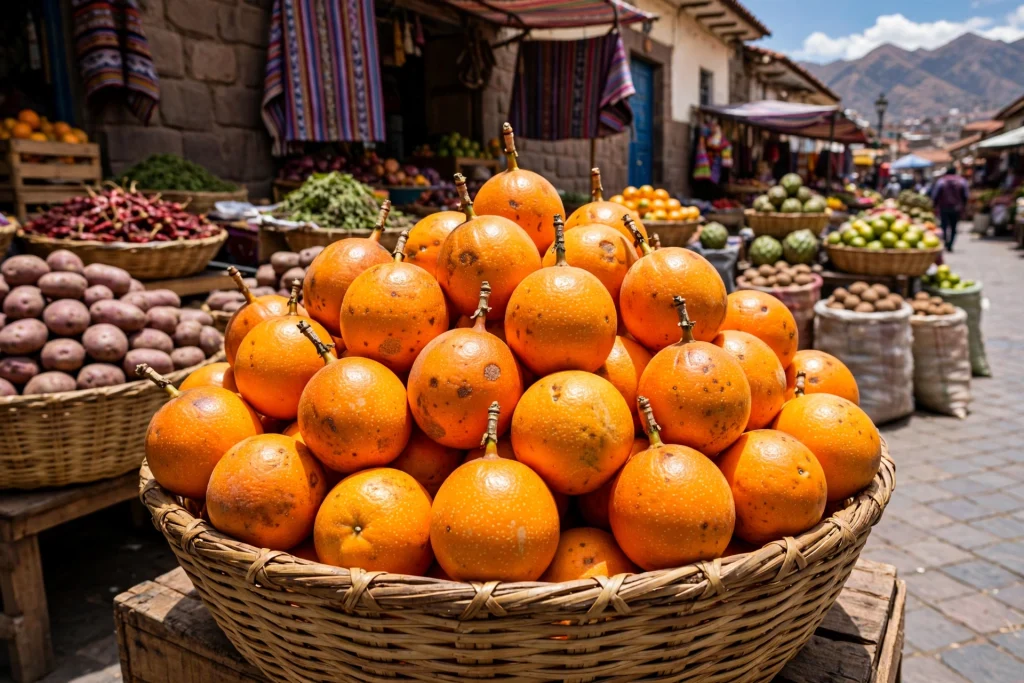
- How to eat it: Crack the hard orange shell, then scoop out the grey seeds covered in clear, sweet jelly. Eat seeds and all.
- Why you must try it: It is fun, it is not messy like other passion fruits, and children love it. It is also calming and great for digestion.
- Where to find it: Every fruit stall at San Pedro. Buy 3 for a few soles.
4. Pacay, Ice Cream Bean
- What it tastes like: Sweet vanilla cotton candy.
- How to eat it: The fruit looks like a giant green bean, up to 40 cm long. Open it and you will find white, fluffy pods around black seeds. Suck the soft cotton off the seeds. It really does taste like ice cream.
- Why you must try it: There is nothing like it in Europe or the US. It is a conversation starter and a perfect snack while walking around Cusco.
5. Aguaymanto, Goldenberry
- What it tastes like: Sweet and tangy, like a mix of pineapple and tomato.
- How to eat it: Peel back the papery husk and pop the golden berry in your mouth.
- Why you must try it: It has more vitamin C than an orange, plus vitamin A and iron. Peruvians eat it fresh, dried, in salads, and dipped in chocolate.
- Can you find it at home: Sometimes as dried goldenberries in the UK and US, but fresh Peruvian aguaymanto is far juicier.
6. Aguaje
- What it tastes like: Rich, oily, and slightly sour, with a carrot like flavour.
- How to eat it: It is rarely eaten whole by tourists. Try it as juice, ice cream, or a frozen pulp drink.
- Why you must try it: This is an Amazon superfood. It is one of the richest natural sources of vitamin A in the world, plus healthy fats that are great for skin. In the Amazon, people say it is for women, because of its phytoestrogens, but everyone drinks it.
- Where to find it: Juice stalls at San Pedro Market. Ask for jugo de aguaje with a little sugar.
7. Yellow Pitahaya, Yellow Dragon Fruit
- What it tastes like: Sweet, floral, and juicy. Far better than pink dragon fruit.
- How to eat it: Cut in half and scoop. Do not eat the yellow skin.
- Where to find it: Fruit stalls outside San Pedro and inside the market.
8. Tuna, Cactus Fruit
- What it tastes like: Sweet melon mixed with pear.
- How to eat it: Buy it already peeled at the market. Eat it fresh or in juice.
- Important tip: Never pick it with bare hands. The cactus is covered in tiny hair like thorns that are painful to remove.
- Price: 1 to 2 soles per fruit at the market.
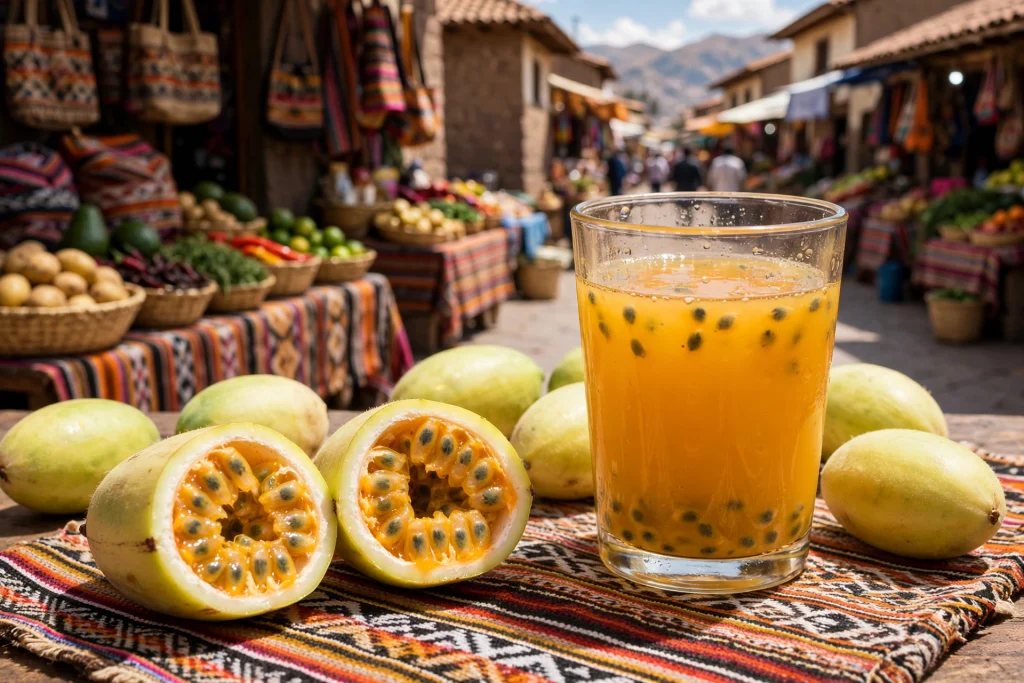
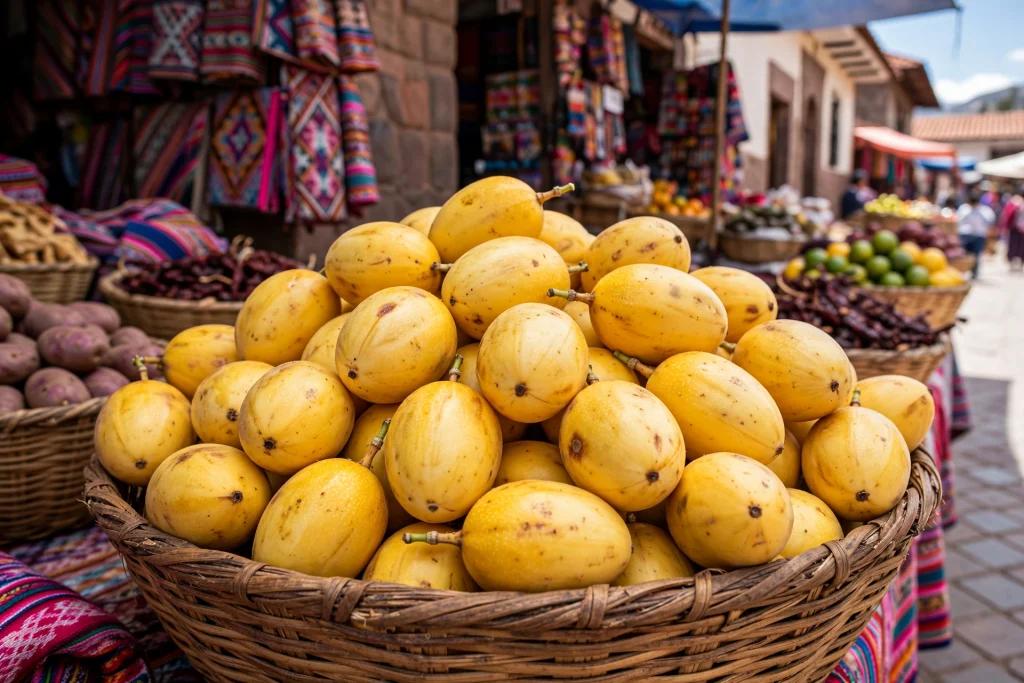
9. Tumbo, Banana Passion Fruit
- What it tastes like: Tart, fragrant passion fruit with a banana shape.
- How to eat it: Cut it open and scoop the orange pulp, or drink it in juice.
- Why you must try it: It is native to the Andes and almost impossible to find in Europe or the US. In Cusco, it is often mixed with other fruits for a refreshing juice. It is high in vitamin C and great for digestion.
10. Maracuya, Passion Fruit
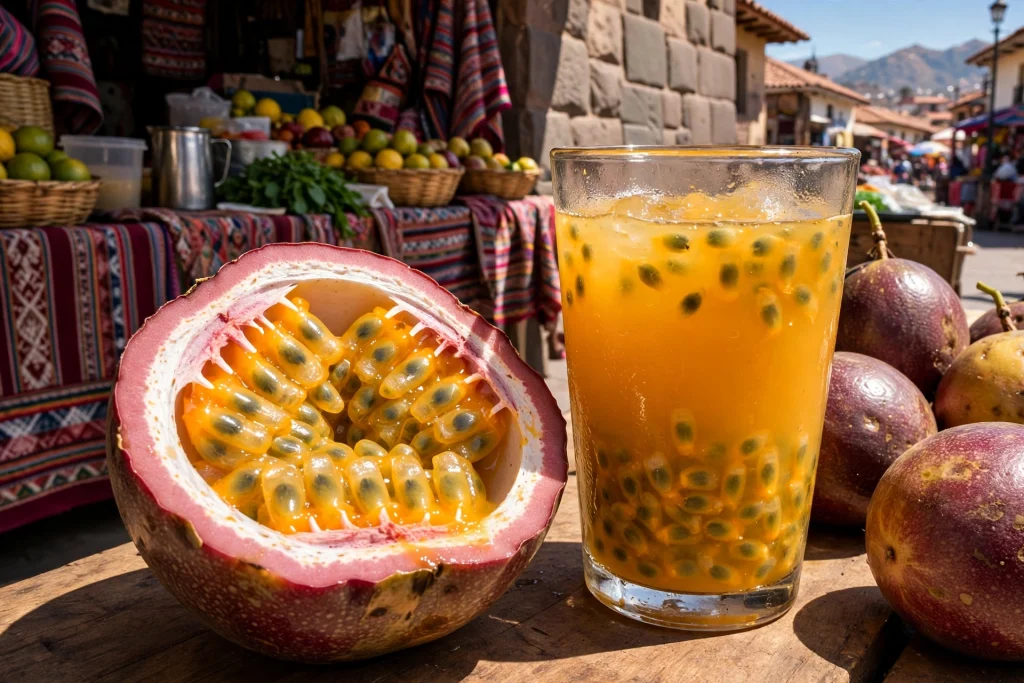
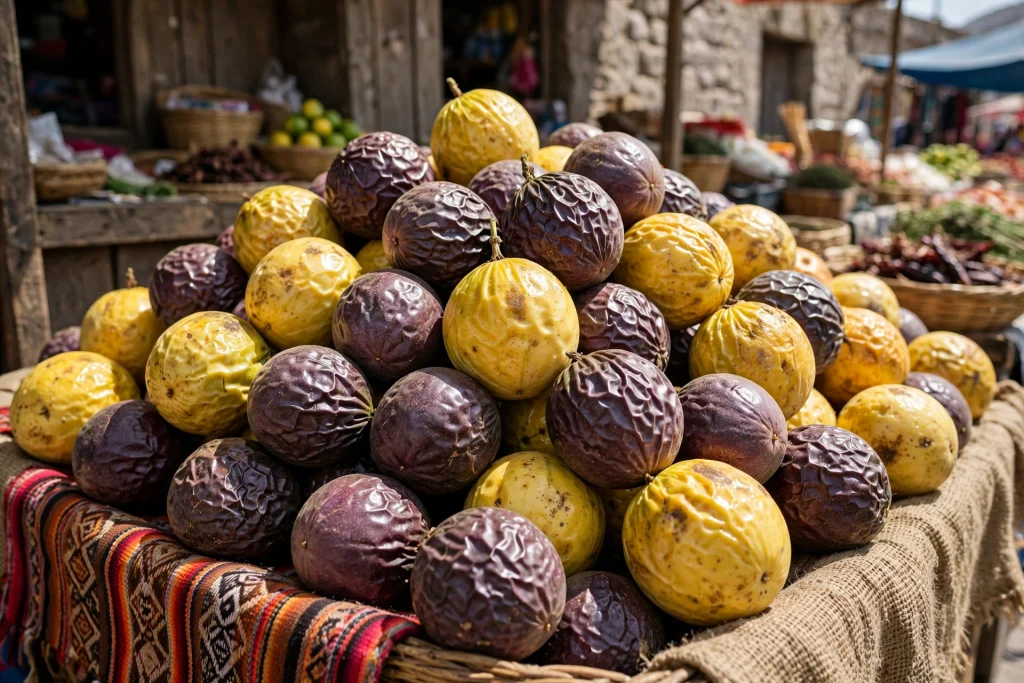
- What it tastes like: Boldly sour and tropical.
- How to eat it: Cut and scoop, or drink as juice. Peruvians rarely eat it alone. They mix it with mango, orange, or banana to balance the sourness.
- Why you must try it: You may know passion fruit, but Peruvian maracuya is stronger, fresher, and cheaper. A glass of maracuya juice at San Pedro is one of the best drinks in Cusco.
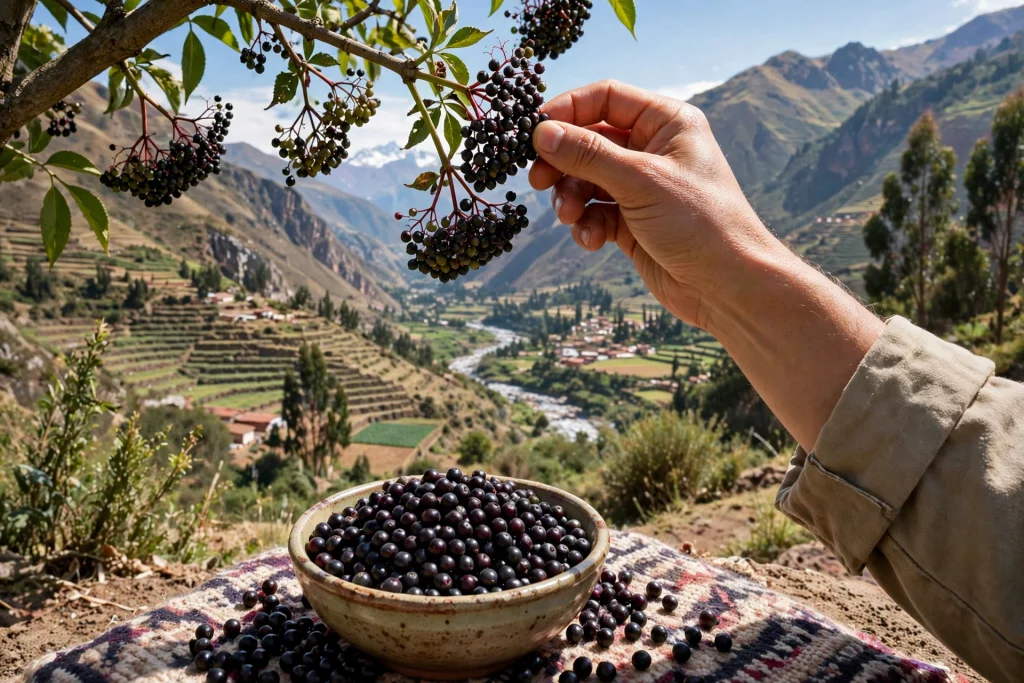
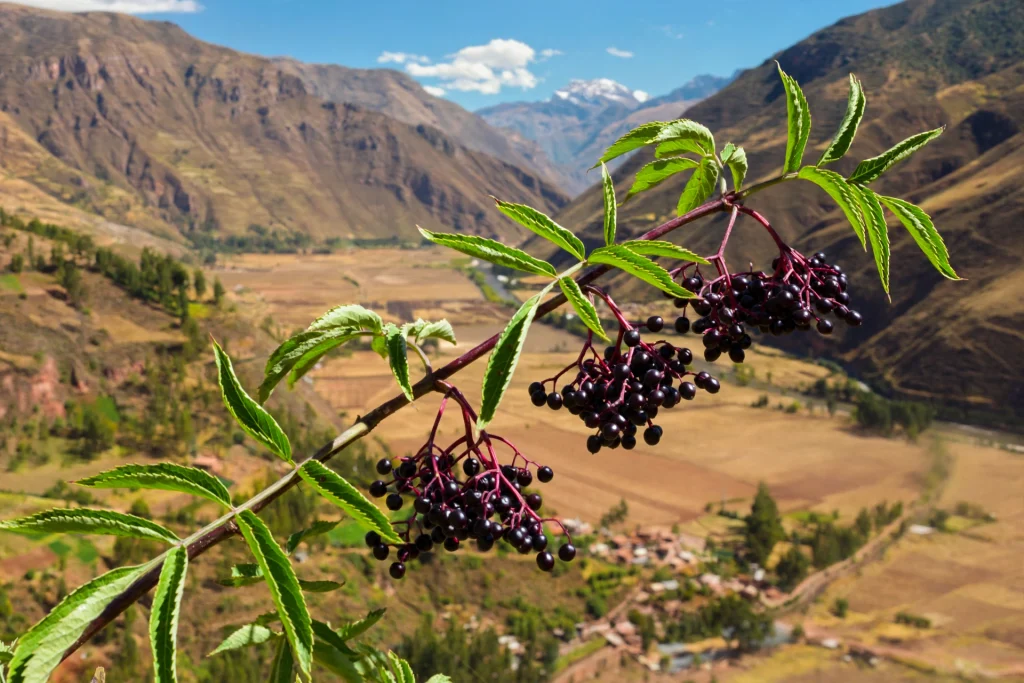
11. Sauco, Andean Elderberry
- What it tastes like: Sweet and slightly tart, like a wild berry.
- How to eat it: Wash it and eat it straight from the tree.
- Where to find it: There are plenty of sauco trees in Urubamba. If you are staying there and going for a walk, look out for small dark purple berries in clusters on trees along the river and on country paths.
- When to look: You will see them fruiting most often from March to July, in the cooler months after the rainy season. If you are on a walk in Urubamba and see a tree full of dark berries, ask your guide before you pick, but most are sauco and safe to taste once washed.
Bonus: Peruvian Mango
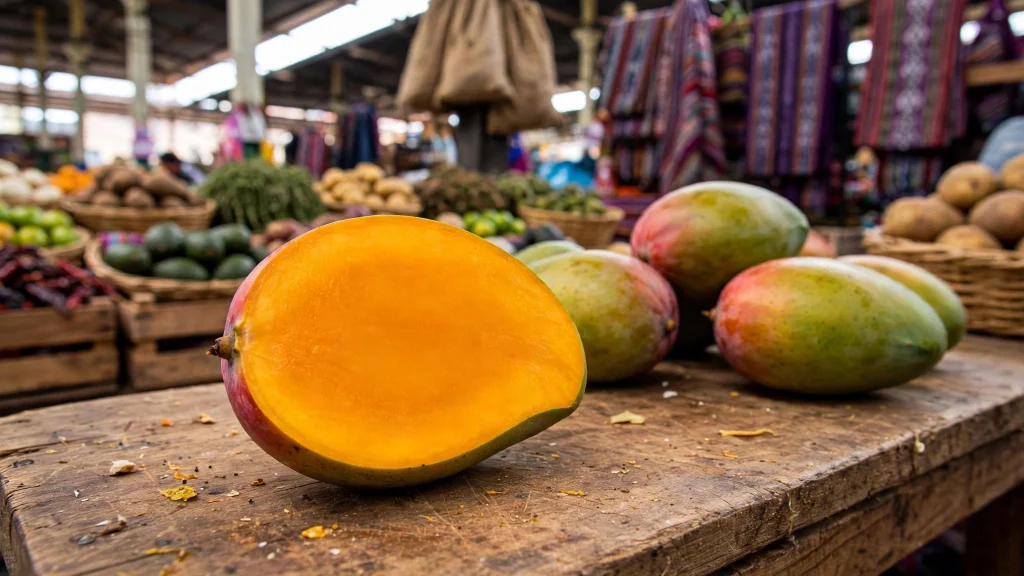
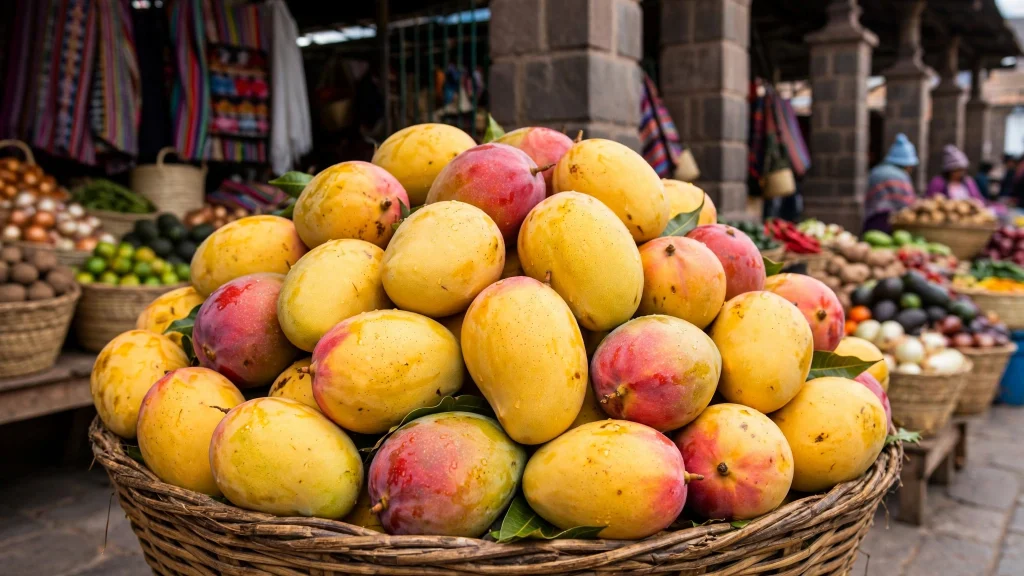
You can buy mango at home, but Peruvian Kent mango from Piura is different. It is larger, less fibrous, and much sweeter because of the dry coastal climate and strong sun. In season from December to March, it is one of the best mangoes in the world. Try it fresh at the market or in a mango and maracuya juice.
Where to Try Them: San Pedro Market, Cusco
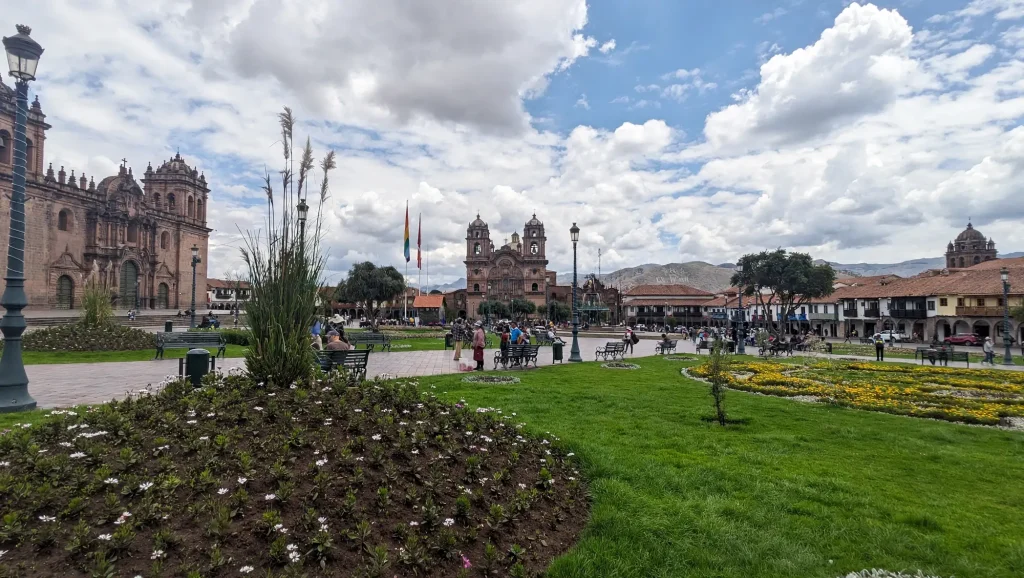
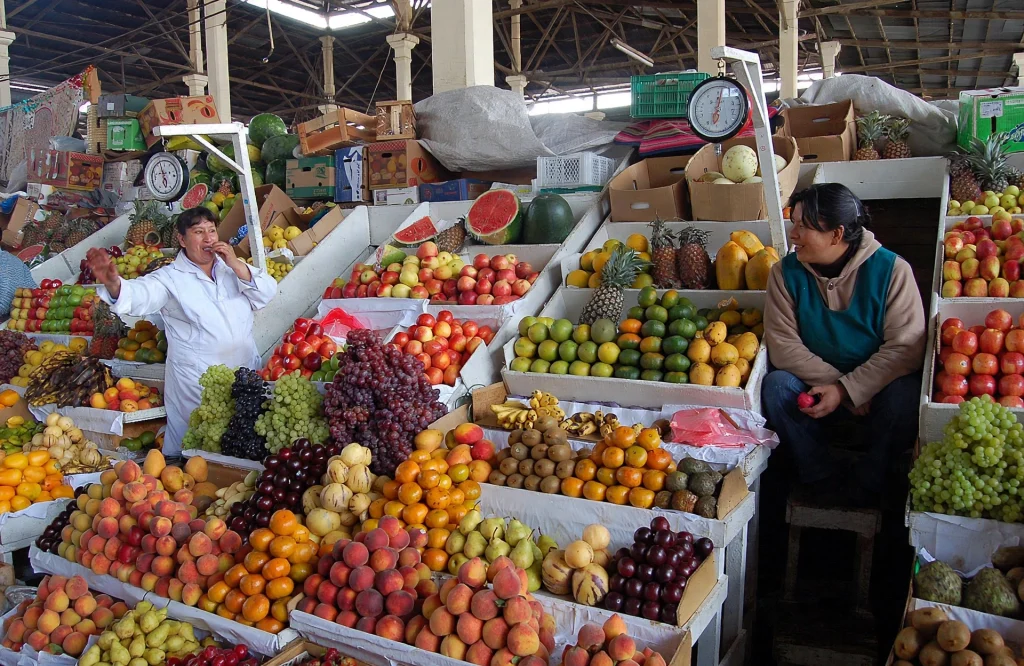
San Pedro Market is 5 minutes from the Plaza de Armas and it is the best place in Cusco to try Peruvian fruit.
- Inside the market: Go to the fruit section and the juice section. Inside, there are 2 rows of juice stalls. This is where you can mix it up. Ask for a juice with lucuma, mango, and maracuya, or aguaymanto and banana. You can have it with milk or without milk. With milk is creamier and more like a smoothie. Without milk is fresher and better for tasting the real fruit.
- Outside the market: Every day, vendors set up outside San Pedro selling fresh orange juice. A glass costs 3.5 to 4 soles. A bottle costs 5 soles. It is squeezed in front of you, ice cold, sweet, and refreshing after walking around Cusco.
- Local tip, say aumento: When you finish your orange juice, say aumento. It means a top up. Many vendors will add a little more to your glass for free. It is a small local custom and a great way to practice your Spanish.
Practical tips for San Pedro:
- Go in the morning for the freshest fruit and the busiest juice stalls.
- Bring small coins in soles. Most fruit costs 1 to 5 soles.
- Ask to taste before you buy. Most sellers are happy to let you try a slice of chirimoya or granadilla.
- Do not buy fruit to take home to the US or Europe. Fresh fruit cannot go through customs. Enjoy it in Cusco, and buy dried aguaymanto or lucuma powder as a souvenir instead.
Final Tip
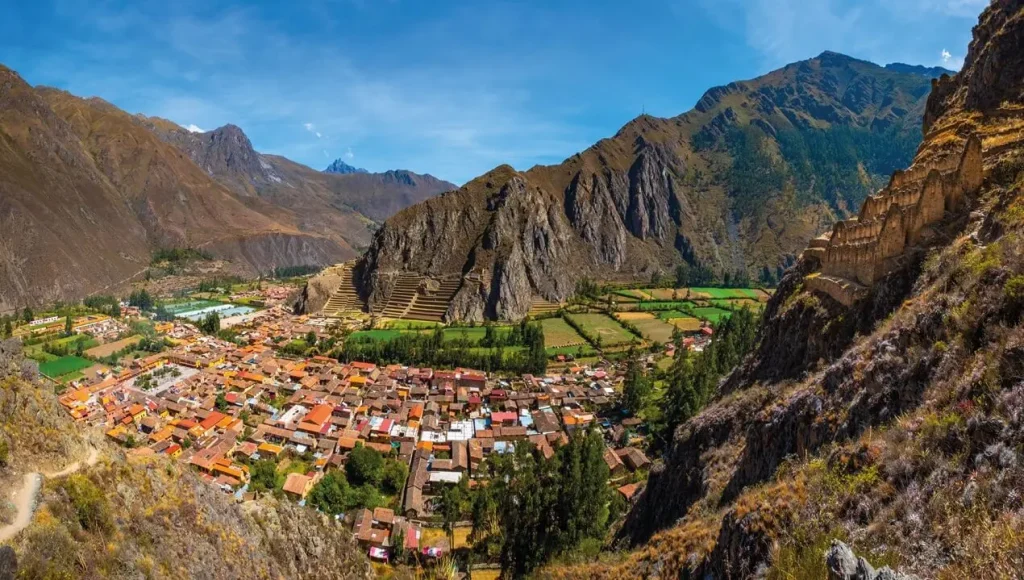
If you are staying in Ollantaytambo or Urubamba before Machu Picchu, keep tasting as you go. The fruit gets even fresher as you go lower into the Sacred Valley. Stop at a market stall, try a tuna, drink a maracuya juice, and ask the seller what is in season today. That is the real taste of Peru.
Want us to take you there? Our guides start every Sacred Valley tour at San Pedro Market for a fruit tasting and a fresh juice, before heading to Pisac, Ollantaytambo, and Machu Picchu.