Understanding Andean Culture and Rituals
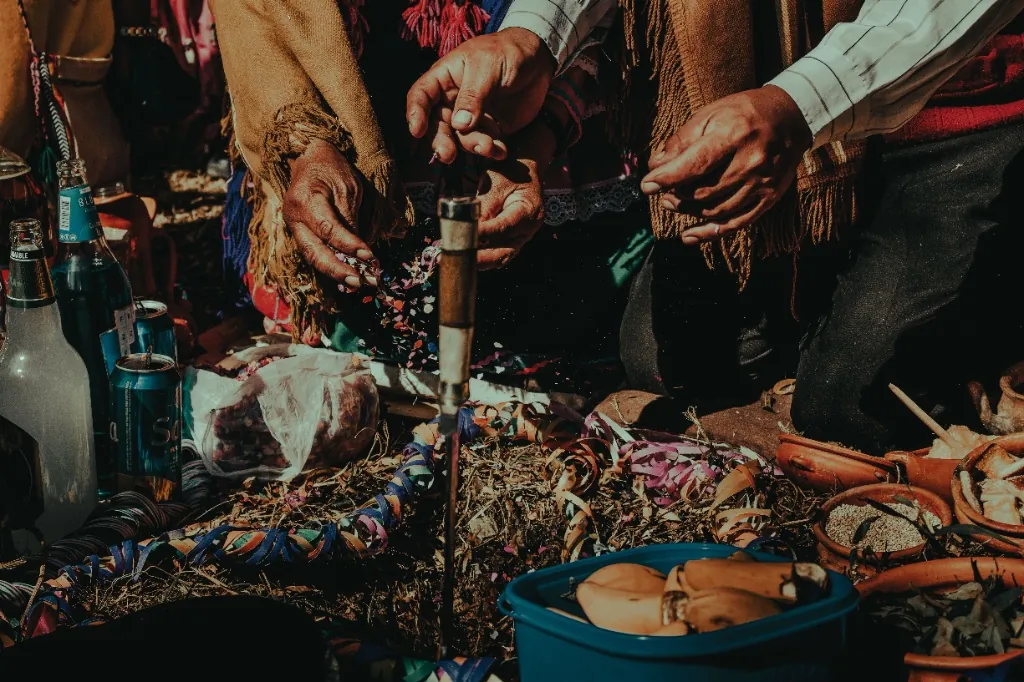
In Cusco, spirituality is not something you only see in a museum. You feel it in the stone walls, in the high mountain passes, in the quiet moment when a guide pauses to offer coca leaves to the earth, and in the shared meal that comes straight out of the ground.
This guide explains the living belief system behind those moments, the rituals travelers can join, and the calendar of festivals where it all comes alive. It is written for travelers who want to understand what they are seeing, why it matters to local people, and how to take part with respect.
The Living Cosmos of the Andes
Andean culture is built on one central idea: Kawsay, or living energy.
In this view, everything is alive and connected. Mountains, rivers, rocks, plants, and people all share the same energy. Nothing in nature is just an object. Everything has consciousness and a role.
This is why a ruin is never just a ruin in Cusco. It is a place where that energy is especially strong.
Another key idea is Pachakuti, which means a turning or renewal of the world. Andean time moves in cycles, not in a straight line. The past is present. Traditions return. Balance is lost and then restored.
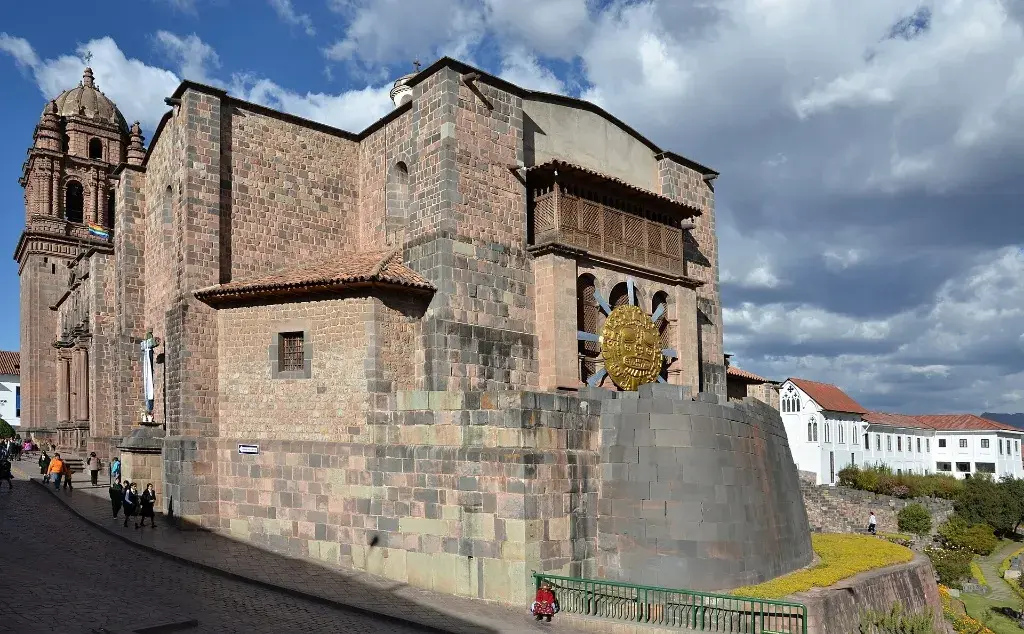
Today, many people in the Andes practice both Andean spirituality and Catholicism at the same time. You will see this blending everywhere. A church may stand on top of an Inca temple. A festival may honor both a Catholic saint and Pachamama. For local people, this is not a contradiction. It is two ways of describing the same sacred landscape.
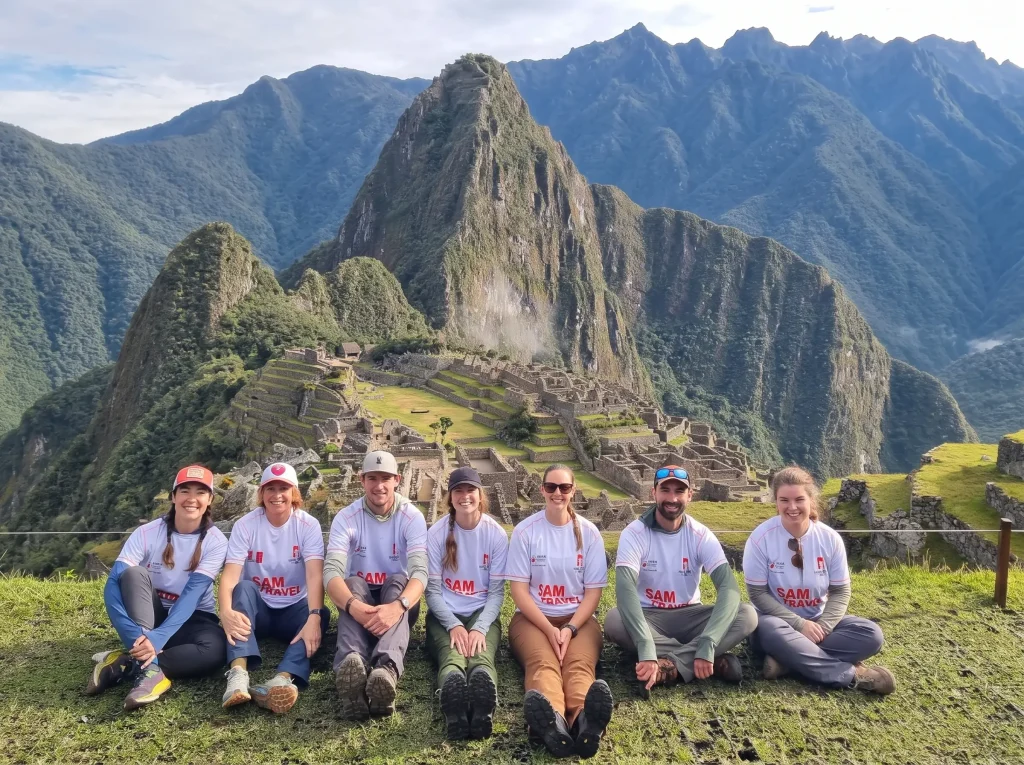
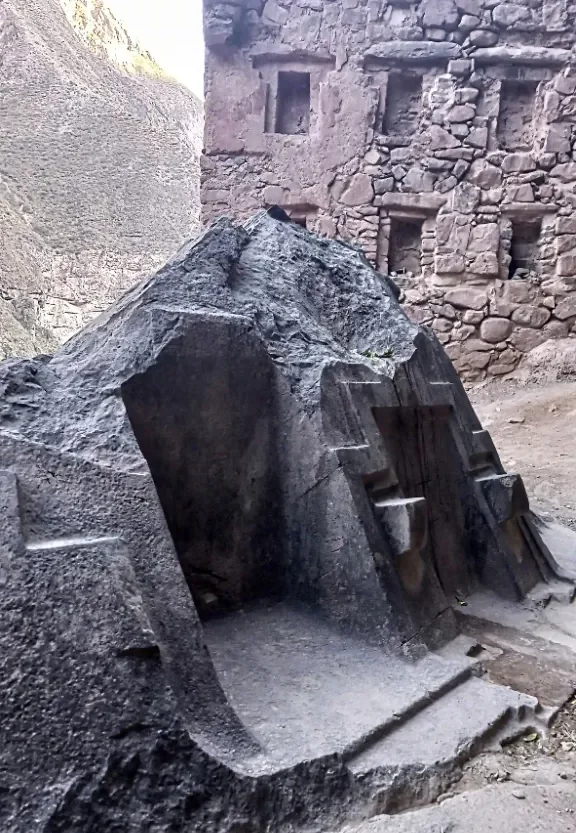
For travelers, this matters because mysticism in Cusco and the Sacred Valley is not history. It is daily life. You will encounter it in markets, on treks, and at ancient sites like Naupa Iglesia and Machu Picchu.
The Stage: Wak’as, Sacred Power Spots
What is a wak’a? A wak’a is a sacred place where Andean people believe the energy of the earth concentrates.
The Incas did not choose building sites by accident. They identified wak’as and built temples, altars, and cities around them. Qorikancha in Cusco, Naupa Iglesia in the Sacred Valley, and Machu Picchu are all powerful examples.
These are not dead stones. They are nodes in a large spiritual network that connects mountains, springs, caves, and sacred rocks across the Andes.
When you stand at a wak’a, you are standing where generations of Andean people have come to pray, ask for permission, and give thanks.
The Protectors: The Apus, Mountain Spirits
Look up from almost any ruin in Cusco and you will see massive snowcapped peaks. Local people do not see these mountains as geography alone. They see them as living protector deities called Apus.
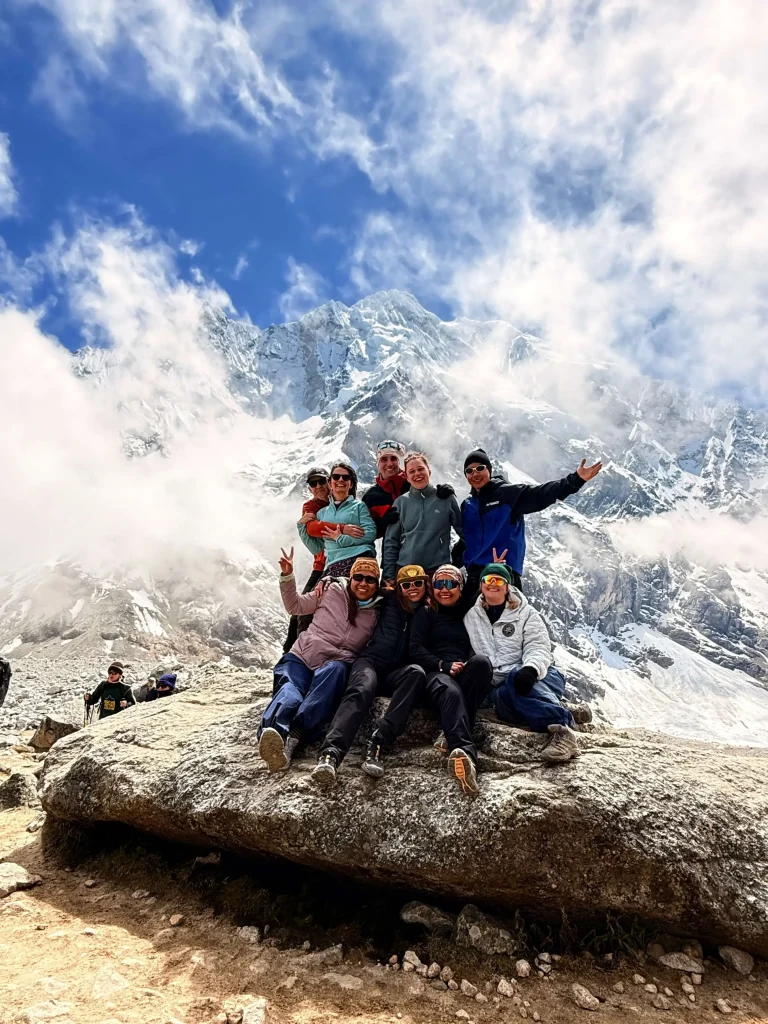
Two of the most important Apus for travelers are Salkantay and Ausangate. Salkantay watches over the route to Machu Picchu. Ausangate watches over the high communities south of Cusco. Each Apu has its own personality, its own territory, and its own relationship with the people who live beneath it.
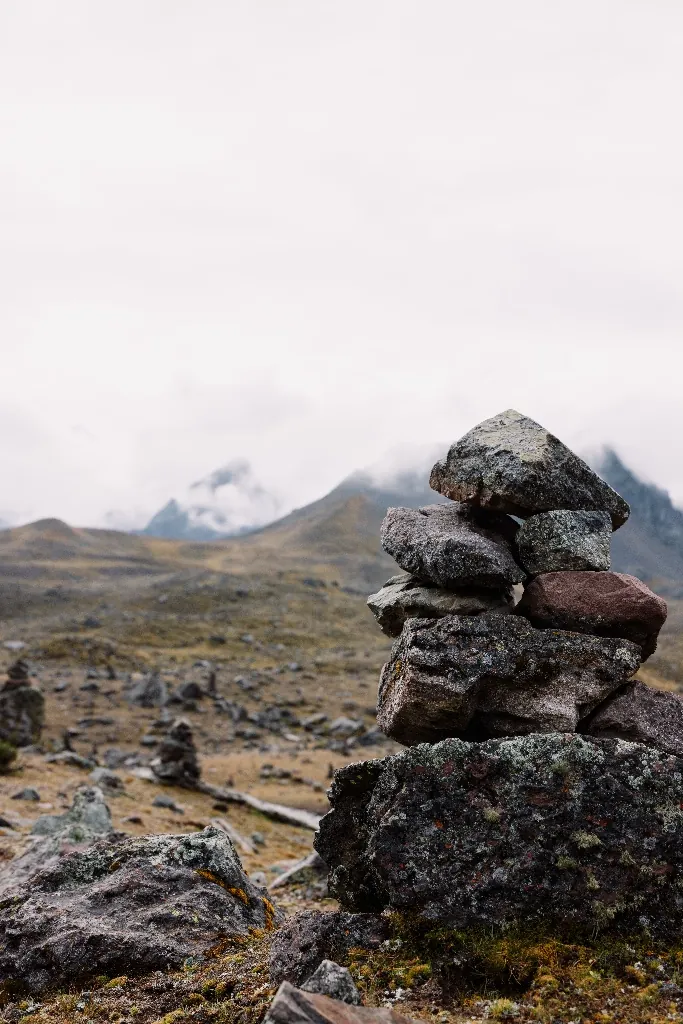
You interact with the Apus even without realizing it. Every time a hiker adds a stone to a trailside apacheta, a small pile of stones built as an offering, they are speaking to the Apu. Every time you pause to catch your breath at a high pass, you are in the presence of an Apu.
In Andean belief, the Apus protect travelers, control weather, and guard water sources. That is why guides always acknowledge them before crossing a pass.
The Mother: Pachamama and the Art of Ayni
Beneath the Apus is Pachamama, Mother Earth.
Pachamama is the supreme life giver, protector, and embodiment of fertility, nature, and time. She sustains everything. Crops grow from her. Water flows from her. Life returns to her.
The moral foundation of Andean life is Ayni, sacred reciprocity. Ayni means today for you, tomorrow for me. You cannot only take from the earth. You must give back what you take.
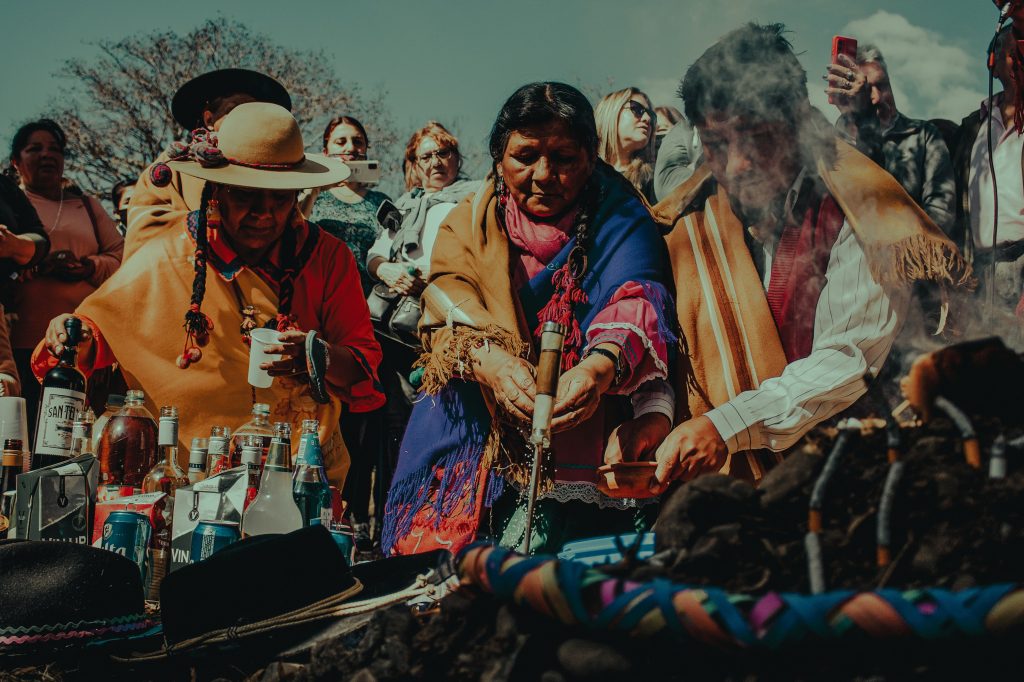
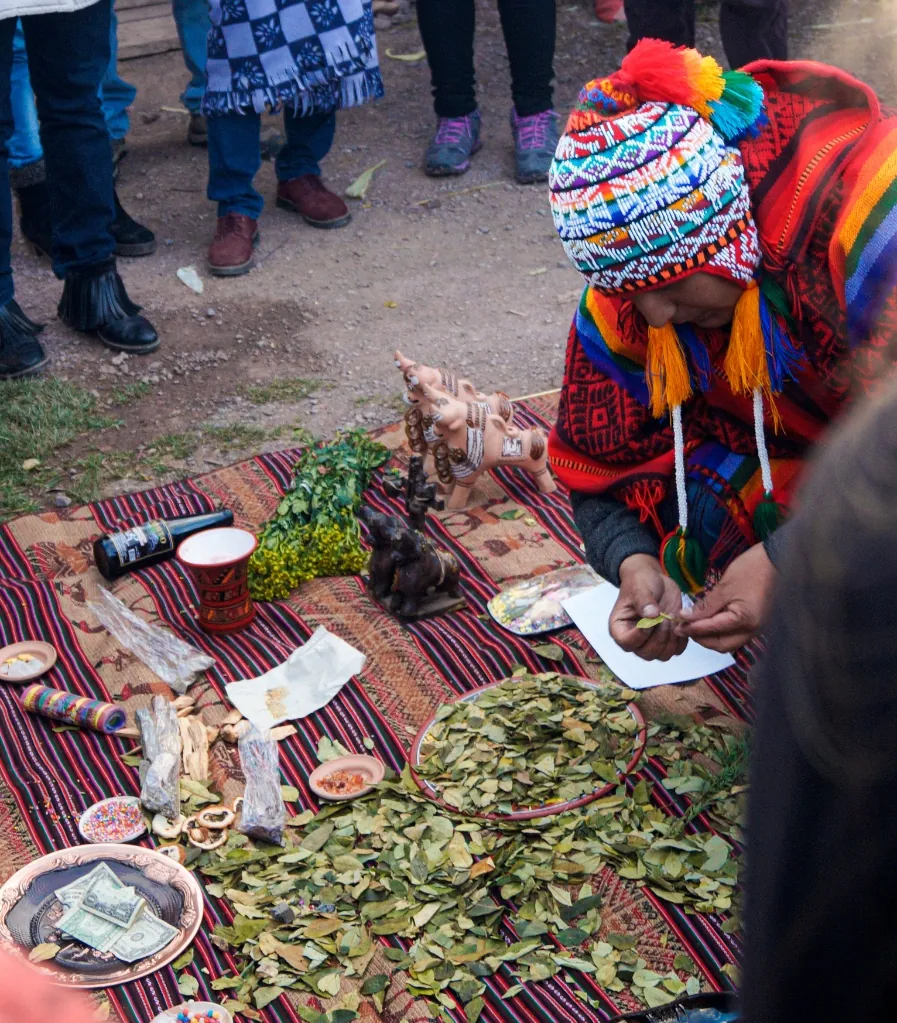
This is expressed in the Pago a la Tierra, or Payment to the Earth. It is a ceremony of gratitude where people offer food, drink, coca leaves, and other symbolic items to Pachamama. Farmers make a pago before planting. Families make a pago before building a house. Travelers are often invited to take part in a pago before a long trek.
The message is simple. You do not just take photos and leave a ruin. You give back.
The Bridge: The K’intu, How Travelers Participate
So how do you actually speak to the Apus and Pachamama? With a k’intu.
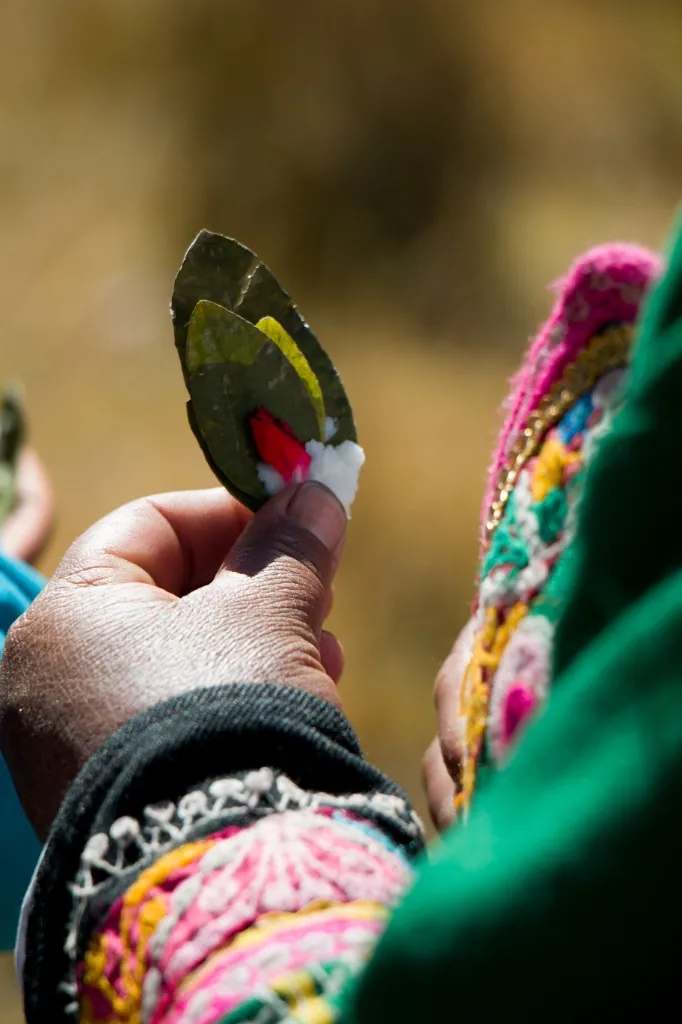
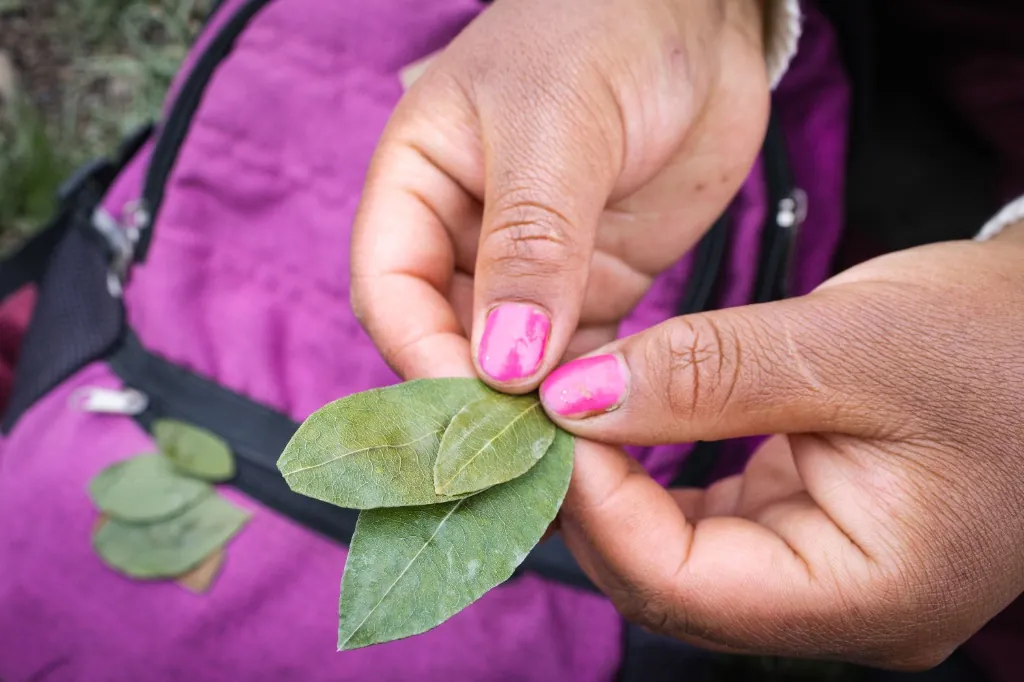
A k’intu is a sacred grouping of three pristine coca leaves. The three leaves represent the three worlds of Andean cosmology: the upper world, this world, and the inner world. They also represent balance between body, mind, and spirit.
Here is what you will often see on a trek. Your guide stops before a mountain pass. He holds three coca leaves together. He blows softly on them while thinking of his intention. He then offers them to the mountain, or places them on the ground.
That single, quiet gesture contains the entire belief system. It is a request for safe passage. It is a sign of respect. It is an act of Ayni.
If you are offered a k’intu, hold it with both hands, focus on your intention for the journey, and follow your guide. You do not need to know perfect words. Sincerity matters more than performance.
Coca Leaf Readings: Divination Through the Sacred Plant
What is a coca leaf reading? It is a traditional Andean consultation where a Paqo, an Andean priest or spiritual practitioner, interprets dried coca leaves to offer guidance.
In the Andes, coca, called kuka in Quechua, is not a drug in the traditional sense. It is a sacred medicine, a gift from the sun, and a bridge to the spiritual world. Local people chew it for altitude and energy. They offer it to Pachamama. They use it to open communication with the Apus.
Coca leaf is legal in Peru for traditional and cultural use. It is completely distinct from cocaine, which is a processed chemical product. This distinction is essential to understand Andean culture correctly.
How a Reading Works
A typical reading takes place in a quiet, respectful space. The Paqo will invite you to sit and share what is on your mind.
The practitioner then tosses dried coca leaves onto a sacred cloth, called a mesha. He reads their positions, their orientation, and the shapes they form. Some leaves land face up. Some land face down. Some form small cup like shapes. Each pattern carries meaning.
The Paqo will explain what he sees and talk through it with you. It is a conversation, not a prediction show.
What Can You Ask?
People seek readings for many reasons:
- Guidance on a personal decision or life change
- Clarity on health, energy, or emotional blocks
- Understanding relationships and family matters
- Spiritual alignment and direction for a new path
- Permission and blessing before a journey
You do not need to believe in a specific religion to take part. You only need to come with an open mind and a clear question.
Despachos: The Sacred Art of Andean Offerings
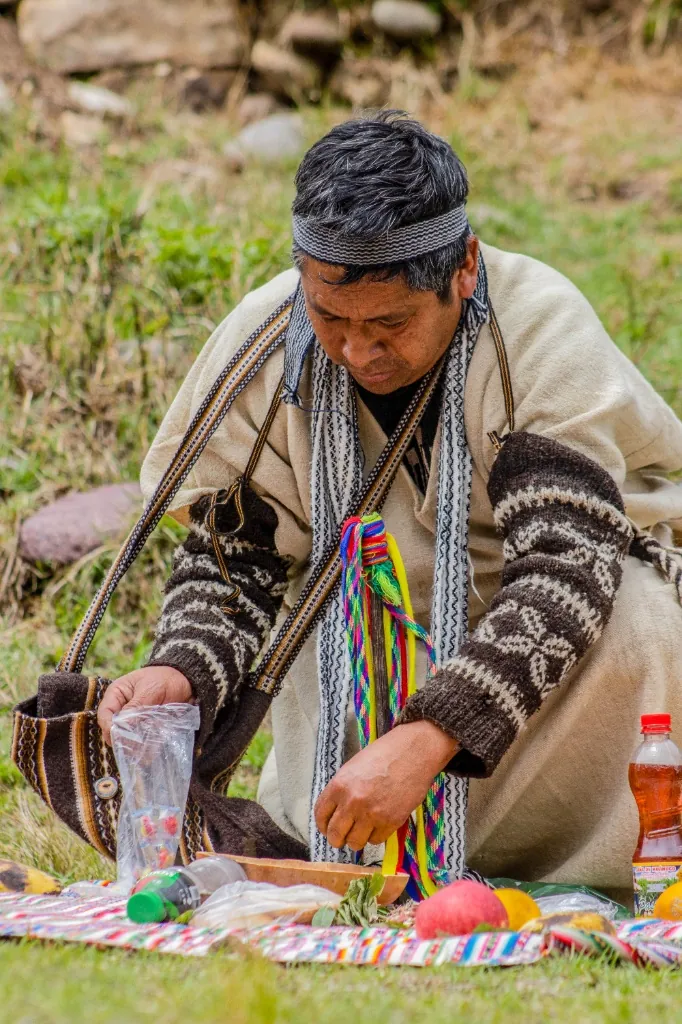
What is a despacho? A despacho is a beautiful prayer bundle, like a mandala made of offerings, created to express gratitude, ask for healing, or restore balance.
A Paqo builds it with intention, layer by layer. Every item has a meaning. Nothing is random.
Anatomy of an Offering
A despacho often includes:
- K’intus: Groups of three coca leaves, used as the core offering to Pachamama and the Apus
- Sweet elements: Sugar, candies, and sweet wine to feed the sweet nature of the earth
- Seeds and grains: Symbols of fertility, abundance, and new life
- Wool and animal fat: Symbols of life force, warmth, and connection to animals
- Silver and gold representations: Small paper or metal figures symbolizing wealth, health, and protection
- Flowers and herbs: Offerings of beauty and healing
The Paqo arranges these items in a precise pattern on paper. Participants are often invited to add their own k’intus and blow their intentions into them before they are placed in the bundle.
The Ritual Conclusion
Once the bundle is complete, it is carefully wrapped and tied. It is then burned or buried so the prayers are physically and spiritually delivered to Pachamama and the Apus.
Burning is the most common ending for travelers. As the smoke rises, the Paqo explains that the offering is now traveling to the spiritual world. It is a moment of stillness, not a spectacle. Many people describe it as deeply moving, even if they arrived skeptical.
Huatia: The Earth Oven and the Taste of Ayni
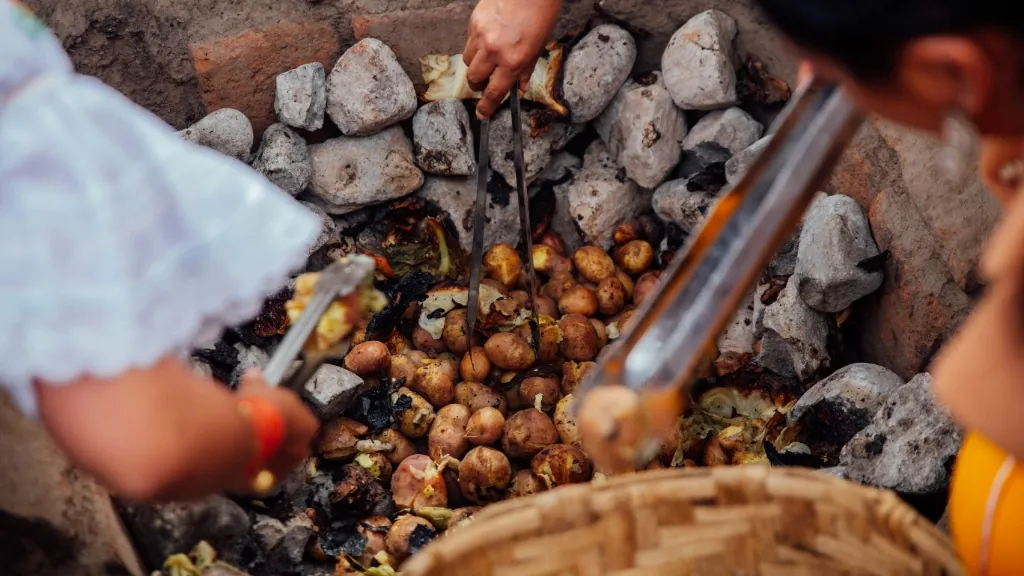
What is huatia? Huatia, also spelled watia, is a traditional Andean earth oven where food is cooked inside the earth itself.
If a despacho is a prayer you offer to Pachamama, huatia is a meal you share with her. It turns the idea of Ayni into something you can see, smell, and taste.
Huatia has been practiced in the Cusco region since long before the Inca period. It is still a central part of community life in the Sacred Valley and in high communities near Ausangate, especially during harvest time and in August, the month of Pachamama.
How Huatia Works
A huatia is built from the earth, not from a kitchen.
First, people build a small dome using clods of earth called champas, or using stones, and light a fire inside. The fire heats the earth and stones until they are glowing hot. The ashes are then cleared.
Next, the food is placed inside the hot dome. The most classic huatia is made with native potatoes, ocas, sweet potatoes, fava beans, and corn. In many communities, people also add lamb, pork, chicken, or cheese, seasoned with local herbs like huacatay.
Finally, the dome is covered with earth to seal in the heat. The food steams and roasts slowly inside Pachamama for about 40 to 60 minutes. When the oven is opened, the steam rises and everyone gathers around.
Andean Calendar: When to Experience It
The beliefs above are not separate from the festival calendar. Festivals are where they come alive in public. If you plan your trip around one of these dates, you will see Andean culture at its fullest.
Dates for movable festivals change each year. Always check locally before you travel.
Carnaval in Cusco: February to March
Carnaval is joyful, messy, and community based. Streets fill with water games, dancing, and music. A key tradition is the yunza, a tree decorated with gifts that people dance around and then cut down. Festivities generally take place in February or March, in the period leading up to Lent.
For travelers, it is the most playful side of Ayni. Everyone shares, everyone gets wet, everyone celebrates together.
Semana Santa and Senor de los Temblores: Holy Week, Holy Monday
Holy Week in Cusco has its central day on Holy Monday. On this day, the patron of Cusco, the Lord of the Tremors, is carried in procession. The biggest religious celebration takes place on Holy Monday, when the Senor de los Temblores is carried through the streets in one of Cusco’s most important and solemn processions.
People throw red nucchu flower petals as the image passes. It is solemn, emotional, and a powerful example of how Andean and Catholic devotion exist together.
Qoyllur Rit’i, Festival of the Snow Star: May or June
Qoyllur Rit’i is the most shamanic festival on this list. It is a massive pilgrimage to the Sinakara valley below Ausangate, held around Trinity Sunday, so the date moves each year.
Thousands of pilgrims walk for days, camp in the cold, dance through the night, and climb to the glacier at dawn to greet the sun. It is directly about the Apus, ice, penance, and devotion. If you want to understand why Ausangate is sacred, this is the festival to study.
Corpus Christi in Cusco: May or June
Corpus Christi is a movable feast, usually in May or June. Fifteen saints and virgins are carried in procession around the Plaza de Armas, each from its own parish, with its own band and dancers.
It is the perfect example for the blending worlds idea. The procession is Catholic in form, but the music, the food, and the way communities organize around their saint are deeply Andean. Do not miss the traditional dish Chiri Uchu, served only at this time.
Andean New Year, Willka Kuti: June 21
June 21 is the winter solstice and the Andean New Year. The winter solstice is celebrated, marking the beginning of the agricultural cycle, with ceremonies held in sacred places.
It is smaller and quieter than Inti Raymi, but it is the true Andean new year. Paqos make offerings at wak’as at dawn to welcome the return of the sun.
Inti Raymi, Festival of the Sun: June 24
Inti Raymi is the biggest date for a Cusco tour site. The biggest dates include Inti Raymi on June 24, which is also the day of the city. It is held on June 24 and is the start of the winter solstice season in local tradition.
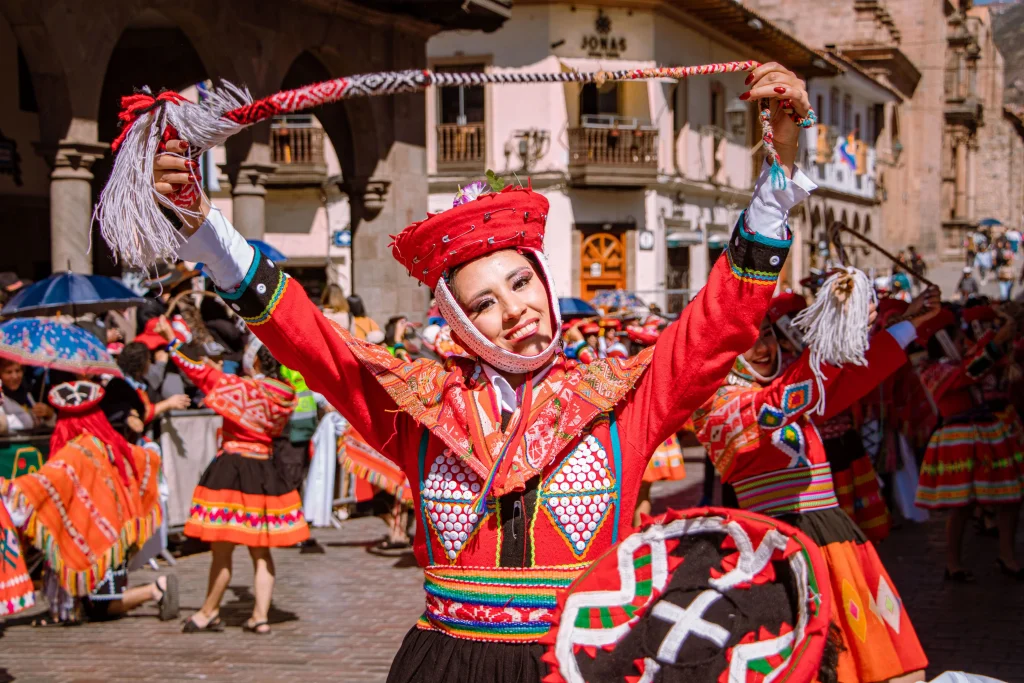
It is a reenactment of the Inca ceremony for the sun god Inti, performed at Qorikancha, Plaza de Armas, and Sacsayhuaman. Hundreds of performers in traditional dress recreate the offering, the chicha toast to the sun, and the blessing of the people. Book months ahead if you want a seat at Sacsayhuaman.
Virgen del Carmen in Paucartambo: July 15 to July 17
In mid July, the small colonial town of Paucartambo, east of Cusco, hosts three days of masked dances, bands, and street theater for the Virgen del Carmen.
Each dance group tells a story: devils, angels, Inca warriors, and Spanish soldiers. It is colorful, local, and less crowded than Inti Raymi, which makes it a favorite for travelers who want a deeper cultural experience.
Pachamama Day: August 1 and All of August
Every August 1, people in the Andes commemorate Pachamama’s Day. August 1 signals the start of the sacred month dedicated to Pachamama, when the earth begins to restore itself after harvest.
This is when the biggest pagos are made. Families prepare despachos, offer chicha and coca leaves, and often host a huatia. If you are in Cusco in August, you will see pagos everywhere, from family courtyards to hotel lobbies. It is the best month to experience the Pachamama section of this blog in real life.
Todos los Santos and Day of the Dead: November 1 and November 2
November 1 and November 2 bring Todos los Santos, when families carry ornate bread figures and full meals to cemeteries to share with their dead. On November 1 and November 2, Cusco commemorates the Day of All Saints and the Day of the Dead, and the most important tradition is to bring flowers, offerings, and other items to honor deceased relatives.
The key food is tanta wawa, sweet bread shaped like a baby, often decorated with a face. Families eat lechon, drink chicha, play music, and spend the day at the cemetery. It connects directly to Ayni and ancestor reverence: you do not forget the dead, you feed them and keep them part of the family.