



Half-Day Cusco City Tour
Qoricancha, Sacsayhuaman, Qenqo, Puka Pukara & Tambomachay. Licensed local guide, private van, daily departures.
Located at 3,400m in the Peruvian Andes, Cusco was the capital of the Inca Empire and is now a UNESCO World Heritage Site. This half-day city tour is the perfect introduction to Cusco on your first day, with no trekking required.
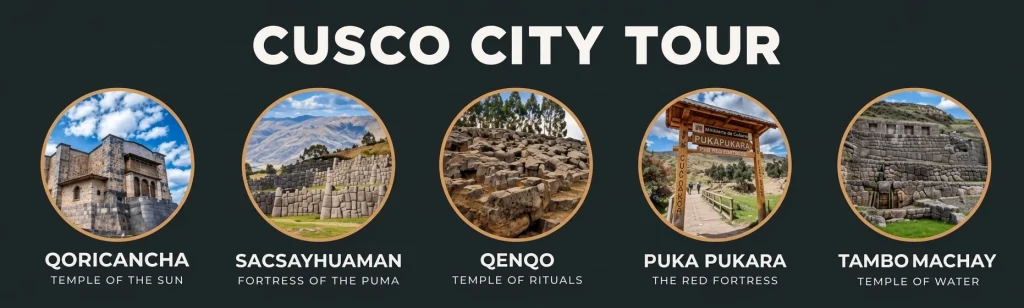
In just 4 to 5 hours, you will visit 5 essential Inca sites: Qoricancha – Temple of the Sun, Sacsayhuaman Fortress, Qenqo Ritual Site, Puka Pukara Red Fortress, and Tambomachay Temple of Water. Travel by private van with a professional, licensed guide born in Cusco.
We are a licensed tour operator in Cusco, Peru, with 10+ years’ operating city tours and Inca Trail treks. We are not resellers. All tours are led by professional local guides licensed by MINCETUR, Peru’s Ministry of Tourism, who were born in Cusco and trained in Inca history and archaeology. We share legends and local stories you won’t find in guidebooks. Small groups, private transport, first aid trained guides, and oxygen on request.
Places you visit on our Cusco City Tour
- Qoricancha: The Temple of the Sun and Santo Domingo Convent
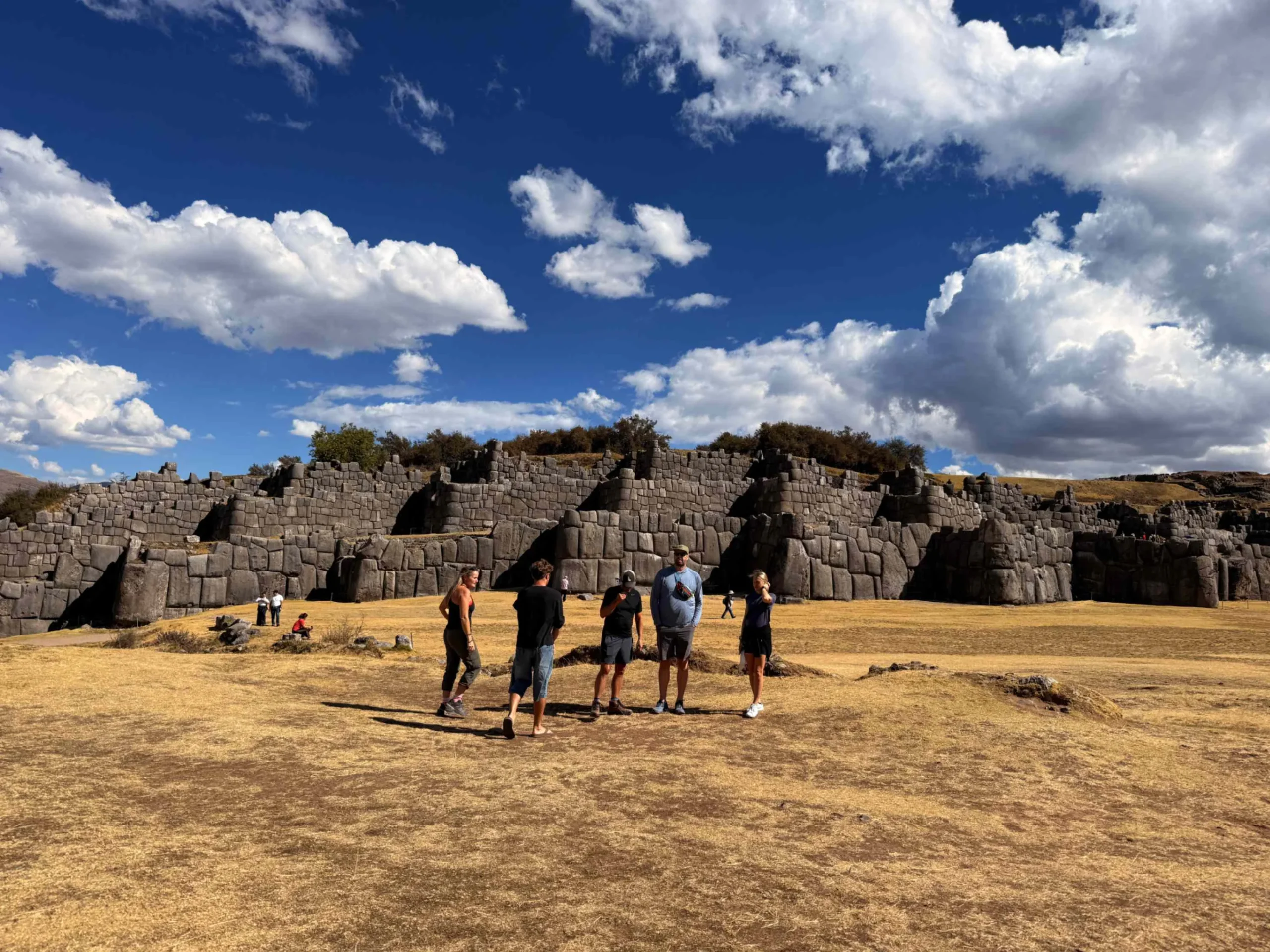
- Sacsayhuaman: The most impressive archaeological site above Cusco, fortress of the Puma head
- Qenqo: Sacred site with immense carved boulder and underground chambers
- Puka Pukara: The Red Fortress, former tambo and checkpoint for Inca messengers
- Tambomachay: The Temple of Water and royal bath of Inca Yupanqui
Full Itinerary
The first stop on the tour is the Convent of Santo Domingo and Qoricancha. This church was built directly over the temple of Qoricancha, considered the most important temple in Cusco for the Inca and their main center of worship of the sun. You will have time to explore both the Inca and colonial sections with your guide.
Enjoy the site before traveling by private van to Sacsayhuaman, the most impressive Inca site above the city at 3,700 meters. Later visit the sacred sites of Qenqo, Puka Pukara and Tambomachay located just outside Cusco. Learn the true history, legends and importance of each site from your professional local guide who was born in Cusco. You will arrive back at your hotel in time for a tasty dinner in one of the many excellent restaurants in the city of Cusco.
Complete Guide to the 5 Inca Sites on the Cusco City Tour Half Day
At your selected time, we pick you up from your hotel in Cusco’s Historic Center.
This tour operates daily, every day of the year. Morning departure: 9:00 AM – 1:30 PM. Afternoon departure: 1:30 PM – 6:00 PM. If your hotel is outside the historic center or in the Sacred Valley, we set a meeting point at Plaza de Armas. The tour ends near Plaza de Armas so you can walk to dinner.
1. Qoricancha and the Convent of Santo Domingo – Temple of the Sun
Qoricancha means enclosure of gold in Quechua. It was the most important temple in Cusco during the Inca Empire and was dedicated to the worship of Inti, the sun god. What a magnificent sight it must have been during Inca times, with walls covered with solid sheets of gold and courtyards filled with life size statues of gold and silver. Today we only see the remarkable fine stonework that survived earthquakes. When the Spanish arrived in 1533 they used the stones to build the Santo Domingo Church and Convent directly on top of the Inca temple. Inside you will see how Inca walls support Spanish colonial arches, a perfect symbol of the mestizo culture. Something not to be missed is the impressive collection of religious art by the famous Cusqueña School of Art from the 17th and 18th centuries. Our licensed guides explain the spiritual meaning of this site for the Inca.
2. Sacsayhuaman – Fortress of the Puma Head
One of the most impressive Inca sites you will see in Peru, Sacsayhuaman means place of the satisfied falcon in Quechua. Until today it is not certain what the exact purpose of the site was before the Spanish arrived. Research by local archaeologists has discovered burial tombs and ceremonial offerings, which suggests it was most likely used as a temple and military fortress.
Even today after much of the site was taken away or destroyed during colonial times, you can still see how great Sacsayhuaman must have been during Inca times. Some of the massive limestone blocks remain in place. The largest ones weigh more than 128 tons and are fitted together without mortar with millimetric precision.
The city of Cusco was planned in the shape of a sacred Puma, an animal the Inca worshipped. Sacsayhuaman was the head of the Puma, with the Cusco River representing the spine. The Inca ruin features three levels of iconic zigzag walls designed for defense and ceremony. On the 24th of June every year the spectacular Inti Raymi festival is held at this site. During Inca times this ceremony celebrated the winter solstice and honored the sun god Inti. Today it is the most famous festival in Cusco, with our guides explaining the authentic history behind it.
3. Qenqo – Temple of Rituals and Sacred Carvings
This site has the most impressive carved rocks in the Cusco area. The entire site is covered in carvings directly sculpted into the natural limestone bedrock. Some carvings are indistinct and not easily recognizable, while others are clearly identified as figures of the llama, condor and snakes, the three sacred animals of the Inca trilogy representing the heavens, earth and underworld.
Zigzag channels are sculpted into the bedrock that were likely used for ritual offerings of chicha corn beer. Below the main rock there are a number of natural caves, underground passageways and an altar carved from a single stone that may have been used for sacrifices and mummification. Buried mummies and offerings have also been discovered around Qenqo by archaeologists. Your guide will show you the best angles to see the carvings and explain their spiritual importance.
4. Puka Pukara – The Red Fortress
Known as the Red Fortress because its limestone turns reddish at sunset, this small but fascinating site may not have been a fortress as the name suggests. On further investigation by historians, it appears it had no defensive purpose.
Its most likely purpose was as a tambo, a resting place for chasquis, the fast Inca messengers, and an administrative checkpoint and guard post for the entrance to Cusco. It was also used as a hunting lodge for the Inca elite. It is interesting to see the way the Incas built the walls directly over the irregular bedrock, adapting their architecture perfectly to the natural landscape. The site offers excellent views of the Sacred Valley entrance.
5. Tambomachay – Temple of Water and Royal Bath
The name means place of rest in Quechua. It used to be the royal palace and private hunting lodge of Inca Yupanqui when he went to hunt in the surrounding hills. This site was also thought to have been used as a Temple of the Water, as the Inca worshipped water as a source of life.
There are some impressive aqueducts, canals and fountains sculpted out of a single piece of stone, designed to channel water flowing from a nearby natural spring. The hydraulic system still works perfectly today after more than 500 years, with crystal clear water flowing year-round. Your guide will demonstrate how the Incas engineered the water to flow at a constant level through two separate falls.
All tours are led by our professional local guides licensed by the Ministry of Tourism of Peru, with many years of experience explaining Inca history and archaeology.
What’s Included in the Cusco City Tour ?
Included
- Hotel pickup and drop-off in Cusco Historic Center
- Professional licensed local guide, fluent in English & Spanish
- Private transportation with experienced driver to all 5 sites
- All local taxes
Not Included
- Entrance tickets: Boleto Turístico Parcial – S/70 soles (covers Sacsayhuaman, Qenqo, Puka Pukara, Tambomachay). Payable in cash at first site. Valid 1 day.
- Qoricancha entrance – S/20 soles per person, payable in cash on site.
- Meals, tips, travel insurance
Price – Cusco City Tour Half Day
Tour Details: From $75 USD per person | Private groups from $150 total | 5 sites in 4 to 5 hours: Qoricancha, Sacsayhuaman, Qenqo, Puka Pukara, & Tambomachay | Daily departures 9:00 AM & 1:30 PM
Standard Price – Shared Service
- Cusco City Tour – Half Day: $75 USD pp
- Half-day cultural tour (Qoricancha Temple of the Sun, Sacsayhuaman Fortress, Qenqo, Puka Pukara, Tambomachay) in small groups with a licensed local guide
Private Group Prices – Any Date, 100% Private
- Group of 1 to 6 Persons: $150 Total
- $150 for the total group (not per person). Private guide, chauffeur, and private van (no others added). Flexible start time
- Group of 7 to 12 Persons: $180 Total
- $180 for the total group (not per person). Private guide, chauffeur, and private van (no others added). Best for large families
Key Information
- Note: Standard price is $75 USD per person. Private prices are per group, not per person. Entrance tickets not included (Tourist Ticket S/70 + Qoricancha S/20, payable in cash in soles). Our guide helps you purchase at the first site. Hotel pickup in Cusco historic center included
What to Bring for Cusco City Tour Half Day
Tour Details: Essential items for Qoricancha, Sacsayhuaman, Qenqo, Puka Pukara, & Tambomachay | Easy tour, 4 to 5 hours
Cash, Documents, and Personal Items
- Cash in Peruvian Soles (S/90 Minimum)
- S/70 for Tourist Ticket + S/20 for Qoricancha (cash only)
- Bring small bills (10, 20, 50 soles) for tickets, water, and souvenirs
- Passport or ID
- Required to buy and validate your Tourist Ticket at Sacsayhuaman (copy or photo accepted)
Clothing, Footwear, and Weather Protection
- Layered Clothing
- Cusco weather changes fast at 3,400m; wear breathable layers you can add or remove easily
- Light Rain Jacket or Poncho
- Sudden showers, especially November to March; a light waterproof jacket is enough
- Sun Hat, Sunglasses & Sunscreen
- UV is extreme at 3,400m to 3,700m, even on cloudy days (essential for Sacsayhuaman)
- Comfortable Walking Shoes
- Cobblestones and stone steps at all ruins; sneakers with good grip are enough (no hiking boots needed)
Hydration and Electronics
- Water Bottle – 1 Liter
- Stay hydrated to prevent altitude sickness (do not drink tap water in Peru)
- Camera + Power Bank
- Best photos at Qoricancha and sunset from Sacsayhuaman; batteries drain fast at altitude